

Modern Kitchen Decor That Actually Works: Balancing Aesthetics With Everyday Life

Open a Pinterest feed of modern kitchens and you'll find sleek surfaces, floating shelves, and statement lighting that look effortlessly curated. Open your own kitchen after a week of dinner prep, and the reality looks different—open shelving has become a dish graveyard, marble countertops show water rings, and minimalist cabinetry hides clutter behind closed doors. Modern kitchen decor doesn't have to sacrifice daily function for visual polish. This article walks through the specific trade-offs between popular modern elements and how to choose materials, layouts, and accents that keep your space beautiful without turning it into a showroom you're afraid to use.
Why Modern Kitchens Often Fail at Daily Life
The modern kitchen is perhaps the most photographed room in any home, and that’s precisely what gets it into trouble. When design media celebrates a space, they’re showing you the version where every bowl is positioned with intention, the marble countertops gleam under perfect lighting, and no dishware has been left out for more than an hour. What they rarely show is the reality of Tuesday evening: dinner prep in full swing, children grabbing snacks, a half-finished glass sitting on the counter, and someone’s keys tossed onto what was supposed to be a pristine surface.
This gap between how a modern kitchen looks and how it functions has become one of the biggest frustrations for homeowners investing in renovations. The problem isn’t that modern design is inherently impractical — it’s that many kitchens are designed first for photographs and second for actual use.
The visual-first design trap: curated shelves versus lived-in clutter
Open shelving exemplifies this tension beautifully. On social media, a row of white ceramic plates against a light wood wall creates an airy, minimalist aesthetic that immediately reads as modern kitchen decor. In practice, that same shelf becomes a display case for every coffee mug family members use daily, and the moment you leave three mismatched mugs in a row, the carefully curated look starts to fray.
The solution isn’t to abandon open shelving entirely but to be intentional about what lives out in the open. Keep only the pieces you actually reach for regularly — your favorite mugs, everyday bowls, and maybe one or two decorative items that won’t feel cluttered even when slightly askew. Close the rest away behind cabinets or pantry doors. A practical rule of thumb: if something needs to be moved for guests to visit, it probably belongs in closed storage.
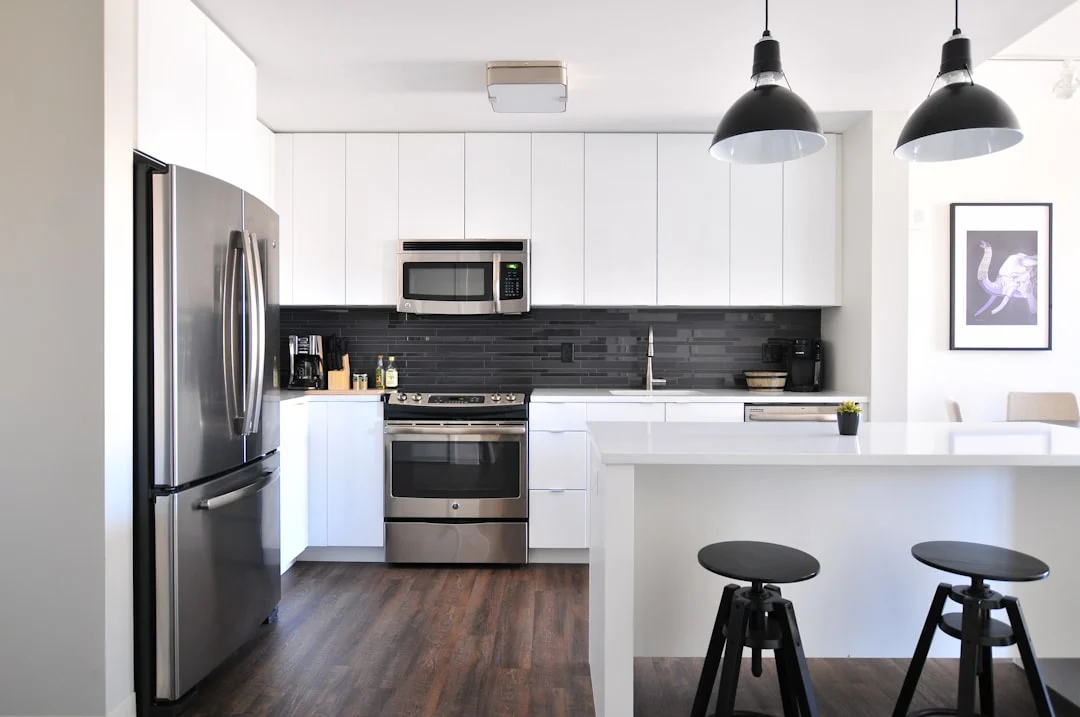
Water rings, fingerprints, and scuff marks on pristine surfaces
modern kitchen design has a particular love affair with materials that show every imperfection. Marble countertops are stunning but turn into a map of daily life — water rings from glasses, oil spots from cooking, etch marks from knives, and the occasional ring left by a warm plate set down without a trivet. matte black fixtures look sleek until they become fingerprints magnets. High-gloss cabinetry reflects light beautifully in photos but reveals every smudge with unforgiving clarity.
When selecting materials for your modern kitchen, consider how much maintenance you’re actually willing to do. Quartz countertops offer the clean, contemporary look of stone without the ongoing sealing and careful cleaning that marble demands. Satin-finish stainless steel appliances hide fingerprints better than polished models. A slab backsplash in a matte porcelain or textured material can give you the seamless modern aesthetic while resisting stains more readily than glossy subway tile.
The key is matching your material choices to your household’s actual routine. If you cook daily and have kids, a quartz surface that looks almost as refined as marble but doesn’t require special care is likely worth the investment over genuine stone. If your kitchen sees lighter use, you can afford to lean into more delicate materials.
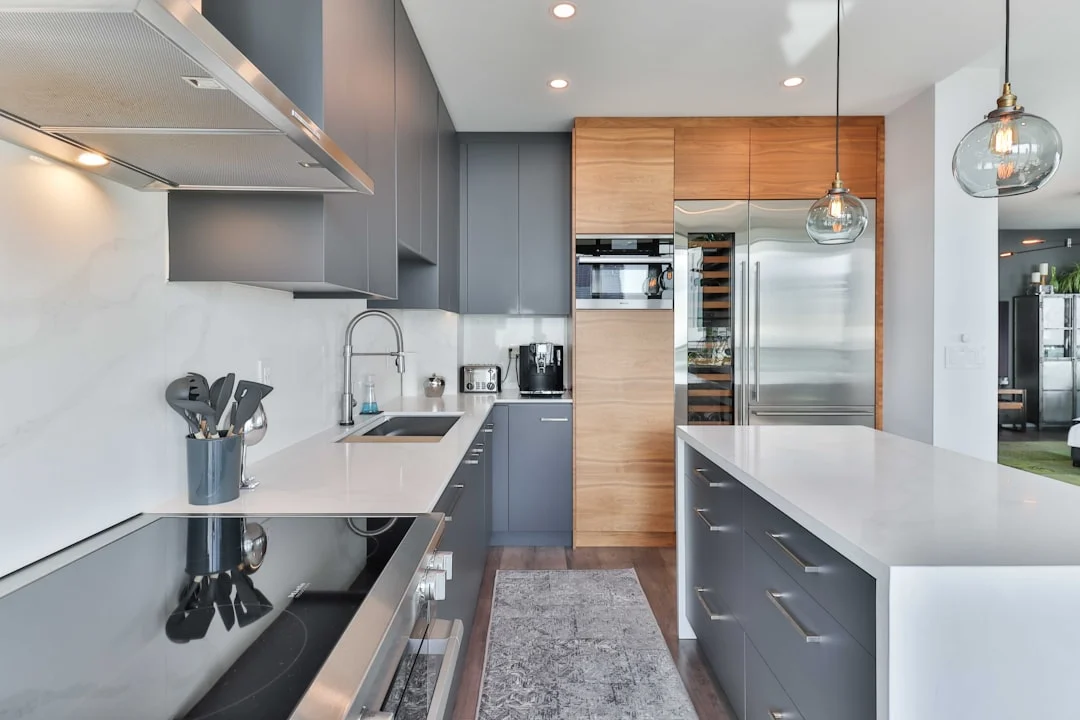
Open shelving that looks airy but demands constant maintenance
Beyond the visual-first trap and material sensitivity, open shelving in modern kitchens introduces a specific set of daily challenges. Dust settles on exposed shelves whether you notice it or not. Items that get moved around frequently — spices, cooking oils, everyday utensils — create visual noise when their containers aren’t perfectly matched. And unlike closed cabinets, which hide your kitchen’s activity behind doors, open shelving keeps everything visible at all times.
Consider a hybrid approach for the most practical result: use open shelving for items you want to display and reach frequently, such as mugs, decorative bowls, or cookbooks. Reserve closed cabinets for appliances, bulkier items, and anything that doesn’t need to be seen daily. A common configuration in modern farmhouse kitchens — which blend clean lines with warmth — is upper open shelves paired with lower closed cabinetry, giving you visual breathing room without sacrificing storage efficiency.
Lighting also plays a crucial role. Modern kitchen lighting isn’t just about choosing pendant fixtures or recessed lights that look good; it’s about illuminating your surfaces in ways that minimize the appearance of small imperfections while making the space functional for actual work. Task lighting over countertops and under-cabinet strips reveal what you’re doing, while ambient lighting softens the overall feel.
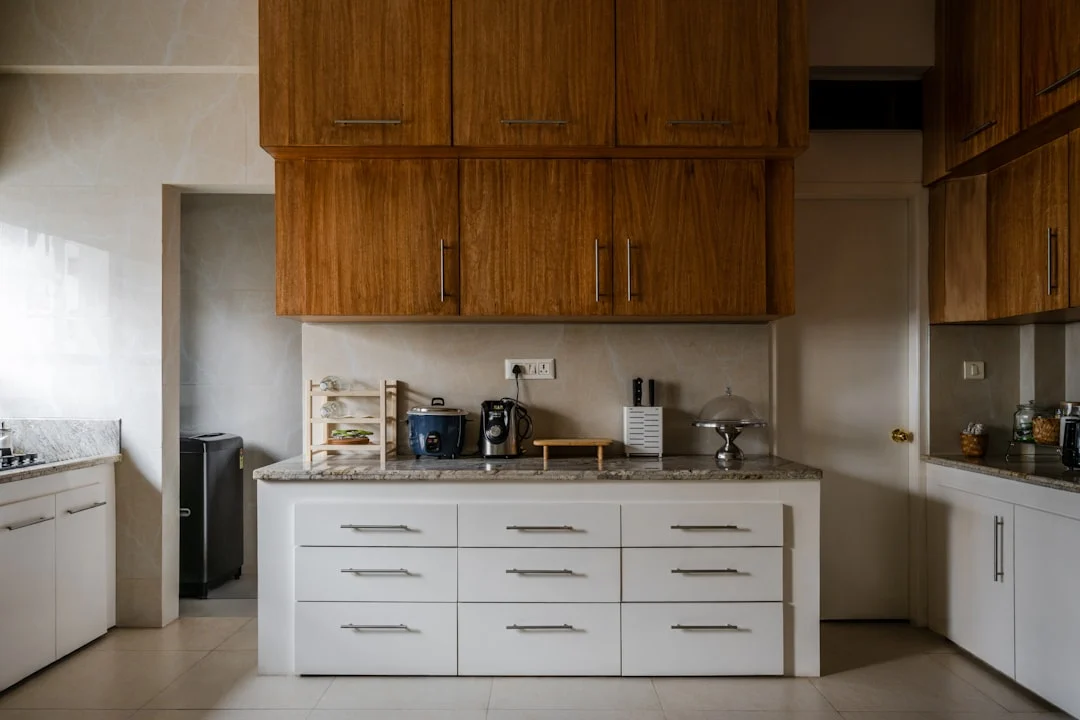
The takeaway is straightforward: a modern kitchen that works at daily life isn’t one that looks perfect — it’s one where every design choice accounts for how people actually use the space. That means choosing materials that can handle your routine, organizing storage around what you need to see versus what you need to hide, and accepting that a lived-in modern kitchen is more attractive than an empty one.
The kitchen countertop is where modern decor meets the daily grind of cutting vegetables, setting down hot pans, and wiping away the inevitable spills. It’s the surface that gets the most use in any room, which means your choice between aesthetics and practicality will determine whether your kitchen looks good or actually works.
Marble-look quartz vs. natural marble: when to invest and when to save
Natural marble brings unmistakable character—each slab has unique veining, subtle color variations, and a cool surface that feels luxurious under your hands. But marble is porous, so it absorbs red wine, lemon juice, and even cooking oils unless sealed regularly. Etching marks from acidic foods are part of the marble experience; they add to its lived-in charm but won’t look right in every modern kitchen style.
Quartz with a marble look gives you similar visual appeal without the maintenance headaches. Engineered quartz is non-porous, resists staining, and doesn’t require sealing. The trade-off is that quartz patterns tend to repeat across slabs, so your counters might lack the one-of-a-kind quality of genuine stone. For a modern kitchen decor scheme where consistency matters—think matching an island to perimeter counters—quartz often wins on practicality.
Here’s the decision framework: if you cook with acidic ingredients daily and don’t mind routine maintenance, natural marble adds investment value that resonates in resale. If your kitchen sees heavy use from family members who leave mugs out or set down hot pans without trivets, quartz protects your budget and your countertops equally well.
Matte finishes hide smudges but show water spots—knowing the trade-off
Matte surfaces have become a cornerstone of modern kitchen decor because they create a soft, sophisticated look that doesn’t compete with other design elements. Matte black hardware against white quartz, for example, offers clean contrast without the glare of polished finishes.
The catch is what matte hides versus what it reveals. Fingerprints and smudges disappear easily on matte surfaces, which matters in a kitchen where hands touch everything. But water spots become more visible after washing dishes or wiping counters. In households with hard water, this means daily drying becomes part of the routine rather than an occasional chore.
Consider your local water quality and cooking habits before committing to matte finishes on countertops. If you run a dishwasher regularly and have a spotless sink area, the trade-off works in your favor. For homes with hard water or families where everyone leaves their coffee mug out, a light-touch satin finish might give you the modern look without the constant buffing.
Edge profiles and thickness that affect both look and durability
The edge of your countertop is one of the most overlooked elements in modern kitchen decor. A simple square edge reads clean and contemporary, but it also shows every chip and wear mark along the perimeter where knives and pots meet the surface. A beveled or eased edge softens this look while hiding minor damage better.
Thickness matters too. Standard 2cm quartz or granite looks fine in most applications, but 3cm slabs carry a more substantial presence that reads as higher-end. The difference shows up visually—the thicker edge gives your countertop a grounded, intentional feel rather than the floating appearance of thinner surfaces. For modern kitchen decor where every element should feel deliberate, 3cm edges often justify their cost.
Consider how you actually use your counters during cooking. If you frequently cut directly on the surface or set down heavy pots near the edge, a thicker countertop with a reinforced edge profile will last longer without requiring repairs. The visual upgrade is secondary to the functional benefit in these cases.
Cabinetry, Hardware, and Finishes That Coordinate Without Looking Matchy-Matchy
The biggest mistake homeowners make when updating their kitchen is treating every surface as part of a coordinated set. White oak cabinets get paired with white quartz counters, brushed nickel fixtures, and a matching subway tile backsplash — and suddenly the room feels like a showroom display rather than a space you actually use. The trick to modern kitchen decor that holds up over time is letting finishes talk to each other without repeating themselves.
White oak cabinetry with matte black or brushed brass hardware
White oak has quietly become one of the most versatile cabinet materials in contemporary kitchens, and for good reason. Unlike painted cabinets that demand a specific paint color family, white oak works with warm, cool, and neutral palettes alike. The wood grain adds visual texture without overwhelming clean lines, which matters when you’re trying to decorate a modern kitchen without looking sterile.
Pairing white oak with matte black hardware creates contrast that reads as intentional rather than accidental. Think slim bar pulls on upper cabinets paired with slightly larger handles on lower doors — the hardware does more heavy lifting than people realize in tying together finishes like faucet bodies, lighting fixtures, and appliance trim. Brushed brass offers a warmer alternative that pairs especially well with wood tones and stone surfaces. The choice between matte black and brushed brass isn’t about following a trend; it’s about what complements the rest of your material palette.
Mixing painted islands with wood-toned perimeter cabinets
Painted islands have been so popular that they risk becoming their own cliché. The key is choosing colors that feel related to, not identical with, your surrounding finishes. A pale sage or navy island reads as intentional against white oak perimeter cabinets, while a crisp off-white painted island can look flat and dated if the undertones don’t harmonize.
Consider how much visual weight you want the island to carry. If your kitchen gets heavy traffic — meaning it’s where meals are prepped, homework happens, and casual snacks get devoured — a painted island is worth the extra maintenance only if you’re committing to touch-ups. For most homeowners renovating on a moderate budget, wood-tone perimeter cabinets with a contrasting painted or stained island tend to age more gracefully than fully matching sets.
Hardware can bridge this gap. When your island and perimeter cabinets use different materials or finishes, consistent hardware placement — whether pulls centered vertically on doors or mounted flush on drawer fronts — creates visual rhythm that prevents the look from feeling disjointed.
Hardware trends for 2025: slim pulls versus integrated finger grips
The hardware conversation in modern kitchens has shifted toward two distinct directions, and each serves different practical needs. Slim bar pulls offer a clean horizontal line that works well on both upper and lower cabinets, especially when installed at consistent heights across the room. They’re forgiving of installation errors and relatively easy to swap out if your taste evolves.
Integrated finger grips — recessed channels cut into cabinet doors or thin metal strips mounted beneath them — create a flush, minimalist look that appeals to homeowners who want modern kitchen decor ideas on a budget without buying expensive new cabinets. The trade-off is that they work best on flat-panel doors and drawers; ornate raised panel doors tend to look awkward with finger grips.
Both approaches pair well with the broader trend toward concealed hinges and soft-close mechanisms, which keep the visual focus on materials rather than exposed hardware. If your kitchen will see heavy use from kids and pets, matte finishes in either black or brass tend to show fingerprints and scratches less noticeably than polished surfaces.
Lighting That Defines Modern Style Without Overpowering the Space
Lighting is where most modern kitchens either nail it or miss the mark entirely. Get it right, and your space feels intentional and warm even at midnight when you’re hunting for a snack. Get it wrong, and you’ve got a showroom that looks great in photos but leaves you squinting over your cutting board.
Pendant lighting over islands: sizing and hanging height rules
The island pendant is the showpiece of most modern kitchens, which means it’s also the easiest to mess up. The biggest mistake people make? Hanging lights too high or picking fixtures that are either too small to register or so oversized they dominate the room.
For sizing, aim for a fixture diameter that’s roughly one-third to one-half the width of your island. An island that’s 8 feet wide can handle two pendants each around 15 to 20 inches across without feeling cramped. The rule of thumb on height is to hang them 30 to 36 inches above the countertop surface — not from the ceiling. That’s why you need to measure down, not up.
Modern kitchens tend toward clean lines and understated materials, so consider matte black or brushed brass finishes that won’t compete with other hardware in the room. If your faucet, cabinet pulls, and appliance handles are all stainless steel, a black pendant will ground the space without adding visual noise. Pair those fixtures with dimmable LED bulbs in the 2700K to 3000K range for warmth that doesn’t feel yellow or dated.
Under-cabinet LEDs for task visibility without visual clutter
This is where modern kitchen decor earns its practicality. Under-cabinet lighting solves the shadow problem that plagues most kitchens — when your body blocks overhead light while you’re working at the counter, you need a secondary source positioned right above the workspace.
LED strip lights have become the go-to for a reason: they’re nearly invisible once installed and provide even illumination along the entire length of your counters. Look for options with adhesive backing that mount directly to the underside of your cabinets, and choose ones with a diffuser to eliminate hot spots. The modern preference is toward linear strips rather than puck lights because they don’t create that dotted pattern on your countertop.
Color temperature matters here too. If your pendant lights are warm white (2700K), keep your under-cabinet lighting in the same family — somewhere between 3000K and 3500K works well for task visibility without feeling clinical. Match them to your cabinet finish: matte black fixtures pair nicely with warmer LEDs, while stainless steel appliances look better with slightly cooler options.
Layering ambient, task, and accent lighting in a modern kitchen
A successful modern kitchen doesn’t rely on one type of light — it uses three layers working together. Ambient light comes from overhead sources like recessed cans or your main ceiling fixture. Task light sits where you actually work: under cabinets, above the sink, and inside dark cabinetry. Accent lighting adds visual interest — think linear strips running along open shelving or a small spotlight highlighting artwork on an exposed wall.
The trick to layering without clutter is zoning. Put your lights on separate circuits so you can control different layers independently. You want the ability to use just under-cabinet LEDs for evening prep, or turn on the pendant and accent lights while keeping the overhead recessed cans off during dinner cooking. Modern dimmer switches — especially smart ones that respond to phone apps or voice commands — make this kind of flexibility practical rather than complicated.
For a truly cohesive look, keep your light sources consistent in style even if they serve different purposes. If you’ve chosen geometric pendant lights over the island, consider matching geometric recessed cans overhead. The repetition of shapes creates visual rhythm without demanding attention — which is exactly what modern kitchen decor should do.
Open Shelving Versus Closed Cabinets for Modern Kitchens
The open shelving trend has been dominating modern kitchen decor for years, but it’s worth asking whether those Instagram-worthy displays actually survive daily life. The reality is that open shelves look stunning when they’re styled and nearly invisible when they’re full of everyday clutter.
When Open Shelving Works: Displaying Cookbooks, Ceramics, and Plants
Open shelving succeeds when you have a specific reason to display rather than hide. Think about the items you actually use regularly — a set of cast iron skillets looks as functional as it does decorative on open racks above an island. Cookbooks that get referenced during meal prep, ceramic mixing bowls you reach for weekly, and even a small potted herb garden near the sink all serve dual purposes.
The key is curation over accumulation. A well-styled shelf with five items reads as intentional; ten items on the same shelf looks like storage you ran out of room for. Consider using open shelving in zones where visual appeal matters most: above the prep counter, flanking a range hood, or integrated into an island end wall.
The 80/20 Rule: How Much Closed Storage You Still Need
Modern kitchen design rarely benefits from going completely open. Most homeowners find that dedicating roughly 80% of their storage to closed cabinets and 20% to open shelving creates a workable balance. This ratio gives you room for display without sacrificing the hidden storage needed for less attractive items — things like food storage containers, appliance cords, bulk supplies, and seasonal dishware.
Closed cabinets also handle practical concerns that open shelves struggle with: dust, grease splatter from cooking, and the visual noise of mismatched pantry items. If you have young children or cook frequently, closed storage protects your investment in modern kitchen decor by keeping surfaces cleaner and more organized longer.
Hybrid Approaches: Glass-Front Cabinets That Combine Both Styles
For homeowners torn between open and closed options, glass-front cabinets offer a compelling middle ground. They provide the visual lightness of open shelving while protecting contents from dust and splashes. Modern kitchen design increasingly favors mixed materials — think matte black fixtures paired with white oak cabinetry featuring frosted or clear glass inserts.
Consider installing glass-front cabinets in your most visible zones (upper cabinets near eye level, island fronts) and reserving solid doors for lower storage where items are accessed less frequently. This approach works particularly well with modern kitchen color schemes that use contrast strategically: dark lower cabinets with lighter upper ones create visual depth regardless of whether those uppers have glass doors.
Practical Trade-Offs to Consider
- Maintenance: Open shelves require weekly dusting and more frequent organization. Closed cabinets need occasional deep cleaning inside but otherwise stay out of sight.
- Cookbook visibility: If you use cookbooks regularly, open shelving near your prep area saves time searching through drawers and cabinets.
- Material durability: Modern kitchen decor choices like quartz countertops and stainless steel appliances pair well with either style, but matte finishes show fingerprints more prominently on open surfaces.
- Budget impact: Open shelving typically costs less than full cabinetry since you’re installing fewer cabinet boxes. However, the hardware (brackets, rails) and styling items add up over time.
The most practical modern kitchen decor strategy isn’t choosing between open and closed — it’s selecting where each works best for your cooking habits, family size, and design preferences. A hybrid approach often outperforms going all-in on either extreme.
Budget Trade-Offs: Where to Splurge and Where to Save in Modern Decor
Modern kitchens have a way of turning into design experiments gone wrong when you try to do everything at once. The trick isn’t picking the trendiest materials—it’s understanding which ones deserve your money and which ones are better left as affordable updates.
Countertops and Appliances as Long-Term Investments
Your countertop material is a decision that will outlast most trends, so spend time here. Quartz has largely replaced marble for daily use because it handles heat, stains, and scratches without demanding special maintenance. For a family that cooks regularly, quartz pays for itself in avoided repairs and replacement costs within five years.
Appliances follow the same logic. A stainless steel or panel-ready refrigerator will anchor your kitchen’s look for a decade. The difference between a $1,500 and $3,500 model often comes down to features you may never use—ice dispensers, smart screens, dual compressors—rather than actual performance. Choose what fits your cooking habits, not the catalog.
Decor Accents That Refresh Without Breaking the Bank
This is where most people overspend. Backsplashes, hardware, and lighting are the levers that transform a kitchen’s personality without committing to permanent changes.
- Backsplashes: A slab of quartz or porcelain in your countertop color creates a clean, modern look for less than full-height tile. Subway tile remains reliable because it’s available at every price point and never feels temporary.
- Hardware: Swapping cabinet pulls and knobs costs under $200 for most kitchens and changes the feel dramatically. Matte black fixtures work with nearly every modern kitchen color scheme, while brushed brass adds warmth without overwhelming a minimalist space.
- Lighting: Pendant lights above islands or recessed LEDs in cabinets add layers of illumination that make the room feel intentionally designed rather than just functional. The fixture itself is usually less expensive than people expect.
Paint and Finishes That Deliver Modern Style Without the Cost
Cabinetry often represents 40 to 50 percent of a kitchen budget, but you don’t always need new cabinets to achieve a modern look. Paint is one of the most underrated tools in this category. A single coat of warm white or deep charcoal on existing cabinets can make them look custom-built, especially when paired with updated hardware.
White oak cabinetry has become a defining material for modern kitchens because it bridges clean lines with warmth. If full white oak cabinets are beyond budget, consider using it selectively—on an island, open shelves, or as a door treatment on one section of your kitchen. The visual impact scales with the amount you use.
Finishes matter more than people realize. A modern kitchen feels sterile when every surface has the same level of reflection. Mix matte cabinets with glossy countertops, brushed hardware with polished stone, and you get depth without clutter. This layering effect costs almost nothing but makes a budget-friendly renovation look significantly more expensive.
Making Modern Kitchens Feel Warm, Not Sterile
The difference between a magazine-worthy kitchen and one that actually feels like your home often comes down to temperature. All-white slab cabinets with polished quartz countertops and stainless steel appliances read as crisp in photos, but they can turn into a cold room after a few weeks of real life — where coffee mugs leave rings, kids bump the island, and dinner prep happens at 6 PM instead of during golden-hour content creation.
Warming up a modern kitchen doesn’t require abandoning clean lines or introducing rustic elements. It’s about layering in texture, color, and material variety so the space breathes without looking cluttered. The goal is an environment that photographs well but functions better than it looks.
Textural layers: wood tones, woven baskets, and natural materials
Wood introduces warmth because it carries history — whether you’re using white oak cabinetry or a butcher block island top, the grain pattern breaks up flat surfaces in a way that polished stone never can. The trick is choosing wood tones that complement rather than compete with your primary palette. A kitchen with matte black hardware and light gray cabinets looks complete when you add warm walnut accents; try them through open shelving brackets, bar stools, or a single statement piece like a live-edge cutting board left on the counter.
Baskets are one of the most practical textural additions available. A woven seagrass basket tucked into an open shelf doubles as storage for bread rolls or produce while adding visual weight that prevents shelves from feeling empty. Linen dish towels in muted earth tones — sage, mustard, or stone gray — hung on a simple rod near the sink or stove break up hard surfaces and signal use rather than display.
Consider material pairing as a decision framework: for every cool surface you introduce (quartz, glass backsplash, metal fixtures), add one warm counterpart. A slab of calacatta marble looks stunning against white oak cabinets because the veining echoes organic movement without overwhelming the space. Stainless steel appliances feel clinical when paired with chrome finishes; they read as intentional and modern when combined with brushed nickel or matte black hardware.
Color schemes that add personality to minimalist kitchens
Minimalist doesn’t mean monochrome. A modern kitchen can stay restrained while incorporating a color story that reflects your preferences without tipping into maximalism. The key is establishing a hierarchy: one dominant neutral, one secondary tone, and one accent color that appears in small doses.
Take the popular white-and-gray kitchen as an example. Instead of painting every surface the same shade, layer whites — warm cream cabinets against cool gray countertops with white subway tile creates depth without visual noise. Then introduce a secondary color through your backsplash or island finish. A navy-blue painted island against white perimeter cabinets is a classic modern kitchen move that adds personality without demanding attention.
For those hesitant about committing paint, consider color through hardware and lighting fixtures instead. Matte black pendant lights over an island, brass cabinet pulls on gray cabinetry, or a green-tinted glass backsplash tile can shift the entire feel of the room for significantly less investment than resurfacing cabinets. Modern kitchen color schemes are increasingly incorporating earth tones — olive, terracotta, and deep blue work well with both contemporary and modern farmhouse kitchens because they ground the space without feeling heavy.
The trade-off to keep in mind: darker colors on large surfaces (like a dark island or full-height backsplash) can make a kitchen feel smaller, which may not suit every household. If you’re working with limited square footage, lean toward color through accessories and accent pieces rather than painting walls or cabinets entirely.
Small decor choices that prevent clinical vibes
The details often overlooked in modern kitchens are precisely what keep them from feeling like showrooms. Plants deserve particular attention here — they’re not just decorative but functional, adding life to spaces that might otherwise feel too controlled. A few well-placed options work better than a collection of mismatched pots: herbs on the windowsill, a snake plant in the corner near the refrigerator, or a trailing pothos from an open shelf above the stove.
Art and wall decor don’t belong exclusively in living rooms. A single framed print — even something small like a botanical illustration or abstract piece — hung at eye level on a kitchen wall breaks up what would otherwise be an expanse of cabinetry and backsplash. The key is scale: large walls need pieces that make a statement without overwhelming the room, while smaller spaces benefit from one or two carefully selected works rather than a gallery wall.
Textiles are another underutilized tool for adding warmth. A simple runner rug in front of the sink or prep area introduces color and texture to what is typically a hard-surface zone. Linen curtains on kitchen windows, even if they cover just a small pane, soften light coming through while adding fabric that complements other textiles in adjacent rooms.
Lighting deserves its own mention because it directly affects how warm or cold a kitchen feels. Modern kitchen lighting has moved away from purely functional recessed lights toward layered approaches — pendant lights over islands, under-cabinet task lighting for cooking surfaces, and accent lighting that highlights architectural details or decor pieces. A mix of warm white (2700K–3000K) bulbs across your fixtures creates a more inviting atmosphere than uniform cool white lighting, even in kitchens with a contemporary aesthetic.
The most important principle: don’t overthink the first layer. Start with your base — cabinets, countertops, backsplash, and primary lighting — then add warmth through accessories you can move or replace as your preferences evolve. This approach protects against trend fatigue while giving you room to experiment with modern kitchen decor ideas on a budget.
Ready to plan your modern kitchen refresh? Download our free checklist of material trade-offs and layout decisions so you can choose decor that looks beautiful today and works for daily life tomorrow.
Related posts:

Tagged: Contemporary Kitchen Ideas, Home Decor, Kitchen Material Trends, Minimalist Kitchen Decor, Modern Farmhouse Kitchen, Modern Kitchen Color Schemes, Modern Kitchen Decor, Modern Kitchen Design