

Best Indoor Plants for Living Room Decor: Match Your Species to Your Space

Most living room plant guides start with looks—Monstera, Fiddle Leaf Fig, the usual suspects—and leave readers wondering why their corner plant is yellowing or why the cat keeps shredding it. The real secret to a thriving, decor-worthy living room isn't following trends; it's matching plants to your actual room conditions. Light levels, pet habits, traffic patterns, and humidity all matter more than whether a plant looks expensive in a magazine photo. This guide walks you through which species survive (and thrive) in your specific space so you can pick plants that enhance your decor without becoming another dead leaf on the floor.
Light Level Is Your First Filter—Not Aesthetics
Most living room plant guides start with what looks expensive—the dramatic split leaves of a Monstera, the architectural height of a Fiddle Leaf Fig—and work backward to care requirements. That approach puts you at risk of buying a plant that matches your Pinterest board but fights against your actual room. Light level should come first because it dictates survival before decor does.
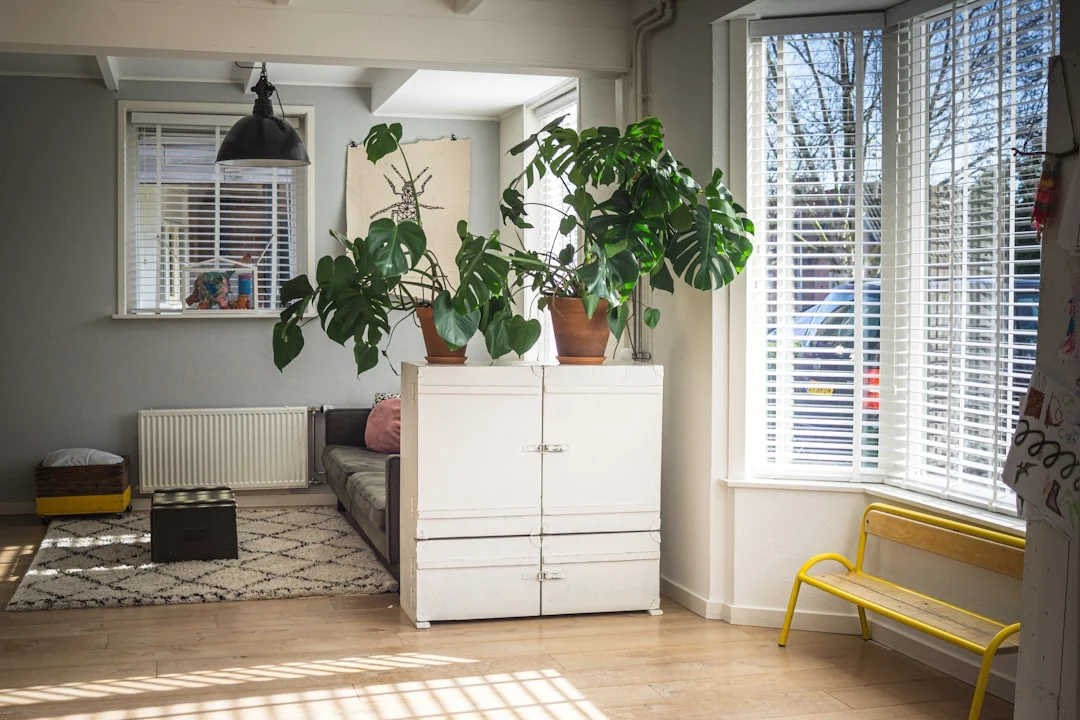
Walk through your living room during the brightest part of the day and notice where shadows fall. A south-facing window might bathe one corner in direct sun while another spot stays cool and dim even at noon. Plants that thrive near a sunny window will often struggle just six feet away in the same room.
Bright Indirect Light: Monstera Deliciosa and Ficus Lyrata
Monstera deliciosa and Fiddle Leaf Fig are the poster children of living room decor for a reason—they read as intentional and expensive. But both species need consistent bright indirect light, which typically means within three to five feet of a window where sunlight is filtered through sheer curtains or reflected off a light-colored wall rather than hitting leaves directly.
If you place either plant in a spot that gets too much direct sun, the leaves will develop brown crispy patches. Too little and they’ll stretch toward the light, losing their compact shape. Both also respond to changes in position, so resist the urge to rotate them frequently or move them around for different occasions.
Low-Light Survivors: Snake Plant, ZZ Plant, and Pothos
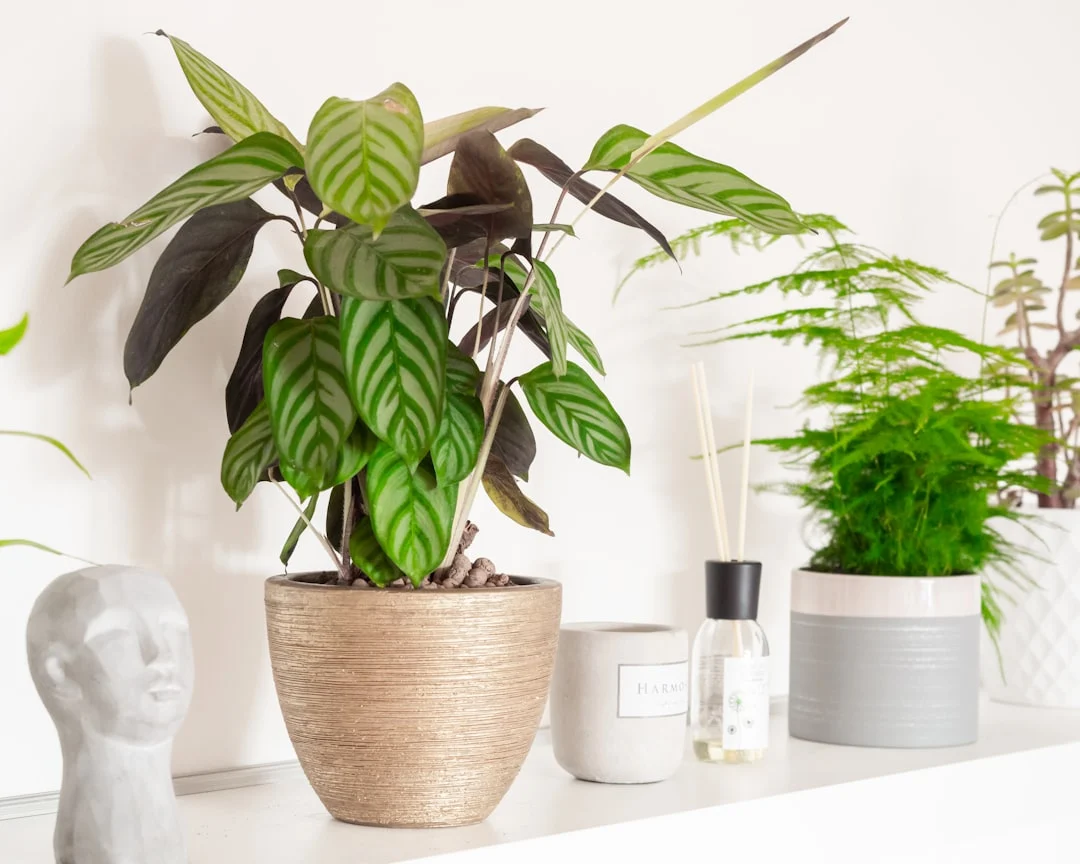
The corner of your living room that feels too dark for most plants is actually a sweet spot for species like the Snake Plant (Sansevieria), ZZ Plant (Zamioculcas zamiifolia), and Pothos. These handle less than four hours of filtered sun per day without losing their foliage or slowing dramatically.
Snake Plants especially tolerate low light because they store water in their thick leaves, making them forgiving if you forget to water during a busy week. ZZ Plants are similar in habit but have an even slower growth rate, which means less pruning and fewer opportunities for things to go wrong. Pothos gives you trailing flexibility—you can let it cascade from a shelf or let it climb a small trellis—and its heart-shaped leaves work with almost any decor style.
A common mistake is thinking low-light plants don’t need light at all. They do, just less of it. If your corner plant starts losing color or growing smaller leaves over several months, it’s not necessarily dying—it may be asking for a slightly brighter spot or a seasonal adjustment as winter light levels drop.
Direct Sun Challenges: Boston Ferns and Calatheas
If your living room features large south-facing windows that flood the space with direct sunlight, you might assume every plant in that zone will be happy. That’s not always true for humidity-loving species like Boston Ferns and Calatheas.
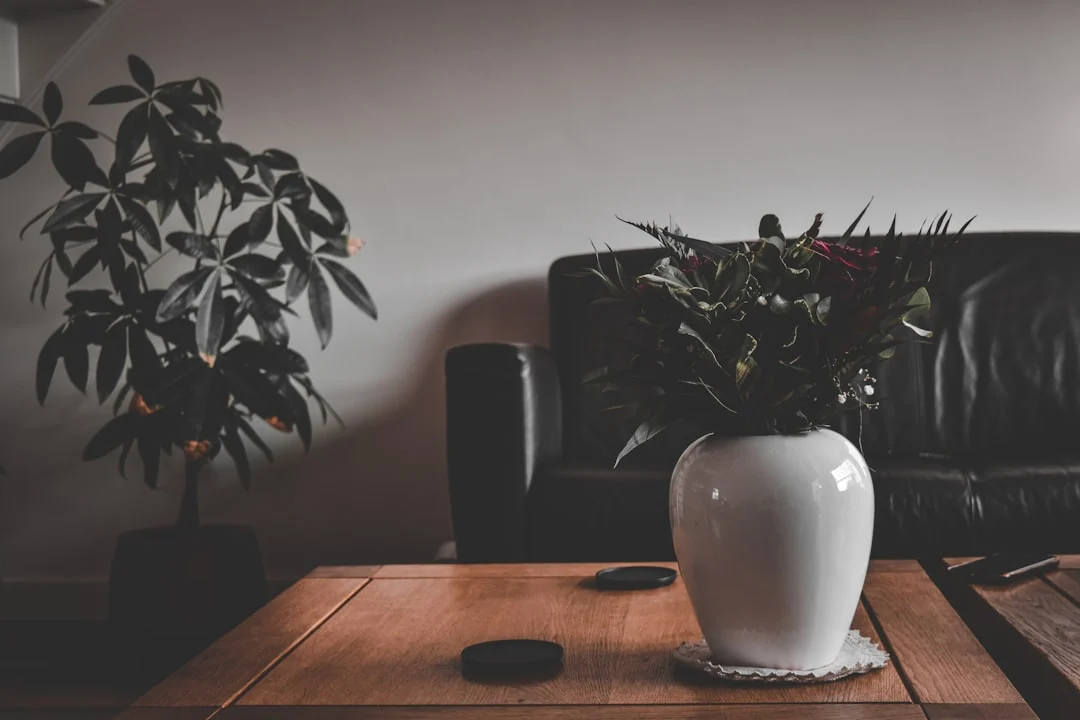
Boston Ferns look lush when they’re healthy, but their delicate fronds scorch quickly under unfiltered sun unless the surrounding air stays moist. The same applies to Calatheas, whose striking patterned leaves can curl and brown at the edges when exposed to too much direct light or too little humidity.
The solution isn’t necessarily to move them away from the window entirely. Instead, position them a few feet back where filtered light reaches them, or place them near other plants that create a microclimate of higher humidity. A small humidifier nearby can make the difference between a calathea that thrives and one that slowly turns crispy.
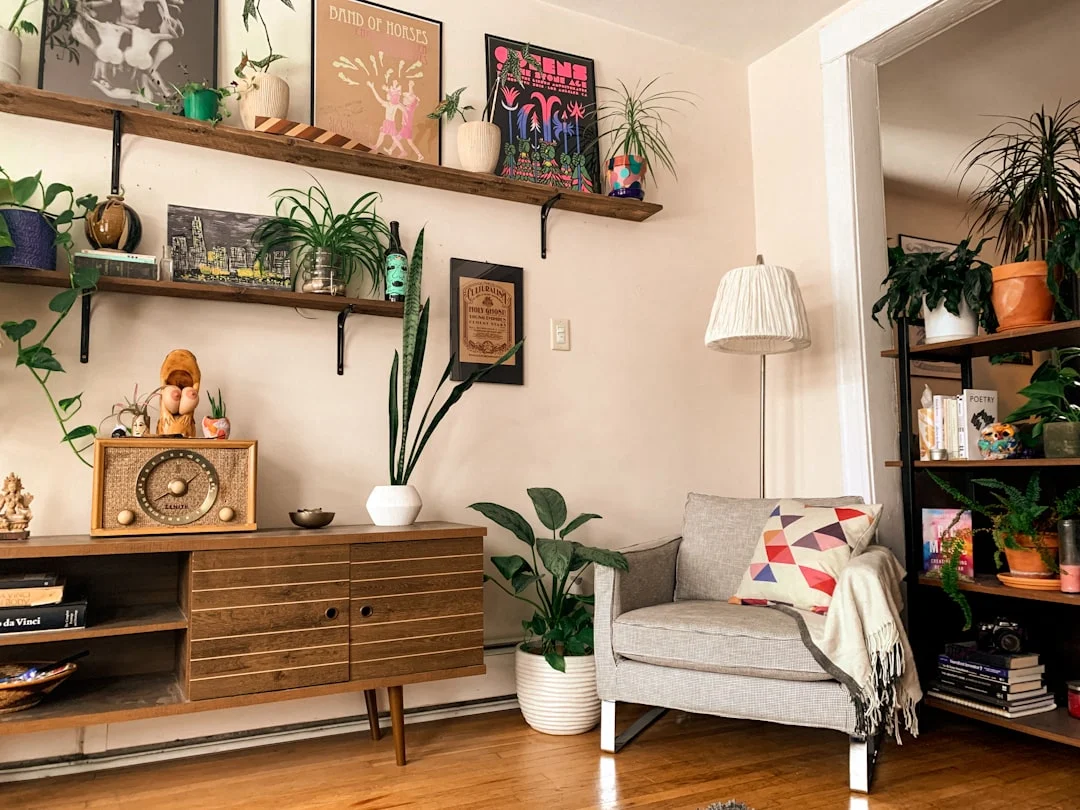
If your living room has multiple windows with different orientations, you don’t need to buy different plants for each—you just need to match what you already have to where it fits best. A Monstera near a west-facing window will appreciate the afternoon light more than one tucked in the east corner. A Snake Plant behind a bookshelf might not get the most dramatic view but will outlast almost every other plant on that same shelf.
Pet-Safe Picks That Won’t End Up as Chewed Stems
If your living room doubles as a playground for cats and dogs, the difference between a thriving plant and a pile of shredded fronds often comes down to one thing: toxicity. The best indoor plants for living room decor with pets aren’t just pretty—they’re survivable when curious paws or sharp claws come into contact with them.
The safest options: Spider Plant, Boston Fern, and Calathea
Spider plants (Chlorophytum comosum) are about as pet-proof as houseplants get. They’re non-toxic to both cats and dogs, which means even if your pup decides to take a nibble out of a dangling stem or your cat swats at the flowerlets, there’s no chemical reaction—just a minor snack. Pair this with their reputation for tolerating inconsistent watering and indirect light, and you’ve got one of the most forgiving low-maintenance indoor plants for living room corners.
Boston ferns (Nephrolepis exaltata) come in at close second. They’re completely safe if ingested and add softness to any space with their feathery fronds. The trade-off is humidity: they dry out faster than most living room plants, especially near heating vents or air conditioning units. If your living room runs warm and dry, consider placing a Boston Fern on a humidifier base or grouping it with other moisture-requiring species to create a microclimate.
Calathea (the broad category covering multiple species like C. ornata and C. lancifolia) are another solid choice for pet owners. Their striking leaf patterns—stripes, dots, and marbled greens—make them work as decor-friendly plants in living rooms without sacrificing safety. They’re non-toxic to cats and dogs alike. One thing to note: calatheas can be particular about water quality. Tap water with high chlorine or fluoride content may cause brown leaf tips, so filtered or distilled water will keep them looking their best.
Toxic but manageable: Peace Lily and Rubber Plant
Not all toxic plants are automatic deal-breakers for pet owners. The key question is placement, not just chemistry. Peace lilies (Spathiphyllum) contain calcium oxalate crystals that cause mild to moderate irritation if chewed—think drooling, pawing at the mouth, and some discomfort—but they’re rarely serious enough to send a dog or cat to emergency care. A peace lily on a living room side table, out of reach of most pets, is essentially safe by design.
Rubber plants (Ficus elastica) are similarly manageable. Their sap is mildly toxic and can cause skin irritation in some animals if ingested in quantity, but they’re not among the worst offenders. The real advantage of a rubber plant for living room decor is its scale: tall, upright, and glossy-leaved, it fills vertical space without sprawling across the floor where pets might knock it over. Position a rubber plant on a sturdy pedestal or shelf to minimize contact risk.
The worst offenders for pet owners
Monstera deliciosa is the poster child for living room plants—and also one of the most dangerous when chewed. Its leaves contain calcium oxalate crystals that embed in a pet’s mouth and throat, causing immediate pain, swelling, and sometimes difficulty breathing. A Monstera on the floor is essentially a hazard zone. If you love the look but have an active dog or cat, consider mounting it high on a wall shelf or using a tall planter that lifts the plant beyond reach.
Other plants to watch include philodendrons, dieffenbachias, and dracaenas. All contain calcium oxalate crystals, all can cause similar symptoms when ingested, and all look great in living room settings. The difference between a Monstera disaster and a Monstera success is usually just height and placement.
When deciding which plants to bring home for your living room, think about your pet’s behavior first. Cats tend to nibble at leaves and stalks; dogs are more likely to knock over pots or chew on exposed soil. If you have a dog that treats floor-level plants like chew toys, prioritize tall or hanging species. If your cat is more interested in the foliage itself, keep toxic plants elevated but accessible enough for them to inspect from below without causing damage.
Tall Plants for Corners vs Compact Options for Small Spaces
Vertical Presence: Ficus elastica (Rubber Plant) and Fiddle Leaf Fig Add Height Without Sprawling
If your living room has empty corners that swallow up furniture without looking intentional, tall plants are the simplest fix. The Rubber Plant and Fiddle Leaf Fig both grow upward with a single trunk and minimal lateral spread, so you can place them near walls or behind sofas without worrying about roots encroaching on foot traffic. A mature Ficus elastica reaches 6 to 8 feet indoors, while a healthy Ficus lyrata typically tops out around 7 feet — both tall enough to anchor a corner but narrow enough to leave room for floor lamps and coffee tables.
The trade-off is that these plants demand better light than most living rooms provide. A Fiddle Leaf Fig in a dim corner will eventually drop leaves and look thin, no matter how much you water it. Position them within 3 to 5 feet of a window, or consider the Rubber Plant as your fallback: it tolerates slightly lower light and forgives occasional neglect better than its more finicky cousin.
Trailing Options: Pothos and Philodendron Create Visual Interest on Shelves, Mantels, or Hanging Planters
When floor space is tight — say you have a small apartment living room with a compact sofa and few side tables — vertical volume still matters. Trailing plants let you grow upward from shelves, mantels, or suspended planters without using precious square footage. Pothos (Epipremnum aureum) is the workhorse of this category: it grows fast, handles low light, tolerates irregular watering, and sends vines 3 to 6 feet long that cascade naturally off any surface.
Philodendron hederaceum offers similar behavior with slightly glossier leaves and a more delicate appearance. Place one on a bookshelf above the TV, hang two from ceiling hooks near a window, or tuck one into a corner planter where its vines can spill toward the floor without crowding your seating area.
Scale Mistakes to Avoid
Picking the wrong size plant is one of the most common decor errors, and it’s often the difference between a room that feels curated and one that feels cluttered. A 7-foot Monstera deliciosa in a studio apartment or small living room will dominate the space — its massive leaves leave little room for other elements to breathe. Conversely, a tiny Spider Plant sitting alone in a large corner looks lost and underwhelming.
Use these rules of thumb when choosing:
- Tall plants (6 feet or more) work best in corners where they can reach toward the ceiling without brushing furniture
- Medium plants (2 to 4 feet) fit beside sofas, on side tables, or as standalone focal points in open areas
- Compact and trailing plants (under 2 feet tall with vines extending outward) are ideal for shelves, mantels, hanging displays, and small rooms where floor space is at a premium
If you’re torn between purchasing one statement plant or several smaller ones, consider the scale of your seating area. A living room with a large sectional can handle a tall Fiddle Leaf Fig without feeling overwhelming, while the same plant in a room with two chairs and an armchair will look out of proportion. Match plant size to the visual weight of your furniture — not just the square footage of the room.
Humidity and Maintenance Tolerance for Real-Life Households
Many living room plant guides lead with aesthetics—Monstera leaves, fiddle leaf figs, rubber plants—but the real question is whether your home’s conditions will keep those plants alive beyond the first season. Before you commit to a species, consider how much light, humidity, and attention your living room actually provides.
Drought-Tolerant Species
Snake Plant, ZZ Plant, and Pothos survive weeks without water—ideal for forgetful owners or frequent travelers. These plants evolved to store moisture in their leaves or rhizomes, so they forgive occasional neglect rather than demand strict schedules. A Snake Plant can sit dry for 2-3 weeks in winter months without showing stress, while a ZZ Plant thrives even when you barely remember it exists on your shelf.
The trade-off? These species tend toward understated looks. They’re not the showstoppers of living room corners, but they’re reliable anchors that won’t send you rushing to the florist after a long weekend away.
High-Humidity Needs
Calathea and Boston Fern require consistent moisture and misting; they struggle in dry, heated homes. Calatheas are particularly finicky—their patterned leaves develop brown edges when indoor humidity drops below 50%, which is common during winter with radiators or forced air running constantly. A Boston Fern demands near-daily watering in a living room setting, and even then it may drop its fronds if you’re away for more than three days.
If your living room gets afternoon sun that heats the space, consider placing humidity-loving species near a bathroom doorway or using a pebble tray. Otherwise, you’ll end up replacing them every few months—a costly mistake if you’ve been drawn in by their lush appearance alone.
The Watering Trap
Overwatering kills more indoor plants than neglect—check soil with your finger before reaching for the can. This is the single most common reason living room plants die, especially species like Peace Lily and Rubber Plant that thrive in consistently moist soil but drown easily in poorly draining pots. Stick your finger an inch into the potting mix; if it feels damp, wait another day or two. If it’s dry, water until excess drains from the bottom.
The problem compounds when you choose decorative containers without drainage holes. A beautiful ceramic vessel looks great on a side table, but without proper drainage, water pools at the bottom and roots suffocate within weeks. Drill a hole if you can, or use a plastic nursery pot inside your decorative one for easy removal during watering.
For pet owners, this matters doubly: dogs are more likely to knock over plants on low tables, and cats may dig into soil looking for hidden bugs or textures. Snake Plants and Spider Plants are relatively safe from curious paws, while Peace Lilies and Pothos contain calcium oxalate crystals that cause irritation if chewed—common enough to notice within the first month of ownership.
Air-Purifying Species Worth Adding to Your Living Room
Most home guides treat air purification like a miracle cure for indoor pollution. The reality is quieter and more useful: plants contribute meaningfully to the air in your living room, but they won’t replace your HVAC system or dramatically clear formaldehyde from a freshly painted space.
Proven performers: Snake Plant (Sansevieria) and Spider Plant
The snake plant is one of the few species that genuinely thrives on neglect. It handles low light, irregular watering, and even drafts near windows. NASA research identified it as a strong absorber of formaldehyde and xylene, two compounds commonly released from furniture finishes and cleaning products. Place one in a corner where your living room meets another room, and it will do its work without drawing attention to itself.
Spider plants offer a different kind of reliability. They grow quickly, producing long arching leaves with small plantlets that dangle like earrings. The same research shows they pull formaldehyde from the air at a rate comparable to many other indoor species. Their trailing habit makes them ideal for shelves or hanging baskets above coffee tables—decorative without being fussy.
Pace Lily as a dual-purpose plant
Peace lilies clean the air and communicate their needs. When they droop, the leaves sag noticeably, telling you it’s time to water. Once hydrated, they perk back up within hours. This species absorbs ammonia, formaldehyde, benzene, and trichloroethylene—compounds that accumulate in rooms where pet litter boxes sit nearby or where cleaning products are stored.
The catch: peace lilies are toxic to cats and dogs if chewed. If your living room doubles as a dog zone, keep the plant elevated or choose a different species. The visual payoff—a glossy green leaf with an elegant white spathe—justifies the placement strategy for most households.
The myth of dramatic purification
A common misconception is that air-purifying plants alone will clean your living room’s atmosphere. They won’t. A single plant removes only a small fraction of pollutants in a typical 12-by-16-foot space. What matters more is scale: adding three to five species with different leaf structures and root zones creates a broader filtration surface area.
Consider this when choosing plants for your living room. If you have a high-traffic corner near the TV stand, place a snake plant there—it tolerates the dry heat from electronics. Near the window where direct sun hits through afternoon hours, add a spider plant or pothos that can handle moderate light without leaf burn. Position a peace lily in a spot with indirect light and consistent humidity for steady purification performance.
The plants you select should match your living room’s actual conditions, not just its decorative style. That’s the difference between a houseplant that survives and one that thrives.
Check your living room's light level, pet situation, and space before you shop—then pick the species that fits all three. A plant that matches your conditions will look better and survive longer than any trendy specimen placed in the wrong spot.
Related posts:

Tagged: Best Indoor Plants For Living Room, Best Indoor Plants For Living Room Decor, Hanging Plants For Living Room, Home Decor, Indoor Plants For Living Room Decor, Living Room Plants With Pets, Low Maintenance Indoor Plants For Living Room, Tall Indoor Plants For Living Room Corners