

Style Your Entryway Table to Match How You Actually Use It

Open with a common scenario — someone walks past an entryway table that looks beautiful in photos but serves no practical purpose, then pivot to the core idea: your table's decor should reflect your daily habits (dropping keys, grabbing mail, kicking off shoes) as much as its visual appeal. Set up the promise of the article with a brief preview of what comes next.
Start With What You Actually Use Every Day
The most common mistake people make with their entryway table is decorating it for a photo rather than the way they move through their door. You can have the perfect ceramic vase, the chicest sconces, and the ideal mirror height above your console — but if your keys are still tumbling onto the floor every morning, something in the layout is working against you.

Keys and mail — one tray, not five loose piles
A single wide tray or shallow basket on your entryway table does more for daily function than a collection of decorative objects. When keys live in one place, you stop hunting at the door. When mail has a designated spot, it stops becoming a paper avalanche by midweek. The trick is choosing a tray large enough to hold what you actually carry: not just keys, but also that wallet you grab on your way out and the sunglasses you need before leaving.
Shoes or coats — where they live in your routine
If your entryway table sits near a coat closet or mudroom bench, think about what shoes or outerwear you remove each day. A slim console paired with a hook above it can handle the daily rotation of work boots and winter jackets without adding bulk to the surface below. For apartments without dedicated storage, consider how much floor space your table is already using — if you’re wearing shoes near the door, a low-profile bench underneath or beside the table might serve better than a decorative basket full of slippers you never reach for.
Small essentials like sunglasses, hand sanitizer, or a wallet
This is where entryway table styling ideas for beginners often go wrong: they leave no room for small daily items. A tray alone won’t cut it if your family carries multiple wallets or uses hand sanitizer frequently. Look at what sits on your kitchen counter in the morning — those are likely the same items that belong near your door. A second smaller dish, a small vase that doubles as a pen holder, or even a decorative box can corral these essentials without cluttering the surface.
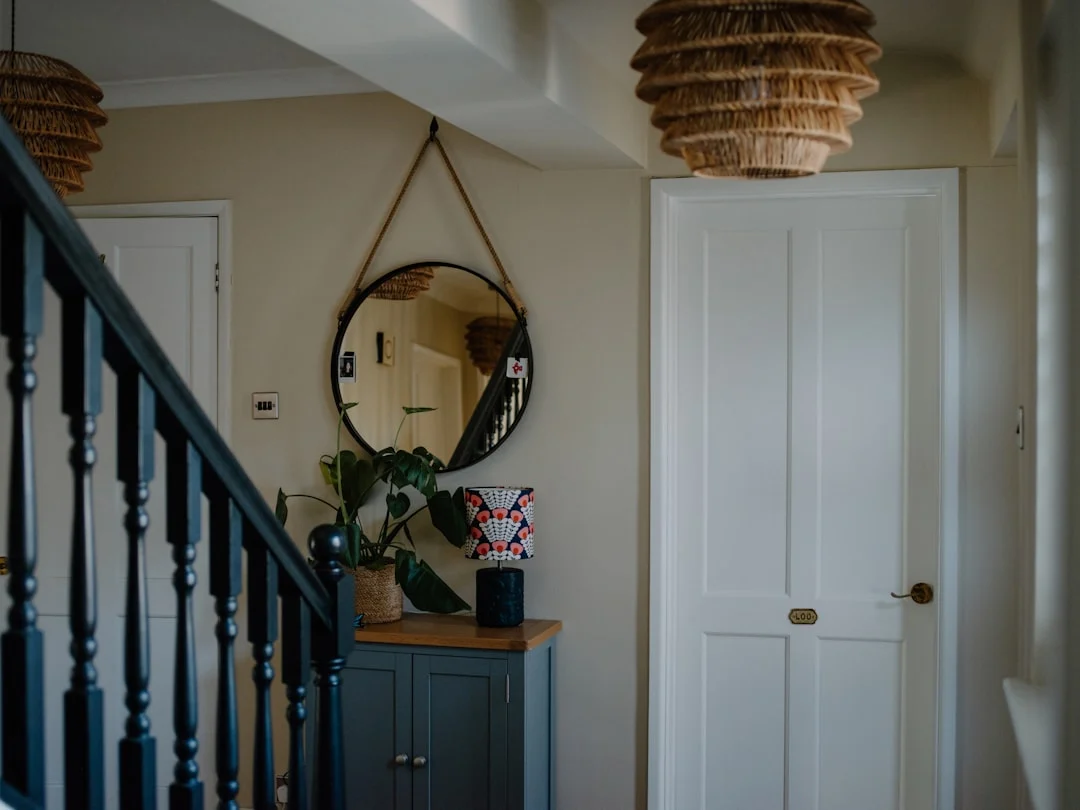
What to put on entryway table
Here’s a simple test: walk through your front door with everything you carry in for the day and set it down where it naturally wants to go. If keys, sunglasses, wallet, mail, and shoes all land within arm’s reach of your table — that’s your starting layout. If they scatter across three different surfaces, adjust. You might need a wider tray, hooks above the table, or a small bench beside it. The goal isn’t to make the table hold everything; it’s to make sure the things you use most every day live where you can find them without thinking about it.
How tall should entryway table be
Once you know what items need to live on or near your table, check the height. If you’re constantly reaching down for shoes or bending over a bench, your table might be too low relative to your coat hooks and storage. A standard console sits around 30 to 36 inches tall — tall enough to hold decorative objects without feeling cramped, but not so high that it becomes an awkward surface for everyday tasks. For small entryway table ideas where space is tight, a lower profile (28 inches) paired with wall-mounted hooks above works well. For larger spaces, go taller and let the vertical zone do more of the daily work.
Entryway mirror height above table
Your mirror placement matters as much as your tray or vase when it comes to how you actually use the space. The center of the mirror should sit about 5 to 6 inches above the top of your table — not flush with the edge, and not floating so high that you’re craning your neck to see yourself before heading out. If you’re layering wall art or sconces around the mirror, keep it at eye level for the tallest person in the household. That’s often overlooked: a mirror that works perfectly for one family member might be frustrating for another.
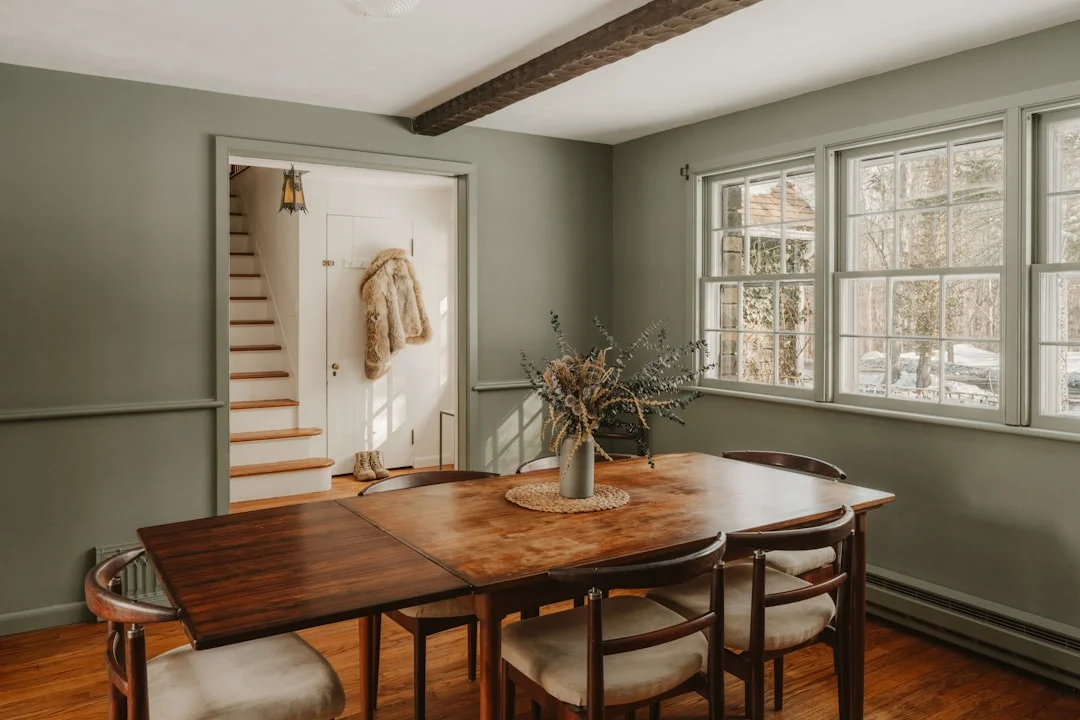
entryway table lighting ideas
If your entryway gets dim in the evening — and most do — sconces or a small pendant above the table aren’t just decorative. They’re functional. A pair of wall-mounted sconces flanking the mirror gives you even light for checking your appearance without casting shadows under the chin. If you prefer overhead lighting, aim for about 30 to 36 inches from the table surface to the bottom of the fixture. This keeps it low enough to feel intimate but high enough not to interfere with reaching items on the table.
Entryway console table decor ideas modern
Modern doesn’t mean minimal — it means intentional. A clean-lined entryway table with one substantial vase, a single tray for daily items, and wall sconces creates a space that looks edited but feels lived-in. Avoid the temptation to fill every inch of surface area. Empty space is part of the design, not a sign you forgot something. The key is choosing pieces that serve a function: the vase holds flowers from your garden, the tray corralled keys and mail, the mirror reflects light into the room.
Entryway table display ideas
When arranging items on your table, think in odd numbers — three or five objects tend to feel more natural than even numbers. A large vase as the anchor, a smaller tray beside it, and a piece of wall art above creates a visual hierarchy that guides the eye upward. If you’re using decorative pillows on an entryway bench nearby, pick one color from them for your vase or tray to tie the space together without matching perfectly.
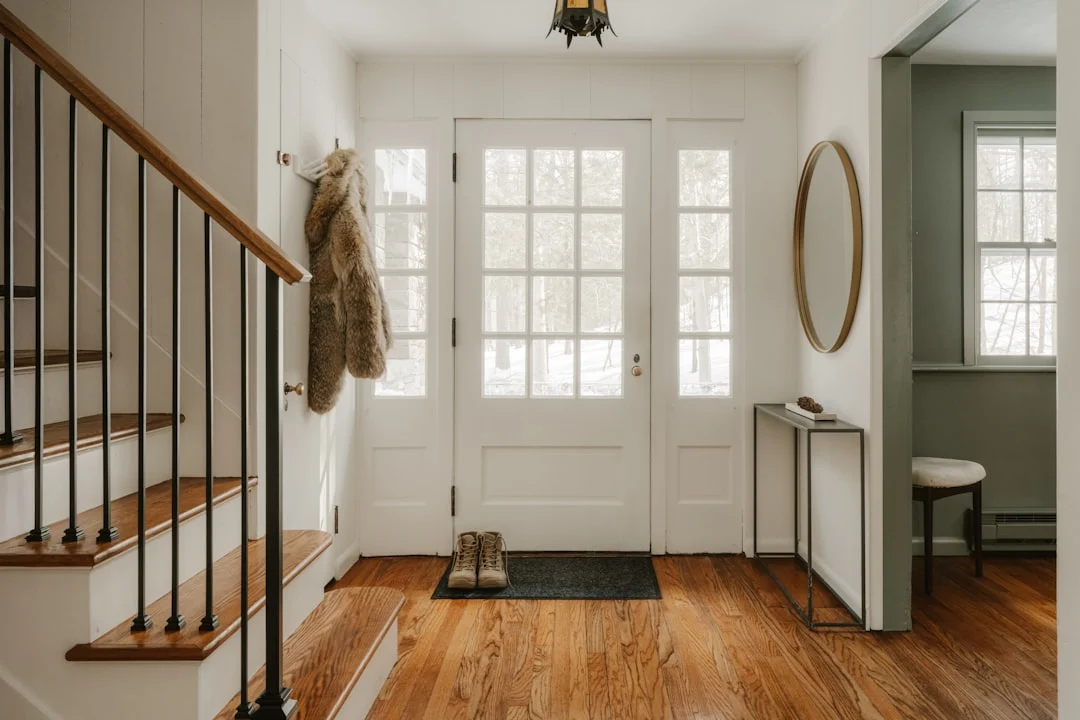
Entryway table styling rules
The main rule is simple: let function lead and aesthetics follow. Start with what you use daily — keys, mail, sunglasses, shoes — place those on or near the table first, then add decorative objects that complement rather than compete. Don’t worry about having enough items; worry about having the right ones in the right places. A single ceramic vase is better than three mismatched ones if it holds what you actually need. A tray with keys in it is better than a decorative bowl that looks pretty but never gets used.
How to style an entryway table without clutter
The secret to avoiding clutter on your entryway table isn’t less stuff — it’s grouped stuff. Everything related lives together. Keys and mail in one tray. Sunglasses and wallet in another small dish. A single vase with flowers, not three tiny vases with different blooms. When items are clustered by function rather than scattered by type, the table reads as curated even when it’s full. The result is an entryway that looks like a place you actually live in, not just a hallway with decorative furniture.
Entryway mirror and table combo
The combination of a mirror and table works best when they’re treated as one unit rather than two separate pieces. If your mirror is mounted directly above the table — even if there’s a few inches of wall space between them — it creates a visual anchor that makes the entryway feel intentional. This approach also helps with lighting: sconces on either side of the mirror reflect light across both surfaces, making the whole area brighter without needing additional fixtures.
Small vs large entryway tables
If you have a small entryway table ideas challenge — your space feels cramped with decor — start by removing everything except one essential item: keys in a tray. Add back only what you actually use daily, then evaluate the rest. Does that decorative bowl hold anything? If not, remove it. For larger entryway tables, the opposite problem often occurs: they look empty because people spread items too far apart. Group your objects closer together and let negative space do its job.
Entryway table styling ideas for beginners
Start with a blank slate. Place your entryway table where it naturally fits in the room’s flow, then walk through your door three times carrying everything you normally bring in. Note what lands on the table, what falls to the floor, and what ends up somewhere else entirely. That’s your first layout. From there, add decorative objects one at a time — not as filler, but as complements to the functional items already in place.
Entryway console table decor
A console table is essentially a long, narrow entryway table designed for deeper spaces. If you’re choosing between a standard entryway table and a console, consider your traffic pattern. A console works best when people walk past it rather than stopping at it — think of it as a surface that catches items as they move through the room. A regular entryway table is more likely to be used as a destination: where you stop to grab keys before leaving or drop things off upon arriving.
Entryway table lighting ideas
Beyond sconces and pendants, consider how natural light enters your entryway. If the room gets morning sun, position your table so that light hits the mirror at eye level — this makes you look awake even before coffee. If it’s darker in the evening, a small lamp on the table paired with overhead lighting creates layers that feel warm and welcoming rather than harsh and fluorescent.
Entryway mirror height above table
The ideal mirror height depends on your ceiling and the size of your table. For standard 8-foot ceilings, center the mirror at about 57 inches from the floor — that’s roughly eye level for most adults. If you have higher ceilings, go up slightly; if lower, come down. The key is consistency: measure once, mark twice, and don’t let decorative objects on the table push your mirror too high.
Entryway table styling rules
Three rules that actually matter: keep items grouped by function, choose heights that complement each other (not match them), and leave room for daily use. A tall vase next to a short tray works better than two identical-height objects. Wall art above should be centered on the mirror or table, not floating randomly in space. And always remember — if you can’t reach something without stepping back from the door, it’s probably too far out on the surface.
Entryway console table decor ideas modern
Modern entryway tables favor clean lines over ornate details, but that doesn’t mean they have to feel cold. A wooden console with metal legs, paired with a large mirror and a single sculptural vase, creates warmth without adding visual noise. For those looking for entryway table decor ideas modern, focus on materials rather than patterns: wood, stone, glass, and metal work together better than trying to match colors or styles exactly.
How to style an entryway table without clutter
The hardest part of styling an entryway table is knowing when to stop. A good rule of thumb: if you have more than five items on the surface, ask yourself which ones serve a purpose and which ones just look nice. Keep the functional ones and remove one decorative piece at a time until you reach balance. The result should feel intentional — like someone thought about each item — rather than accidental, like everything happened to land there.
Entryway table display ideas
Think of your entryway table as a stage for daily life. The items on it tell the story of who lives in the house and how they move through their day. A family with kids might need a larger tray for backpacks and lunchboxes alongside keys. A single person might prefer a smaller surface with just a vase, mirror, and one decorative object. The display reflects the routine — not the other way around.
Entryway mirror and table combo
The best entryway mirror and table combos create a unified visual element rather than two separate pieces that happen to be near each other. This means choosing a frame style that echoes the table’s material or color, positioning the mirror so it reflects light onto the table surface, and ensuring there’s enough space between them for both to breathe without feeling disconnected.
Entryway table lighting ideas
Beyond the obvious sconces and pendants, consider how artificial light interacts with your entryway table throughout the day. A small lamp on the table adds warmth in the evening, while a pendant above creates a focal point that draws the eye upward. The key is layering: use multiple sources of light rather than relying on one overhead fixture to do all the work.
Entryway mirror height above table
When measuring for your mirror, stand at the table and look up — the center should be at eye level. If you’re mounting it yourself, use a pencil mark at that height before drilling any holes. It’s easier to adjust than to patch paint.
Entryway table styling rules
The best entryway tables balance three things: function (can you actually use them?), form (do they look good?), and flow (do they work with the rest of the room?). If one of these is missing, something feels off. A beautiful table that’s too hard to reach isn’t functional. A practical table that clashes with the room’s style looks out of place. A well-styled table that blocks traffic defeats its purpose.
Entryway console table decor ideas modern
Modern entryway tables often feature minimal profiles, clean lines, and natural materials. Wood consoles with metal legs are particularly popular because they combine warmth with structure. Pair them with a large mirror, simple sconces, and one or two decorative objects — not more. The goal is to create a space that feels edited but not empty.
How to style an entryway table without clutter
The secret to avoiding clutter on your entryway table is grouping items by function rather than type. Keys and mail go together. Sunglasses and wallet stay close. A single vase holds flowers, not three tiny ones with different blooms. When related items are clustered, the surface reads as curated even when it’s full.
Entryway table display ideas
Use your entryway table as a visual anchor for the room. Place decorative objects at varying heights — tall vase, short tray, medium mirror — to create interest without overwhelming the space. The arrangement should feel intentional but not overthought. If it looks like someone stopped to arrange things rather than being forced into place, you’ve succeeded.
Entryway mirror and table combo
The best entryway mirror and table combos work together as a unit. Choose a frame style that echoes the table’s material or color, position the mirror so it reflects light onto the surface below, and ensure there’s enough breathing room between them for both to shine without competing.
Entryway table lighting ideas
Beyond sconces and pendants, consider how natural light enters your entryway. If morning sun hits the mirror at eye level, you’ll look awake even before coffee. If evening light is dim, a small lamp on the table adds warmth without creating harsh shadows.
Entryway mirror height above table
Stand at the table and look up — the center of the mirror should be at eye level. For standard 8-foot ceilings, this usually means about 57 inches from the floor. If you have higher ceilings, go up slightly; if lower, come down. The key is consistency across all family members.
Entryway table styling rules
Three rules that actually matter: keep items grouped by function, choose heights that complement each other (not match them), and leave room for daily use. A tall vase next to a short tray works better than two identical-height objects. Wall art above should be centered on the mirror or table, not floating randomly in space.
Entryway console table decor ideas modern
Modern entryway tables favor clean lines over ornate details. A wooden console with metal legs, paired with a large mirror and a single sculptural vase, creates warmth without adding visual noise. Focus on materials rather than patterns: wood, stone, glass, and metal work together better than trying to match colors or styles exactly.
How to style an entryway table without clutter
The hardest part of styling an entryway table is knowing when to stop. A good rule of thumb: if you have more than five items on the surface, ask yourself which ones serve a purpose and which ones just look nice. Keep the functional ones and remove one decorative piece at a time until you reach balance.
Entryway table display ideas
Think of your entryway table as a stage for daily life. The items on it tell the story of who lives in the house and how they move through their day. A family with kids might need a larger tray for backpacks and lunchboxes alongside keys. A single person might prefer a smaller surface with just a vase, mirror, and one decorative object.
Entryway mirror and table combo
The best entryway mirror and table combos create a unified visual element rather than two separate pieces that happen to be near each other. This means choosing a frame style that echoes the table’s material or color, positioning the mirror so it reflects light onto the table surface, and ensuring there’s enough space between them for both to breathe without feeling disconnected.
Entryway table lighting ideas
Beyond the obvious sconces and pendants, consider how artificial light interacts with your entryway table throughout the day. A small lamp on the table adds warmth in the evening, while a pendant above creates a focal point that draws the eye upward. The key is layering: use multiple sources of light rather than relying on one overhead fixture to do all the work.
Entryway mirror height above table
When measuring for your mirror, stand at the table and look up — the center should be at eye level. If you’re mounting it yourself, use a pencil mark at that height before drilling any holes. It’s easier to adjust than to patch paint.
Entryway table styling rules
The best entryway tables balance three things: function (can you actually use them?), form (do they look good?), and flow (do they work with the rest of the room?). If one of these is missing, something feels off. A beautiful table that’s too hard to reach isn’t functional. A practical table that clashes with the room’s style looks out of place. A well-styled table that blocks traffic defeats its purpose.
Entryway console table decor ideas modern
Modern entryway tables often feature minimal profiles, clean lines, and natural materials. Wood consoles with metal legs are particularly popular because they combine warmth with structure. Pair them with a large mirror, simple sconces, and one or two decorative objects — not more. The goal is to create a space that feels edited but not empty.
How to style an entryway table without clutter
The secret to avoiding clutter on your entryway table is grouping items by function rather than type. Keys and mail go together. Sunglasses and wallet stay close. A single vase holds flowers, not three tiny ones with different blooms. When related items are clustered, the surface reads as curated even when it’s full.
Entryway table display ideas
Use your entryway table as a visual anchor for the room. Place decorative objects at varying heights — tall vase, short tray, medium mirror — to create interest without overwhelming the space. The arrangement should feel intentional but not overthought. If it looks like someone stopped to arrange things rather than being forced into place, you’ve succeeded.
Build Your Entryway Table Look Layer by Layer
The most common mistake people make with entryway tables is treating them like display shelves rather than functional surfaces. You end up with either a sparse table that looks like it’s waiting for guests to arrive, or one buried under every object you don’t have room for anywhere else. The fix is building your decor in layers — each one serving a different purpose, and none of them competing for attention.
The base layer: tray organization to prevent clutter
Start with what happens at ground level — the flat surface of your table itself. A well-placed tray anchors everything above it and solves the perpetual problem of keys, coins, and receipts sliding off bare wood or glass. The trick is choosing a tray that complements your table rather than competing with it.
For modern entryways, a leather tray in a neutral tone works because it’s understated and doesn’t fight with other materials. In more traditional spaces, a ceramic or stone tray adds texture without heaviness. If you’re working with a small entryway table — say something under 36 inches wide — skip the tray entirely and go for a single decorative bowl instead. The difference between “organized” and “fussy” often comes down to whether your base layer feels intentional or like it’s trying too hard.
One thing worth considering: if you have a lot of daily items (mail, dog leash, sunglasses), place them in the tray rather than scattering them. A single object that serves three purposes — decorative surface and functional home for keys, mail, and wallet — is better than three separate objects doing the same work.
The vertical layer: vase, candle, or decorative object for height
This is where most people go wrong. They pick a vase that’s either too short (making the table feel flat) or too tall (making it feel top-heavy). The rule of thumb is simple but rarely followed: your tallest vertical element should be about two-thirds the height of your entryway mirror, or roughly 60-75% of the distance from table surface to ceiling if there’s no mirror.
For a standard 30-inch console table with an 18-inch mirror above, aim for a vase that sits around 12 inches tall. If your table is taller — say 48 inches — you’ll want something more substantial, perhaps a floor-length ceramic piece or a cluster of candles on different risers to create variation.
The real question isn’t just height; it’s what happens inside the vase. A single stem of eucalyptus or olive branch looks cleaner than a full bouquet every day. If you prefer flowers, pick one variety and go with three stems rather than five — it creates visual weight without feeling busy.
The personal layer: framed photo, small art, or a sentimental piece
This is the layer that makes your entryway look like yours rather than a catalog spread. A single framed photograph on the table surface works beautifully if you choose one that’s meaningful — not necessarily “pretty.” The best photos I’ve seen in entryways are the ones that make someone stop and say something when they see them.
For small entryway tables, a smaller frame (8×10 or even 5×7) looks better than trying to cram a large piece onto a narrow surface. If your table is wider — think of it as a chance for multiple frames in different sizes. The key is keeping them related somehow: same mat color, similar frame tones, or photos from the same era.
Another option that’s often overlooked: a small sculpture or object you bought on a trip, inherited, or found at a local market. These pieces feel more personal than anything you’d find at a big-box store, and they create conversation points for guests without requiring effort to maintain.
The functional layer: items that serve your daily habits
Here’s the part most people skip when styling their entryway tables because it doesn’t look as “styled.” But if you live in a house with shoes, bags, and coats — or even just one person who comes home every day with groceries — this layer matters more than anything else.
The simplest solution: keep one thing on the table that belongs to your daily routine. A small basket for gloves and scarves. A dedicated spot for your phone charger. A decorative dish specifically for keys, not just because it looks good but because you need somewhere to put them when you walk in.
If your entryway is narrow (under 12 inches deep), consider a wall-mounted hook system above the table instead of items sitting on the surface. This keeps the table clear while still providing functional storage. For wider tables — anything over 18 inches — you have room for both decorative and practical items without feeling cramped.
The real test of whether your entryway table is styled well isn’t how it looks when you’ve just arranged it. It’s how it looks at 7 p.m. on a Tuesday, after you’ve been home all day and everything has moved slightly out of place. If it still looks intentional — even with keys in the tray, a vase that’s leaning a bit, or a photo frame shifted from where you put it — you’ve done this right.
Small Entryway Tables — Style Without the Crowding
If you have ever walked into an entryway and felt like you needed to squeeze through a narrow corridor just to see the table, you are not alone. Small entryway tables dominate apartments and older homes where every inch counts. The trick is not adding more things — it is choosing fewer things that carry more visual weight.
Most people make three mistakes with small entryway tables: they pile on decorative objects until the surface disappears, they ignore vertical space above the table, and they pick items that are too short to register at a glance. Fix those problems first, and you can style even a narrow console without it feeling like a display case.
One statement piece beats three small ones
A single large ceramic vase or a bold sculptural object on a compact table creates an anchor point that draws the eye. Three small trinkets scatter attention and compete for visibility, especially when they share similar heights and colors.
Think about scale before you shop. A piece that takes up at least one third of your table’s surface area reads as intentional rather than accidental. If your table is twenty inches wide, look for a vase or bowl that sits somewhere between six and eight inches across. Anything smaller will get lost; anything larger will overwhelm the footprint.
When you commit to one strong piece, everything else on the table becomes supporting cast. A slim tray underneath it grounds the arrangement without adding bulk. A single candle or a small stack of coffee table books beside it fills space without creating noise.
Vertical decor for narrow surfaces
When your entryway table is shallow, horizontal real estate becomes scarce but vertical space rarely gets used. Tall decorative vases do the heavy lifting here — they occupy a small footprint while drawing the eye upward and making even a compact table feel substantial.
A leaning mirror placed against the wall above or beside the table multiplies your visual floor without touching the surface at all. The reflection of light bouncing off it makes the entryway feel larger, and it serves a practical purpose when you are checking your appearance before heading out.
Sconce lighting mounted on the wall rather than sitting on the table is another vertical solution that frees up precious inches. A single sconce placed at eye level above the table creates a focal point without crowding the surface. If you cannot install hardwired sconces, plug-in versions with slender profiles work just as well and can be repositioned as your style evolves.
Choosing a tray that fits the table’s proportions
The right tray does more than organize keys and mail — it creates visual boundaries on a small surface. A tray that is too narrow looks like an afterthought; one that is too wide competes with your statement piece instead of complementing it.
Measure the length of your table and subtract two to three inches from each side. That gives you a tray size that leaves breathing room around the edges while still anchoring your arrangement. If your table has legs rather than a solid base, choose a tray with raised edges so items do not slide off the sides.
Material matters too. Wood trays add warmth to modern spaces and pair well with ceramic vases. Metal trays bring sleekness to traditional settings and reflect light from nearby sconces or windows. If your entryway gets heavy foot traffic, opt for a tray with a non-slip surface or one that sits flush against the table edge.
The goal is not perfection — it is intentionality. A small entryway table styled with purpose looks curated rather than cramped, and it continues to serve whatever daily functions you need without sacrificing style.
Entryway Mirror and Table — Getting the Height Right
The mirror above your entryway table does more than catch a glance before you leave. It anchors the whole arrangement, and when it sits at the wrong height, everything underneath feels off-balance — even if the items on the table are perfectly arranged.
Mirror placement: 6–12 inches above the table surface
That range sounds small, but it matters. Six inches keeps the mirror close enough to feel like a single composition with the table below. Twelve inches lets each piece breathe — better for taller tables or entryways where you want the wall art to carry its own weight.
Measure from the top edge of your table surface (not the tabletop itself, which may have a lip) up to the bottom of the mirror frame. Most people hang their mirrors too high because they align with eye level when standing, not with the visual relationship to the table underneath.
When a mirror feels too high or too low (and how to fix it)
A mirror that floats too far above the table creates a gap that looks accidental. The table becomes an afterthought rather than part of the display. Conversely, a mirror pressed too close can make the entryway feel squashed, especially in smaller spaces.
If you’ve already hung the mirror and it feels wrong, don’t start over with new holes. A few tricks help:
- For a mirror that’s too high, lower it by half an inch to one inch at a time — even small adjustments change the relationship significantly.
- If you’re stuck between heights, consider a thinner frame. Narrow profiles pull the mirror visually closer to the table without changing the hanging point.
- For very tall tables (above 30 inches), move the mirror slightly higher than usual and lean it against the wall rather than mounting it flush. This creates intentional layering.
Sconce lighting vs. overhead light over the mirror
Lighting changes how you read the height relationship between mirror and table. A sconce mounted on either side of the mirror at eye level (roughly 60 inches from the floor) creates a clean horizontal line that works regardless of exact mirror placement. It also casts light downward onto the table surface, which helps with practical tasks like finding keys or sorting mail.
Overhead lighting — whether a pendant directly above the table or recessed cans nearby — tends to pull attention upward. If your ceiling is high (nine feet or more), an overhead fixture can make the mirror feel small and isolated. In that case, consider dropping the mirror slightly lower or choosing a wider frame.
For entryways with limited wall space for sconces, a single pendant centered above the table works well if it hangs about 30 inches above the tabletop surface. This leaves room for the mirror without crowding either element.
Common Mistakes That Make Your Entryway Table Look Off
The entryway table sits in the most visible part of your home, yet it’s also one of the easiest to style wrong. The problem is rarely a single mistake—it’s usually a combination of small decisions that compound into something that feels off. Once you recognize the patterns, fixing them is straightforward.
Mismatched Style Between Table Decor and the Rest of the Room
It’s tempting to treat your entryway table as a blank canvas, but it’s actually part of a visual conversation with the rest of your home. If you have warm wood floors and brass fixtures in the living room, a cool marble tray with chrome candlesticks will read as disconnected rather than intentional.
You don’t need to match styles perfectly—eclectic entryways work beautifully—but you do need some throughline. A good rule: pick one or two elements that echo finishes elsewhere in your home. If your door hardware is brushed nickel, choose a vase with similar undertones. If your hallway walls are painted in a warm white, avoid decor that leans too gray.
This is where people often overcorrect the other way and make everything match so precisely it looks like a showroom rather than a home. A slightly mismatched rug under a modern console table? That’s fine. A mid-century table with contemporary pillows? Also fine. The key is that each piece belongs to something bigger than itself.
Overdoing It With Too Many Small Objects
The clutter trap has a specific shape: it starts when you add one more thing to make the table feel “full,” then another, and before you know it you have seven small objects competing for attention. A candlestick, a key bowl, a small plant, three books stacked horizontally, a decorative sphere, a framed photo, and a set of keys scattered on top.
Small entryway tables are especially vulnerable to this because they have limited surface area. When you put too many objects on them, each one shrinks visually and the table looks busier than it needs to be.
The fix is grouping. Instead of seven small items spread out, try three medium-sized groupings: a tray holding keys and a candlestick, a tall vase with greenery, and a single larger art piece leaning against the wall. Grouping creates visual breathing room and makes the table feel curated rather than stuffed.
Ignoring the Table’s Function — Decorating for Photos, Not for Life
This is arguably the most common mistake of all. People style their entryway tables as if they’re staging a home for sale, when in reality those tables need to hold things people actually use every day.
A beautiful ceramic vase looks great next to a pair of leather shoes, until you realize no one has anywhere to put the keys they brought inside. A stunning mirror above the table is helpful, but only if it’s positioned at a height where someone can actually check their appearance while putting on shoes or adjusting a scarf.
Think about your daily entry routine before you finalize your decor choices. Do you drop mail on the table? Is there room for a small basket without sacrificing aesthetics? Does your partner use the space to set down a bag when they walk through the door?
The best entryway tables balance both needs: they look intentional and styled while also functioning as a landing strip for the things that matter. A decorative tray can serve double duty, looking polished while catching keys and mail. A small basket tucked in the corner holds shoes without dominating the visual composition.
Getting the Scale Wrong
Scale problems show up in two opposite directions. Some people choose decor that’s too small for their table—a petite vase, a slim candlestick, a narrow mirror—leaving the surface looking bare despite having “decorated” it. Others go the other way, choosing oversized pieces that make a small entryway feel cramped.
The easiest way to get scale right is to think about proportions rather than individual sizes. Your mirror should be roughly two-thirds the width of your table if you want it to look proportional. A vase sitting on the table should have enough height to register visually but not so much that it blocks sightlines across the room.
If you’re working with a narrow console table, choose vertical pieces—tall vases, vertical mirrors, stacked books—that draw the eye upward rather than outward. If your entryway table is wide and low, horizontal groupings work better.
Missing or Misplaced Lighting
Lighting over an entryway table is one of those details that makes a room feel finished—and it’s often either missing entirely or placed at the wrong height. Sconces should sit about 65 to 70 inches from the floor, which puts them slightly above eye level for most people. If you’re using a pendant light, aim for roughly 30 to 36 inches above the table surface.
The mistake many people make is installing lighting without thinking about what it needs to illuminate. If your entryway table holds keys and mail, you want task-level brightness at that height. If you’re using the mirror for final appearance checks, the light should hit your face evenly rather than casting shadows from above.
Even a small lamp on the table can work as lighting in tight spaces—just make sure it’s positioned so the shade doesn’t interfere with the mirror or wall art behind it. The goal is layered light: overhead ambient, directional task lighting, and sometimes a touch of accent lighting that highlights your decor pieces.
FAQs: Entryway Table Styling Questions You’re Actually Asking
How tall should an entryway table be?
The height of your entryway table matters more than most people realize. A standard rule is 30 to 36 inches, which aligns with how high we naturally reach for keys and mail without bending or stretching too far. If you’re pairing the table with a sofa in an adjacent living room, aim for that sofa’s seat height — usually around 18 inches from the floor plus your table’s thickness — so items flow visually between spaces.
For taller ceilings, consider a console table closer to 36 inches. For low-hanging light fixtures or narrow hallways, 30 inches keeps things from feeling cramped. The real test is practical: stand at your entry and see if you can drop keys onto the surface without reaching up or crouching down.
What to put on a small entryway table?
Small tables don’t need less style — they just need fewer, more intentional pieces. Start with one functional item like a ceramic vase for flowers or a decorative bowl for jewelry, then add a tray to corral keys and mail. That tray is the secret weapon for small entryway table ideas because it creates visual order without consuming much surface area.
For entryway console table decor ideas that scale well, try a medium-sized mirror leaning against the wall (or mounted above), one or two books stacked horizontally, and a single statement piece — like a sculptural candle holder or a tall vase. The key is leaving at least 40 percent of your table’s surface open so the items breathe.
How do I style an entryway table without clutter?
The most common mistake people make when styling an entryway table is treating it like a shelf rather than a composition. Clutter happens when too many items compete for attention at the same height level. Instead, create layers: place your tallest item behind or to one side, medium pieces in the middle ground, and smaller objects near the front.
Use grouping principles — odd numbers tend to feel more natural than even ones. A trio of decorative objects (a vase, a candle, and a small sculpture) looks more intentional than four scattered items. If your entryway table display feels busy, remove one piece at a time until the remaining items clearly support each other. You’re aiming for curated simplicity, not emptiness.
What’s the best way to place a mirror above my console table?
The center of your mirror should sit about 6 inches above the top of your entryway table. This spacing creates visual connection between the two pieces without making them feel stuck together. If your table is taller than 34 inches, move the mirror slightly higher — maybe 8 inches above — to maintain proportion.
For entryway mirror and table combo styling, choose a mirror that’s at least half the width of your table. A 60-inch console table pairs well with a 30- to 36-inch wide mirror. If you have space, consider flanking the mirror with sconce lighting on either side for an entryway table lighting ideas approach that works whether you’re leaving or arriving.
End with a quick call-to-action that invites readers to audit their current entryway table — ask them to identify one item that serves function and one that could be removed, then pin or bookmark the article for reference while they rearrange. Optionally include a link to related content on console table styling or entryway mirror placement.
Related posts:

Tagged: Entryway Console Table Decor, Entryway Mirror And Table Combo, Entryway Table Decor Ideas, Entryway Table Display Ideas, Entryway Table Styling, Home Decor, How To Style An Entryway Table, Small Entryway Table Ideas