

How to Decorate Your Living Room Walls Without Making These 5 Common Mistakes

~150 words. Open with the core insight: most people hang art by instinct and pay for it later in regretful purchases, awkward proportions, or a room that still feels half-done. Position the article as a step-by-step decision framework that starts with measuring before buying—so readers can confidently choose decor that fits their space, furniture, and budget.
Measure Your Walls Before You Buy a Single Piece
The difference between wall decor that anchors a room and decor that looks like an afterthought often comes down to one step most people skip: measuring. Not just the width of the wall, but how it relates to the furniture already in it.

How to measure wall width (and why it matters more than you think)
Grab a tape measure and record the full width of each wall you plan to decorate. Then measure the width of the primary furniture piece against that wall—the sofa, console table, or media unit. The rule of thumb is simple: your wall decor should span roughly two-thirds to three-quarters of the furniture’s width.
That means if your sofa is 72 inches wide, a single statement piece or grouped arrangement should land between 48 and 56 inches across. Anything smaller will look lost. Anything larger will compete with the seating instead of complementing it.
Common measuring mistakes that lead to undersized decor
- Measuring only the wall, not the furniture. A 12-foot accent wall sounds huge until you realize your sofa takes up half of it and leaves the remaining space with a single small print hanging in the middle.
- Ignoring height above eye level. Most people hang art at eye level when standing, but living rooms are primarily viewed from a seated position. Measure from the floor to the top of your sofa back, then add 6 to 10 inches—that’s where the bottom edge of most pieces should land.
- Buying decor in isolation. You find a beautiful mirror at a store and assume it will work on your wall. But if you haven’t measured the space relative to nearby furniture, that mirror might end up floating alone while leaving awkward gaps above your console table.
Before you commit to any purchase—whether it’s a large gallery wall living room arrangement or a single piece of wall art for living rooms over 50—tape paper cutouts to your walls. Use painter’s tape and sketch the dimensions on newspaper first, then swap in the actual frame once you’re confident about scale.
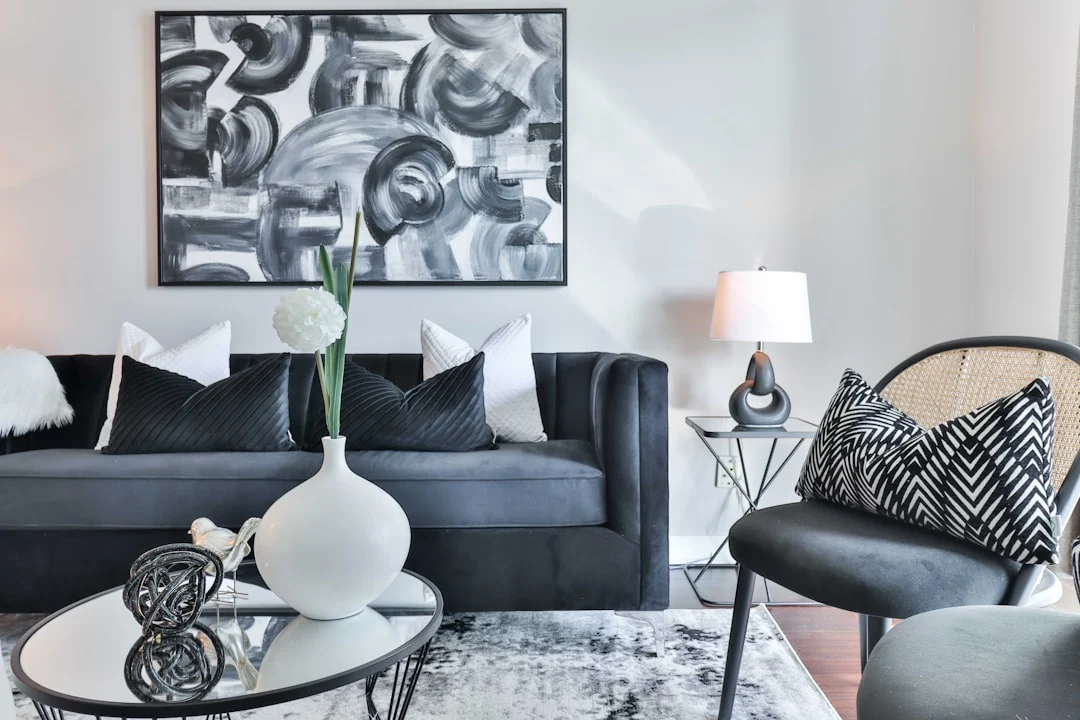
This approach catches problems that measurements alone miss. A mirror might look perfect on paper but visually shrink when placed opposite a dark wood sofa. Two small prints stacked vertically might read as a single piece rather than the statement arrangement you intended.
Hang Pictures at the Right Height Above Sofas and Consoles
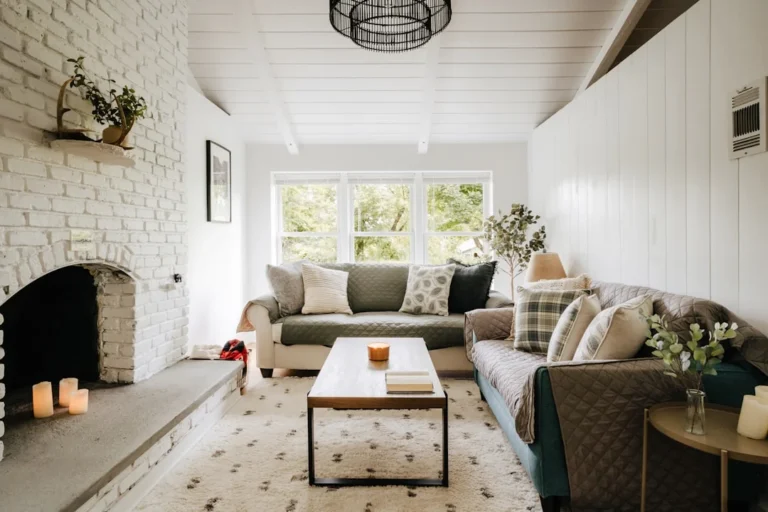
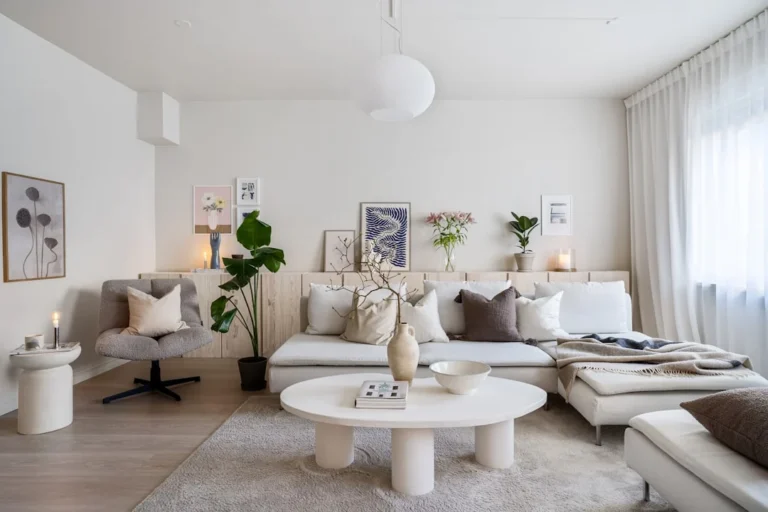
Most people hang their living room wall decor by instinct rather than measurement, which is why art often looks either floating too high or squished against furniture. The starting point for hanging pictures above a sofa is to measure six to eight inches between the top of the backrest and the bottom edge of your frame. That gap keeps the piece visually connected to the seating without forcing you to crane your neck when you’re settled in.
How high to hang pictures above couch (the 6–8 inch rule)
This measurement works because it aligns with natural eye level while seated. If you sit on your sofa and look straight ahead, the art should land comfortably within your peripheral view rather than demanding full attention. For standard sofas that are about thirty inches tall from floor to backrest, this rule typically places the center of your artwork around fifty-seven to sixty inches off the ground — which is also close to what most galleries use as their hanging height for standing viewers.
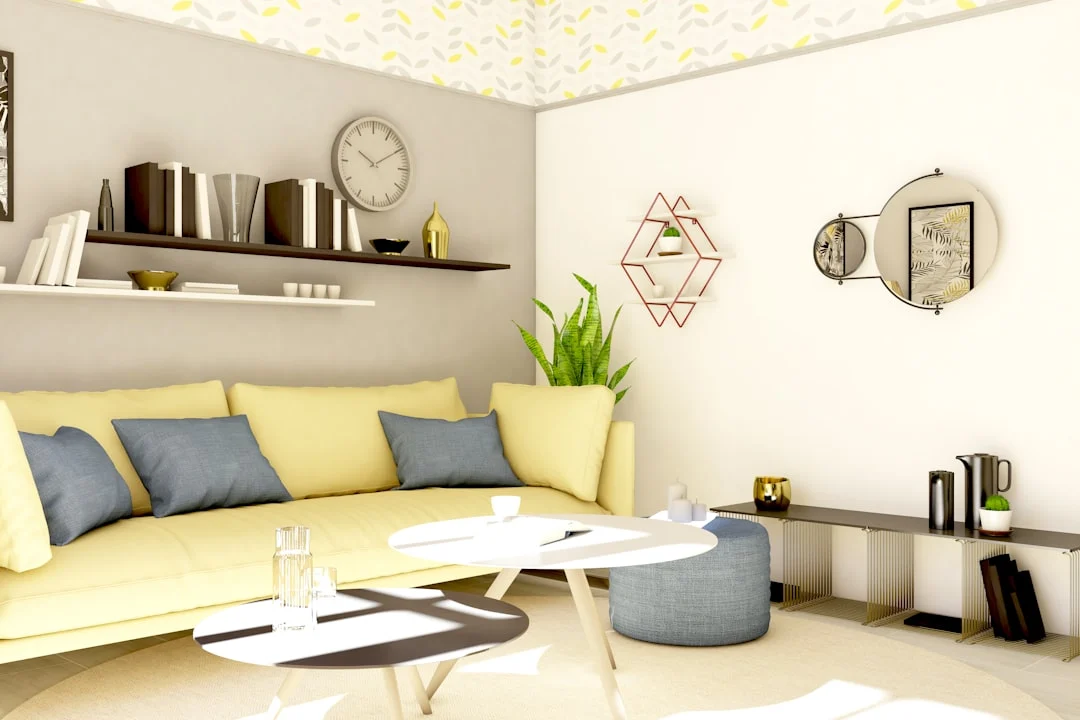
When you’re working with a console table instead of a sofa, apply the same six-to-eight-inch logic but measure from the top of the console rather than a backrest. Console tables tend to be lower and narrower, so your wall decor above them often benefits from being slightly wider to create visual balance. A twenty-four inch wide console can look overwhelmed by a single small frame unless you choose something with more presence.
When to adjust that rule for tall or low furniture
Not every living room follows standard proportions, and your measurements should shift accordingly. If your sofa is unusually tall — say an oversized sectional that pushes backrest height past thirty-six inches — bump the gap up to ten or twelve inches so the art doesn’t feel crowded. Conversely, low-profile furniture like mid-century modern sofas with slim backs might work better with a four-to-five inch gap, keeping the piece closer to the frame of your seating.
There is also the question of ceiling height. In rooms with eight-foot ceilings, hanging art too high can make the wall feel disconnected from the rest of the space. If you have higher ceilings — nine feet or more — you can afford to hang pieces a bit taller without losing that grounded feel. As a practical test, tape your frame to the wall at different heights and step back. The right placement will look intentional rather than accidental.
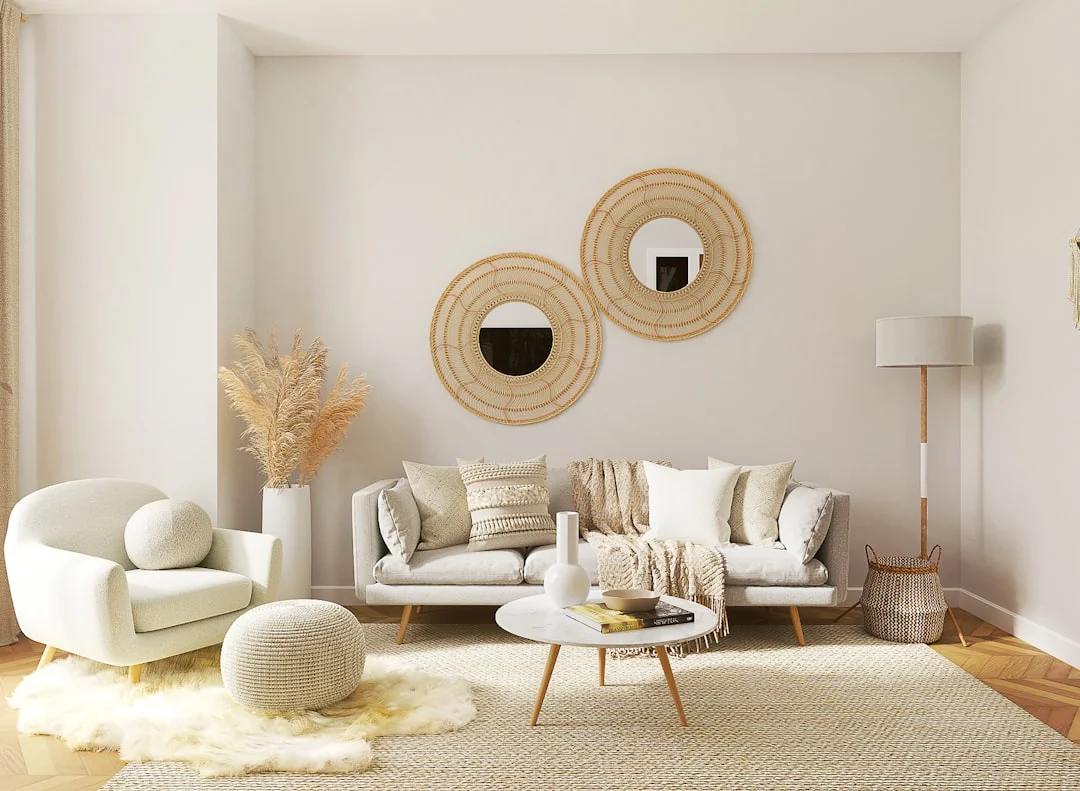
Consider what happens when you mix furniture types in one living room. If your sofa sits against one wall and a console table against another, each piece needs its own height treatment. A large mirror above a console can sit slightly lower than art above a sofa because mirrors reflect light and create the illusion of space, while painted or framed pieces benefit from that extra breathing room above taller seating.
Decide Between Hanging Art and No-Hang Wall Decor
The first decision in living room wall decor isn’t which pieces to buy—it’s whether those pieces need nails at all. Most people default to hanging art because it feels like the “right” thing to do, but no-hang options have become sophisticated enough that they can anchor a space without leaving a single hole in your walls. Your call depends on three factors: how much time you spend rearranging, whether you’re renting or planning to stay put, and what kind of visual weight you want from the start.
Wall art vs. mirrors, shelving, and textiles: when each works best
Hanging art is the most versatile living room wall decor choice because it responds to style more than function—a piece can be abstract, photographic, or hand-painted and still work above a sofa, beside a console table, or on an accent wall. The catch is sizing: hanging art looks weak when it’s smaller than half the width of the furniture beneath it. A 72-inch sofa needs art that spans roughly 36 to 48 inches for balanced proportions.
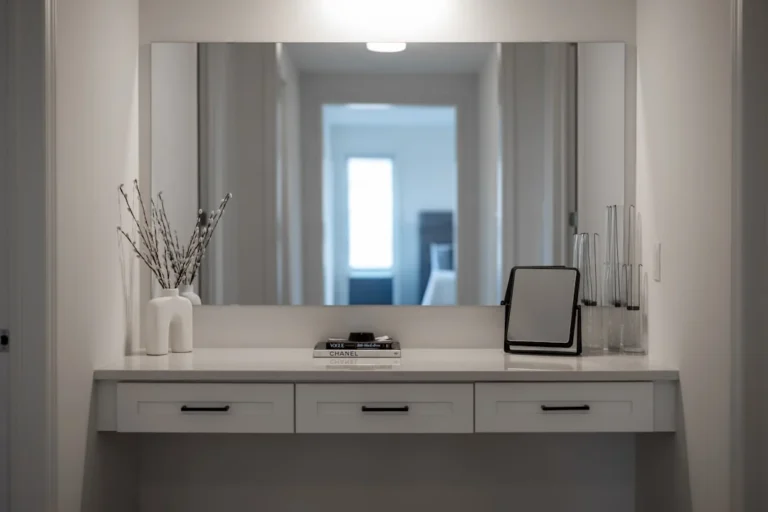
Mirrors do something hanging art can’t—they create the illusion of space and pull in natural light, which makes them essential for smaller living rooms or darker corners. A large mirror above a console table reads as both decor and architectural feature rather than an afterthought. They’re also forgiving on placement since you can adjust them without measuring twice.
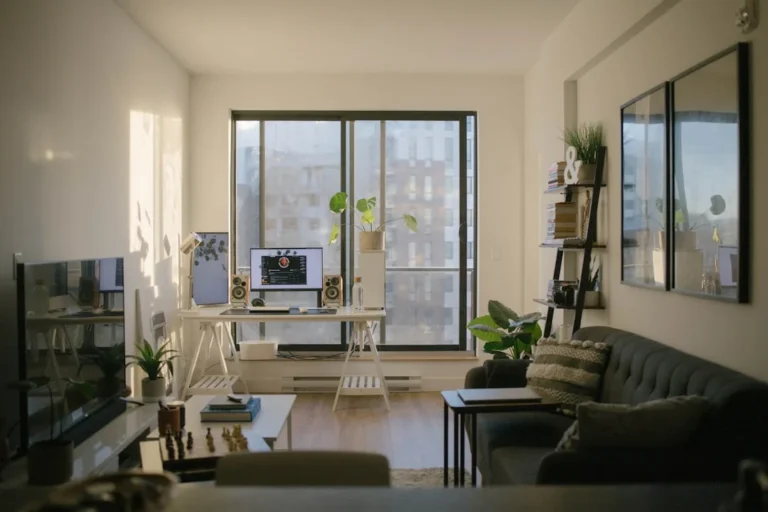
Shelving adds vertical depth when your walls are otherwise flat, turning a blank surface into a display for books, ceramics, and plants. Floating shelves work well in living rooms that double as home offices or media spaces because they hold things you actually use rather than just looking at. The trade-off is visual busyness—open shelving can feel cluttered if every shelf isn’t intentionally styled.
Textiles like wall tapestries and hanging plants soften hard surfaces without the permanence of fixed installations. A large tapestry above a mid-century sofa can replace what would otherwise be three or four separate pieces of wall art, which is why they’re popular in small-space decorating. Hanging plants do double duty as living room accent wall decor while adding organic texture that frames and complements other decor types.
Pros and cons of no-hang options for renters and budget shoppers
No-hang wall decor—adhesive hooks, tension rods, leaning mirrors, and peel-and-stick panels—saves you the most common mistake people make when decorating: drilling into walls before they’ve decided where pieces actually belong. For renters, this means no deposit deductions for “excessive holes.” For budget shoppers, it means you can test a layout by moving pieces around daily before committing to permanent hanging art.
The downside is visual impact. Adhesive hooks have weight limits that make them unsuitable for heavy frames or large mirrors. A leaning mirror against the wall looks casual and works well in bohemian or modern living rooms, but it reads as temporary compared to a hung piece. You also lose the ability to center decor precisely above furniture when everything is anchored by adhesive rather than measured placement.
The practical approach: use no-hang options for your initial living room wall decor layout. Place pieces where you think they belong—above the sofa, beside the console table, scattered across an accent wall—and live with them for a week. Once you’ve found the arrangement that feels right, switch to hanging art for the pieces that earn their spot. This way, you’re not spending on living room wall decor ideas that end up in storage because they looked good on paper but wrong in your actual space.
Build a Gallery Wall That Looks Intentional, Not Cluttered
The biggest mistake people make with gallery walls is treating them like filler rather than a deliberate composition. You can hang twelve pieces and still look empty if they don’t talk to each other, or you can fill an entire wall with three large frames that feel complete. The difference comes down to sizing, spacing, and how you group your living room wall decor.
How many pieces are too many before it feels crowded?
Start by measuring the wall space in front of your sofa or console table. A good rule of thumb is that your entire gallery arrangement should take up about two-thirds to three-quarters of the width of the furniture below it. If you have a 72-inch sofa, aim for a gallery spread between 48 and 56 inches wide. That measurement tells you whether you need one large piece, two medium ones, or several smaller frames.
Here’s where most people go wrong: they count pieces by eye instead of by proportion. A gallery wall with nine small frames can feel busier than a wall with four large ones because the individual visual weight adds up. Think about your focal point first, then build outward.
- One statement piece — works well when you have a bold artwork or a large mirror and want clean space to breathe
- Two to four medium pieces — ideal for smaller walls or above narrow console tables
- Six to ten smaller pieces — best for larger open walls where you want layered texture
- More than ten pieces — requires careful spacing (no more than two inches between frames) and a unifying element like matching frame colors or similar matting
If you’re decorating an empty living room wall and feel overwhelmed, start with fewer pieces. You can always add more later as you live in the space and discover what feels right.
Mixing frames without creating visual chaos
Gallery walls that look cluttered usually aren’t cluttered at all — they just lack a unifying thread. The trick is picking one element to repeat across your pieces, whether that’s frame color, mat width, or the overall tone of the artwork itself.
For example, if you’re mixing black frames, white frames, and wood tones, keep the artwork mostly in a similar color family — warm neutrals, cool blues, or muted earth tones. The variety in frames reads as intentional rather than random when the art ties everything together.
Another approach is laying your frames out on the floor before hanging anything. Arrange them so the largest pieces anchor the corners and smaller ones fill gaps. Step back and look at the arrangement from the perspective of someone sitting on your sofa — that’s where the wall will live for most of its life.
When you’re ready to hang, measure twice and mark once. Use painter’s tape to hold frames in place while you adjust spacing, then drive your nails or hooks. This method saves you from the common mistake of hanging everything at one height when your eyes tell you something is off.
The goal isn’t perfection — it’s cohesion. A gallery wall that feels intentional will complement your living room wall decor ideas without competing with them, and it’ll hold up to years of viewing without demanding a refresh after just a few months.
Choose Accent Wall Decor That Matches Your Budget and Style
The biggest mistake people make with living room wall decor isn’t choosing the wrong style—it’s sizing pieces to the wall instead of the furniture. A painting that looks enormous on an empty stretch of drywall will shrink to nothing when you place it above a sofa, because your eye anchors to the couch, not the perimeter of the room.
Here’s the rule: measure the width of the piece you’re placing decor over, then choose wall art that takes up about two-thirds of that width. If your sofa is 72 inches wide, aim for a single piece around 48 inches across—or three smaller works totaling roughly the same footprint. This keeps the relationship between your furniture and your wall art intentional rather than accidental.
Large Wall Art vs. Multiple Small Pieces—What Works for Your Living Room
A single large piece commands attention with minimal effort. It’s especially useful when you’re working with a blank wall above a console table or the back of a sectional, because it creates an immediate focal point without requiring you to coordinate multiple frames. Think about what kind of statement you want: a bold abstract canvas for energy, a landscape photograph for calm, or a vintage mirror to bounce light around a darker room.
Multiple small pieces—often called a gallery wall—work better when you have an existing collection of art, photographs, or even decorative objects and want to display them together. The trick is to lay everything out on the floor first. Start with your largest piece in the center, arrange smaller works around it at varying heights but within about 6 inches of each other vertically, then step back before committing anything to the wall. If the arrangement feels busy or scattered, you probably have too many pieces. If it looks sparse, add one more medium-sized piece rather than another small one.
There’s also a third option that doesn’t require nails: shelf-based living room accent wall decor. Floating shelves let you display art, plants, and objects in a layered way without the permanence of hanging frames. This approach is particularly useful for renters or anyone who wants to rearrange their wall decor seasonally.
Best Wall Art for Living Rooms Over 50 That Ages Well
If you’re looking at pieces that will still feel current in five or ten years, focus on texture and material over trend-driven color palettes. A woven tapestry, a linen-backed canvas, or a piece with natural wood framing tends to age better than something heavily dependent on the current
What to Do When Your Living Room Walls Still Look Empty
The most common reason living room walls feel empty isn’t a lack of decor—it’s decor that doesn’t relate to the space around it. People hang art based on instinct, which usually means measuring from the floor without accounting for furniture height, and end up with pieces floating too high or sitting too low relative to what they’re supposed to complement.
Start by checking your largest wall hanging against the piece of furniture below it. If you have a sofa that’s 72 inches wide, your main artwork should take up about two-thirds of that width—roughly 48 inches across. Anything smaller will look like an afterthought no matter how beautiful the piece itself is.
Small additions that make a big difference in empty spaces
Sometimes the fix isn’t buying bigger art but adding a second element at eye level to fill the vertical gap. A mirror positioned between a wall painting and a console table creates visual connection where there was none before. Shelving units with books, plants, and small objects add depth without requiring you to commit to heavy gallery walls.
Consider these moves when your wall still feels sparse:
- Add a sconce or wall lamp above existing art to create lighting layers that draw the eye upward
- Hang a tall, narrow mirror next to a sofa where there’s no artwork at all—it reflects light and makes the wall feel intentional
- Install open shelving on an otherwise bare section; even three shelves with curated objects read as a deliberate design choice rather than empty space
- Layer two frames of different sizes at the same height but offset by 4 to 6 inches—this creates visual weight without requiring a large single piece
How to decorate an empty living room wall without buying more stuff
You don’t always need new decor to fix an empty wall. Rearrange what you already own and hang it at the right height, or swap frames to create variety. A collection of smaller pieces—say, four 12×16 inch frames arranged in a grid with consistent spacing—can fill more visual space than one large painting that sits too high above a sofa.
Another approach: take down what’s currently hanging and step back. Often the problem is spacing rather than quantity. If your gallery wall pieces are clustered tightly at chest level, they’ll feel crowded even when empty space surrounds them. Pull everything down, spread out to 48 inches wide for a standard sofa wall, then hang at eye level—roughly 57 to 60 inches from the floor to the center of each piece.
For renters or anyone avoiding permanent changes, wall decor without hanging options like removable decals, tension rods with fabric panels, and adhesive shelves can fill empty walls without commitment. The key is choosing pieces that read as intentional rather than temporary—stick to a consistent color palette and keep spacing generous so the wall feels curated, not cluttered.
The bottom line: if your living room walls still look empty after adding decor, measure twice. Empty space usually means the decor you chose doesn’t match the scale of the furniture below it or sits at the wrong height. Fix those two things first before buying anything new.
Have your own living room wall decor questions? Drop them in the comments and we'll help you decide what works best for your space.
Related posts:

Tagged: Gallery Wall Living Room, Home Decor, How To Hang Art Above Sofa, Large Wall Art For Living Room, Living Room Accent Wall Decor, Living Room Wall Decor, Living Room Wall Decor Ideas, Wall Decor Without Hanging