

How to Choose a Dining Room Centerpiece That Doesn’t Block Your View

Open with the tension between wanting a statement centerpiece and preserving conversation flow at dinner—readers want their table to look styled without becoming an obstacle course of sightlines. Establish the goal: choosing arrangements that enhance the room rather than dominate it.
The Height Rule That Keeps Sightlines Clear
Most dining room centerpieces fail because they ignore what your eyes actually do when you sit down. A vase that looks elegant standing on an empty table can completely cut off conversation once guests are seated, especially on longer rectangular tables where people across from each other need to see faces, not foliage.
Low Centerpieces (Under 12 Inches) for Rectangular Tables
Anything under 12 inches is almost always safe for rectangular dining tables. This range works because it sits below the average seated eye line of about 46 inches, leaving sightlines open between people on opposite sides of the table.
Low centerpieces tend to be the most practical choice for families who host regularly. A cluster of short candlesticks, a low bowl with seasonal fruit, or a compact arrangement of hydrangeas and ferns can anchor the table without forcing guests to crane their necks. The trade-off is that very low pieces can look lost on oversized tables unless you add width—think two smaller arrangements flanking a long runner instead of one solitary vase in the center.
Tall Arrangements (Above 20 Inches) That Still Allow Eye Contact
Tall centerpieces are not off-limits, but they require more intention. A tall arrangement works best when it is narrow enough to slip through your peripheral vision rather than sitting directly in front of you.
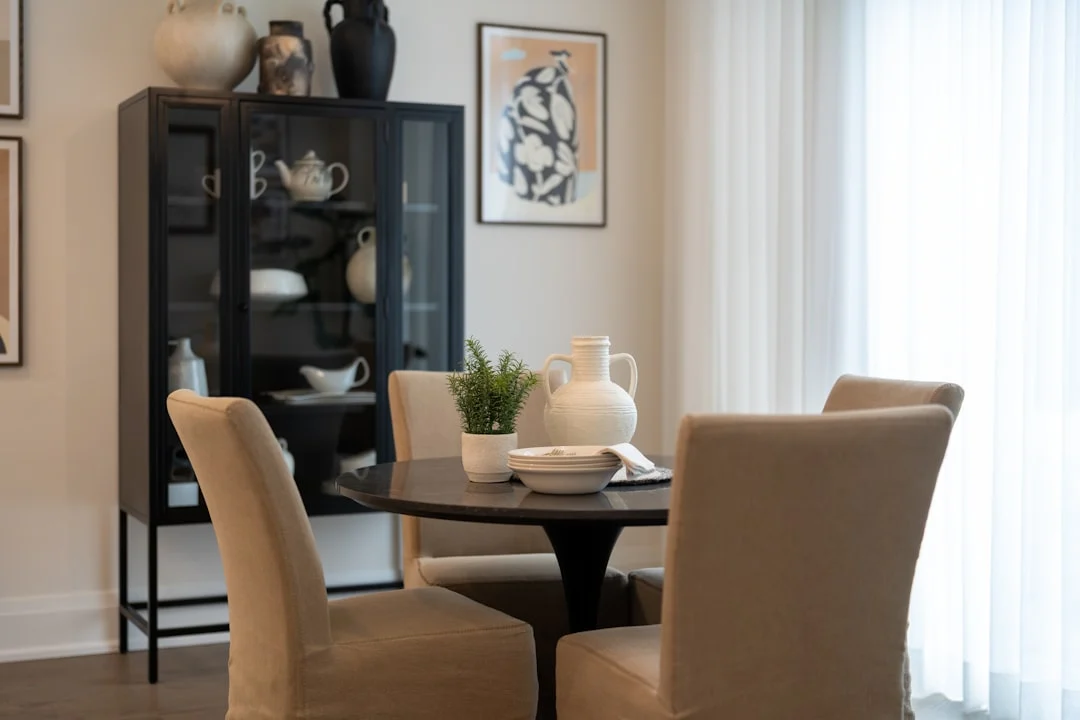
Consider a slender vase with a few long-stemmed branches or a tall cylinder filled with greenery that rises above the table surface but leaves room between the stems for faces to appear. The key measurement here is not just height—it is width. A 24-inch-tall centerpiece that is only 6 inches wide will behave very differently from one that is 14 inches across.
Tall arrangements also tend to work better on round or oval tables where guests sit closer together and do not need to see directly across the table as often. On a square or rectangular table, tall pieces risk becoming visual walls during dinner conversation.
The 6- to 7-Inch Rule for Seated Conversation
There is a practical rule of thumb you can use when shopping for dining room centerpieces: measure the distance from your seated eye level down to the table surface, and pick a centerpiece that sits no more than 6 to 7 inches above that line.
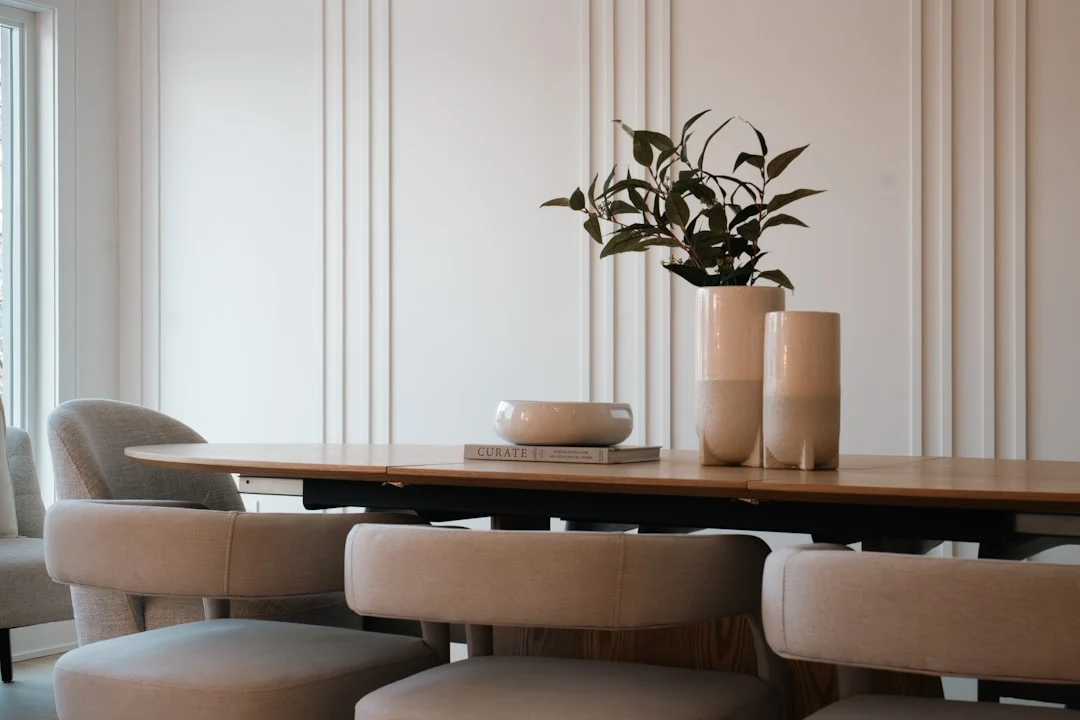
You can test this yourself. Sit at your dining table, relax into your chair, and have someone hold up a vase or arrangement in front of you. If you can see about a third of the person sitting across from you—enough to catch their expression without leaning forward—you are likely in the right height range. If they disappear behind the centerpiece, it is too tall for your table.
This rule is especially useful when buying centerpieces online or shopping at stores that only provide dimensions in inches rather than visual context. A centerpiece listed as “8 to 10 inches high” may sound modest until you realize it could easily exceed the comfortable range on a table with deep place settings and serving dishes already present.
Accounting for Your Table’s Full Load
The height rule changes slightly depending on what else lives on your dining room table. If you use a table runner, placemats, or frequent server dishes like gravy boats or salad bowls, subtract roughly 1 to 2 inches from your target centerpiece height. These items already raise the visual profile of the table surface.
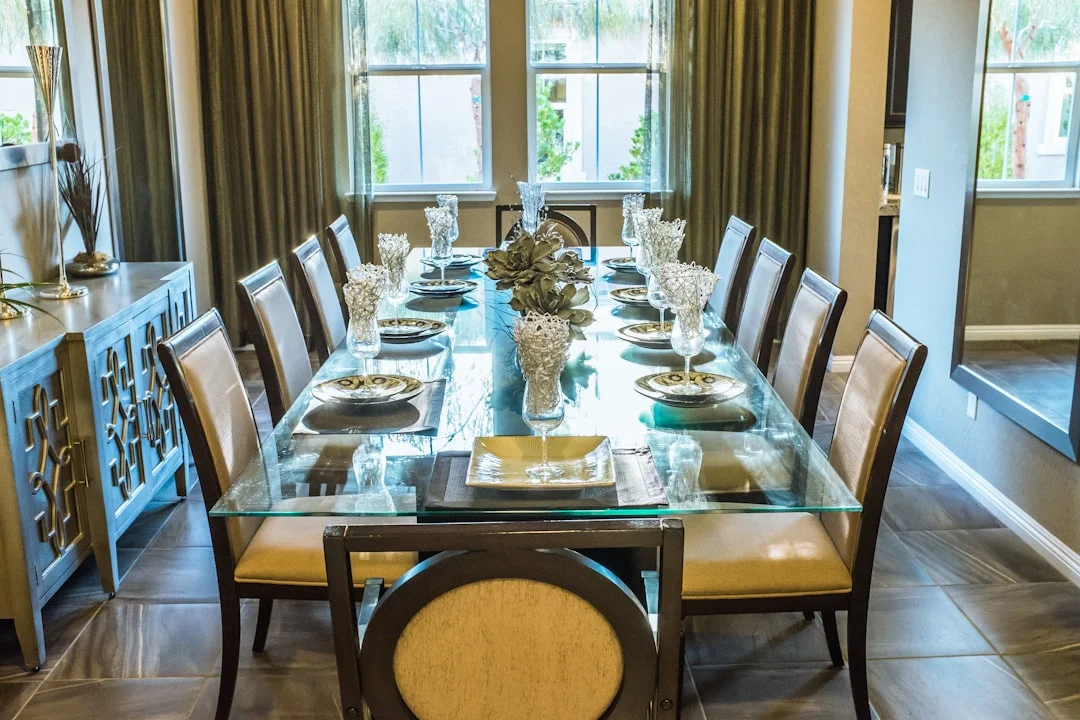
Similarly, if your dining chairs have high backs and your guests sit close together, you may want to favor lower centerpieces even on larger tables. The closer people are to each other, the more likely a tall arrangement becomes an obstacle rather than an accent.
Matching Centerpiece Shape to Your Table’s Geometry
The shape of your dining room table is the first constraint on centerpiece selection. A mismatch here creates visual clutter and, more importantly, blocks sightlines between seated guests. The goal is a piece that occupies the center without becoming a wall.
Why Rectangular Tables Need Low, Elongated Arrangements
Rectangular tables are the most common dining room format, and they demand centerpieces that mirror their proportions. A tall vase or bulky sculpture in the middle of a long table becomes an obstacle when guests sit across from each other at dinner.
The ideal approach is an elongated arrangement—think a long glass vessel with branches, a runner-style candle display, or a low tray of seasonal elements—that stretches along the center line without rising above eye level. Centerpiece height rules for rectangular tables generally land between 10 and 14 inches, depending on your table’s depth. A 36-inch-deep table can accommodate slightly taller pieces than a narrow 28-inch table.
If you prefer flowers over candles, choose varieties with natural upward movement rather than dense, round heads. Orchids, snapdragons, or tall roses in a slender vase create vertical interest without blocking the view. Avoid wide-based floral arrangements that spread outward toward your guests’ shoulders.
Round Tables That Call for Single Large Pieces or Clustered Groups
Round dining tables present a different geometry problem: sightlines radiate equally in all directions, so any centerpiece that is too tall or too wide will be visible from every seat. The solution is either one substantial piece or several smaller ones working together.
A single large centerpiece—such as a sculptural vase, a low bowl filled with fruit, or a group of candles on a circular base—creates a focal point without overwhelming the table surface. For tables under 48 inches in diameter, keep the centerpiece height to 12 inches or less and its width to no more than one-third of the table’s diameter.
Clustered arrangements work well for larger round tables (60 inches and above). Group three or five smaller pieces—candlesticks, small vases, or decorative objects—in a loose circle. The gaps between them allow sightlines to pass through, giving the arrangement visual breathing room.
Oval and Square Table Trade-offs
Oval tables are essentially stretched round tables, so they share similar centerpiece requirements with some flexibility for length. A low oval tray of greenery or a linear candle arrangement works beautifully. The key is to keep the piece centered along the longer axis.
Square tables are the most restrictive shape for centerpieces because every seat sits at roughly equal distance from the center. A centerpiece that looks fine from one angle may block views from another. Square tables benefit most from low, compact arrangements that stay within a 24-inch diameter footprint and rise no higher than 10 inches.
Consider your table’s depth as much as its shape when choosing dining room centerpieces. A deep square table can support a taller piece than a shallow one. Similarly, an oval table with generous width allows for slightly more vertical centerpieces than a narrow oval without sacrificing sightlines between guests.
Five Dining Room Centerpiece Styles That Actually Work
The centerpiece you choose should do one thing well: sit comfortably on your table without turning dinner conversation into a game of peek-a-boo. Below are five styles that consistently deliver on that promise, no matter what shape or size your dining room table is.
Low Vases with Seasonal Blooms
A single low vase or a cluster of small bud vases keeps sightlines clear while still bringing color and texture to the table. Think 6 to 10 inches tall—anything taller starts competing with your guests’ faces. The real trick is choosing flowers that don’t demand vertical attention: ranunculus, garden roses, tulips cut short, or even a few stems of eucalyptus scattered across the surface.
Seasonal blooms keep things feeling intentional rather than decorative afterthought. Spring peonies in late May look as good on a Tuesday night dinner as they do on Mother’s Day. Winter branches and dried grasses hold their shape without wilting, which matters when you’re hosting back-to-back gatherings.
Candlesticks in Varying Heights
Three to five candlesticks at different heights create visual rhythm without adding bulk. The key is variation: a tall pillar candle beside a short taper, or two medium-height brass sticks with one shorter glass holder in between. Avoid matching sets that look like they came off the shelf together—slightly mismatched heights feel more collected and less staged.
Candlesticks work especially well on rectangular tables because they can be arranged linearly down the center without crowding either end. On round or oval tables, group them in a loose cluster so the flames don’t create a wall of light that blocks eye contact across the table.
Table Runners as Minimalist Centerpieces
A linen runner—woven, textured, or subtly patterned—adds warmth without any vertical presence at all. This is the centerpiece style for people who hate clutter but still want their table to feel dressed. Choose a runner that’s about one-third the width of your table and long enough to drape slightly over each end.
The beauty of a runner is that it leaves room for place settings, serving dishes, and even casual arrangements of small objects scattered across its surface: a bowl of lemons, a stack of coasters, a single candle. Nothing blocks anything because the runner lives entirely in the horizontal plane.
Mixed Vessel Groupings for Visual Interest Without Bulk
Combining two or three different vessels—a small jar, a taller bottle, a flat dish—creates depth at eye level without overwhelming the table. The rule is simple: keep the tallest vessel no higher than 12 inches and arrange them so they don’t form a straight line. A slight triangle or L-shape works better visually.
This style lets you play with materials (glass, ceramic, metal) and textures without committing to one look. It also gives you flexibility to change the contents seasonally: summer herbs in spring, dried wheat heads in autumn, evergreen sprigs in December. The vessels stay; the fill changes.
Bowl-Style Arrangements for Wide Tables
A wide, shallow bowl filled with fruit, flowers, or even just decorative stones works beautifully on tables wider than 40 inches. Because bowls are low and spread horizontally, they anchor the table without creating a vertical barrier between guests sitting across from each other.
Choose a bowl that’s proportionate to your table width—roughly half the table’s width is a good starting point—and fill it generously enough that it reads as a deliberate arrangement rather than an empty vessel. A shallow ceramic bowl with lemons and a few sprigs of rosemary feels like something you’d actually want to sit at, not something someone arranged for a photo.
Across all five styles, the common thread is height discipline and horizontal thinking. If your centerpiece forces guests to crane their necks or lean forward to see each other’s faces, it’s working against you—no matter how beautiful the flowers are.
Three Styling Mistakes That Turn Your Table Into a Sightline Blocker
Overcrowding with too many pieces
A centerpiece doesn’t need to be an entire garden. When people pile candlesticks, vases, small potted plants, and decorative bowls onto one surface, the table becomes more of a display case than a dining space. The real problem isn’t decoration itself—it’s competing focal points that force your eye to bounce between objects instead of settling on one clean statement piece.
Instead, pick one or two elements and let them breathe. A single tall vase with a few stems can work just as well as a cluster if you give it room on the table. The goal is visual rest, not visual noise.
Ignoring the space needed for place settings and serving dishes
Many dining room centerpieces look great in photos but leave no room for plates, bowls, or the salad server when guests sit down. If your centerpiece takes up more than one-third of the table’s surface area, people will likely have to shift their place setting around it—or worse, eat with their dinnerware perched at an awkward angle.
Before you commit to a piece, measure your table and picture where each person’s plate will sit. For a standard 60-by-36-inch rectangular table, a centerpiece that stays within the middle third gives everyone room for both a place setting and serving dishes without bumping into the arrangement.
Seasonal centerpieces that clash with year-round furniture
It’s tempting to go all-in on a seasonal theme—think pumpkins in autumn, pinecones in winter, or bright florals for spring. But when those pieces don’t match the scale, color palette, or material of your dining room furniture, they end up looking like temporary decorations rather than intentional design choices.
A heavy wooden table with a delicate glass vase can feel disconnected, just as a sleek modern table might overwhelm a chunky ceramic bowl. The fix is simple: choose seasonal pieces that echo the weight and finish of your furniture. A dark wood dining table pairs naturally with earthy ceramics or muted florals; a light oak table works better with airy glassware and brighter blooms.
A centerpiece that looks stunning in October can feel like a seasonal intrusion in March. The trap many diners fall into is treating the table as a blank canvas each time the calendar flips—buying new arrangements, swapping out vessels entirely, and rebuilding the look from scratch. What you actually need is a flexible system that lets you refresh the presentation without replacing every piece.
Swap flowers, keep the vessel
The most cost-effective way to change your centerpiece’s mood is to hold onto the container while rotating what sits inside it. A clear glass vase with white tulips reads spring; the same vase filled with deep purple crocuses feels like February. You don’t need new vases for every season—you just need different blooms, greenery, or even dried materials that work in whatever vessel is already on your table.
For rectangular dining tables, a long low bowl works year-round whether you fill it with citrus and rosemary in December or orchids and ferns in June. For round tables, a wide shallow dish does the same trick. The key is choosing a vessel whose shape complements your table’s proportions so it never competes for attention.
Layer seasonal accents on a neutral base
Start with something that stays put—a simple runner, a set of tapered candles in a holder, or a low arrangement of evergreen branches. Then add small, inexpensive layers that shift with the season: pinecones in winter, peonies in spring, citrus slices in autumn, seashells in summer. This approach keeps your centerpiece height consistent, which matters for sightlines when guests are seated.
If you’re wondering how tall should a dining room centerpiece be for comfortable conversation, the rule of thumb is three to four inches below eye level when seated. That translates roughly to twelve to fifteen inches from the table surface, depending on your chair height and table dimensions. A neutral base that stays within this range lets seasonal layers sit on top without pushing the whole arrangement above sightline.
Year-round pieces that transition easily
Certain centerpiece ideas for small dining tables—and large ones too—work across seasons because they’re defined by form rather than color. A ceramic vase with a strong silhouette, a polished metal candlestick set, or a simple wooden box filled with seasonal greenery all hold their own without looking out of place in any month.
The trick is choosing pieces that don’t fight each other for visual weight. If your centerpiece is already tall, keep side accents low. If you’re using multiple vessels on a rectangular table, vary their heights so the arrangement reads as intentional rather than crowded. This is especially important when dining room centerpieces need to coexist with place settings, serving dishes, and often guests’ arms resting on the table edge.
When shopping for pieces that will last beyond one season, prioritize materials over trends. Ceramic, glass, metal, and wood all age gracefully and don’t require replacement when a particular color falls out of fashion. You can repaint or re-glaze ceramic pieces without buying new ones, swap out candlesticks in different finishes, and even re-stain wooden vessels to match evolving table colors.
Frequently Asked Questions About Dining Room Centerpieces
How tall should a dining room centerpiece be?
The general rule for dining room centerpieces that don’t block view is to keep them between 10 and 14 inches tall. This range allows guests across the table to maintain eye contact while seated, especially on rectangular tables where sightlines travel straight across. If your dining room has high ceilings or a very large table, you can push toward 16 inches. For low tables or compact rooms, stick closer to 8 inches.
What’s the best centerpiece for a rectangular dining table?
Low centerpieces for rectangular tables typically work best as a linear arrangement — think a long tray of candles, a single wide vase with horizontal blooms, or a table runner paired with clustered floral pieces. The key is keeping height low and width generous so the centerpiece stretches along the table’s length without creating visual barriers at the ends.
Can I use tall dining centerpieces on a small table?
Yes, but you’ll want to choose centerpiece ideas for small dining tables that are tall and narrow rather than wide. A slender vase with long-stemmed flowers or a pair of taper candles in slim holders draws the eye upward without spreading outward into your guests’ space. Avoid chunky arrangements that eat up table surface area — you still need room for place settings and serving dishes.
How do I choose flower arrangements for my dining table?
When selecting flower arrangements for the dining table, prioritize blooms with open faces and airy stems over tightly packed, bushy varieties. Think loose peonies, ranunculus, or garden roses rather than dense hydrangeas. Single-flavor bunches — like all white roses or mixed eucalyptus and lavender — tend to look more refined at table height than multi-patterned mixes that compete with your place settings.
Shop curated dining room centerpieces that prioritize clean sightlines and conversation-friendly heights.
Related posts:

Tagged: Centerpiece Height Rules, Dining Room Centerpiece Ideas, Dining Room Centerpieces, Flower Arrangements For Dining Table, Home Decor, Low Centerpieces For Rectangular Tables, Table Centerpieces By Shape, Tall Dining Centerpieces