

Layered Rustic Farmhouse Decor: How to Build Texture Without Visual Chaos

Hook the reader with the core tension of rustic farmhouse style: it looks effortless, but achieving a lived-in warmth without landing in the 'catalog-perfect' trap takes deliberate layering. Briefly acknowledge the Fixer Upper effect—millions have chased this aesthetic—but position the article as practical guidance for those who want authentic texture over staged perfection. The intro should set up the central promise: you can mix reclaimed wood, black iron hardware, linen, and shiplap without creating visual noise.
Layering Textures Without Overwhelm
The hardest part about rustic farmhouse decor isn’t choosing your pieces—it’s figuring out which ones belong together. A room full of reclaimed wood, black iron hardware, and linen textiles can either feel authentically warm or accidentally cluttered. The difference comes down to how you layer them.

Start with one dominant material
Pick a hero element before you buy anything else. It might be shiplap on an accent wall, wide-plank reclaimed wood flooring, or black iron fixtures throughout the kitchen. This dominant material becomes your visual anchor. Everything else should either complement it or contrast in measured ways.
For example, if you’ve committed to a warm oak floor as your foundation, avoid pairing it with similarly toned pine furniture that competes for attention. Instead, introduce cooler metals or textured textiles that create clear separation between layers.
The rule of three
Every successful rustic farmhouse room relies on three material families working in concert: a wood tone, a metal finish, and a fabric. These aren’t strict categories but rather visual anchors that keep your palette from drifting into chaos.
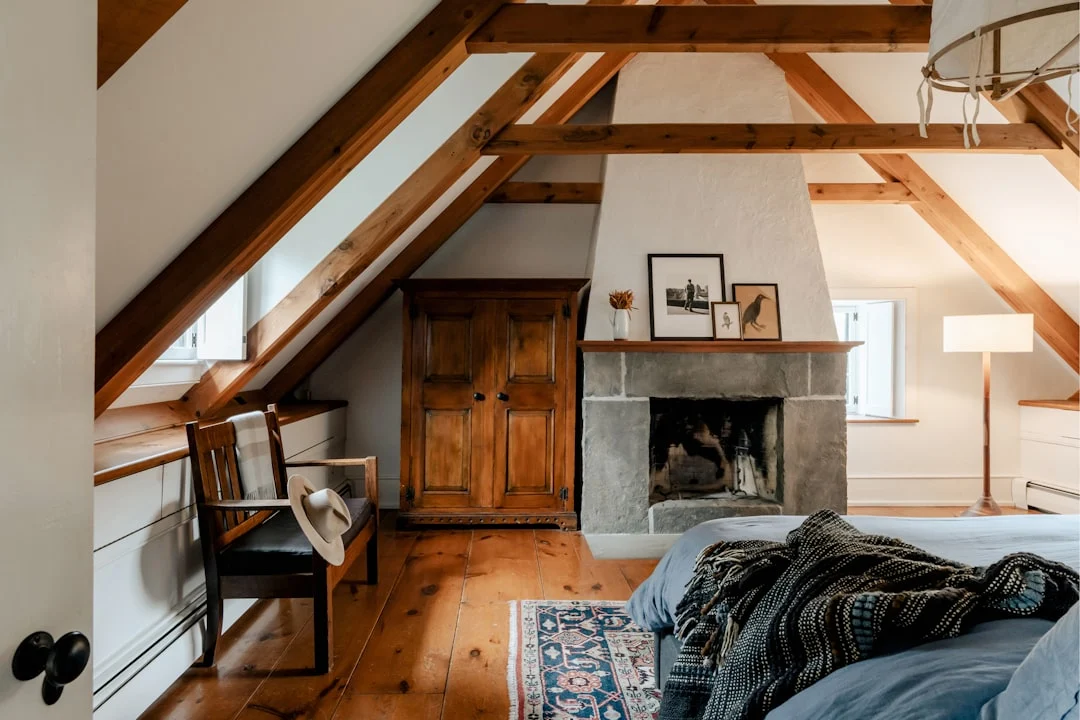
- Wood provides warmth and organic texture—think reclaimed planks, butcher block countertops, or a distressed coffee table
- Metal adds structure and contrast. Black iron hardware feels distinctly farmhouse; brushed brass leans more modern-rustic
- Fabric softens the room’s edges. Linen, burlap, and wool create that lived-in quality without competing with your wood or metal
When you’re shopping for accent pieces, ask yourself: does this item belong to one of these three families? If it doesn’t fit neatly into any of them, it’s probably adding visual noise rather than depth.
Avoid competing textures by varying scale
Texture becomes overwhelming when everything happens at the same visual weight. Large reclaimed planks on your walls pair well with small linen throw pillows—but a room full of large-scale wood, large-scale metal, and large-scale fabric creates a heavy, boxed-in feeling.
Mixing scales gives your eyes places to rest:
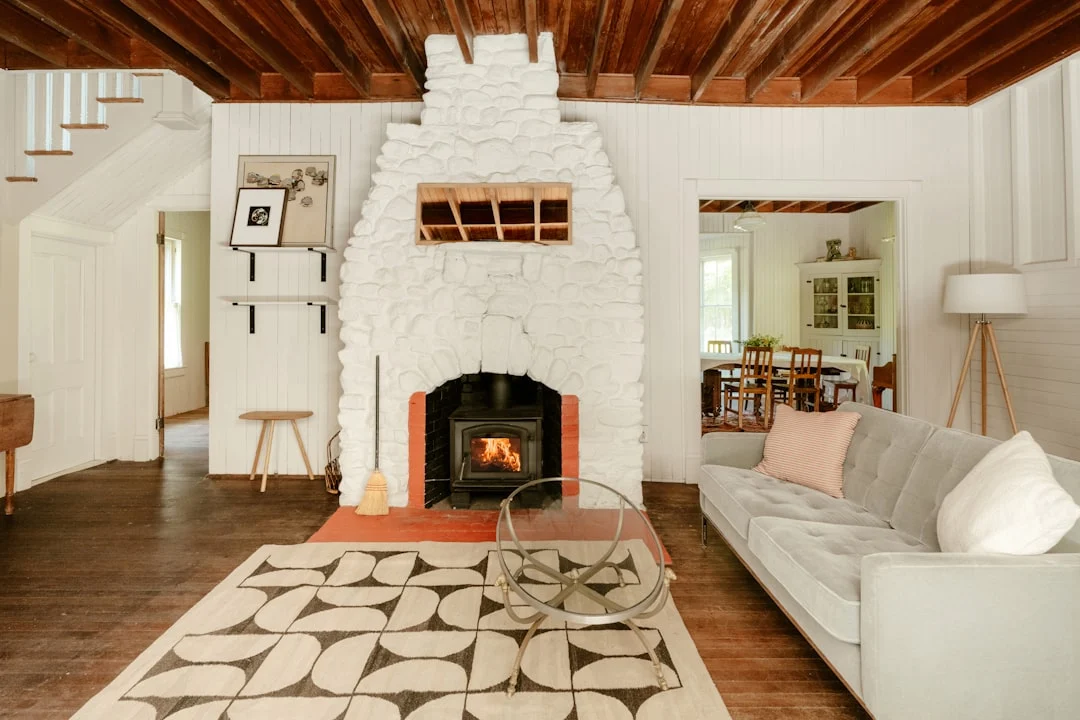
- Pair a chunky wooden dining table with slender black iron chairs
- Layer a rough-hewn farmhouse sink against smooth white subway tiles
- Combine wide plank flooring with narrow picture frame moldings
This principle applies whether you’re working with a small apartment or an open-concept living space. The key is intentional contrast rather than uniformity.
warm rustic farmhouse decor that doesn’t feel dated
The line between warm and cluttered often comes down to color temperature. A room dominated by cool whites with black iron accents reads as modern farmhouse—clean, almost clinical. Warm rustic farmhouse decor leans into amber wood tones, cream linens, and muted earth colors that echo natural aging.
If you’re mixing vintage finds with new pieces, let the vintage items carry more texture (distressed wood, hand-forged metal) while newer furniture stays simpler in form. This creates depth without visual competition. The result is a space that feels collected over time rather than staged in one afternoon.
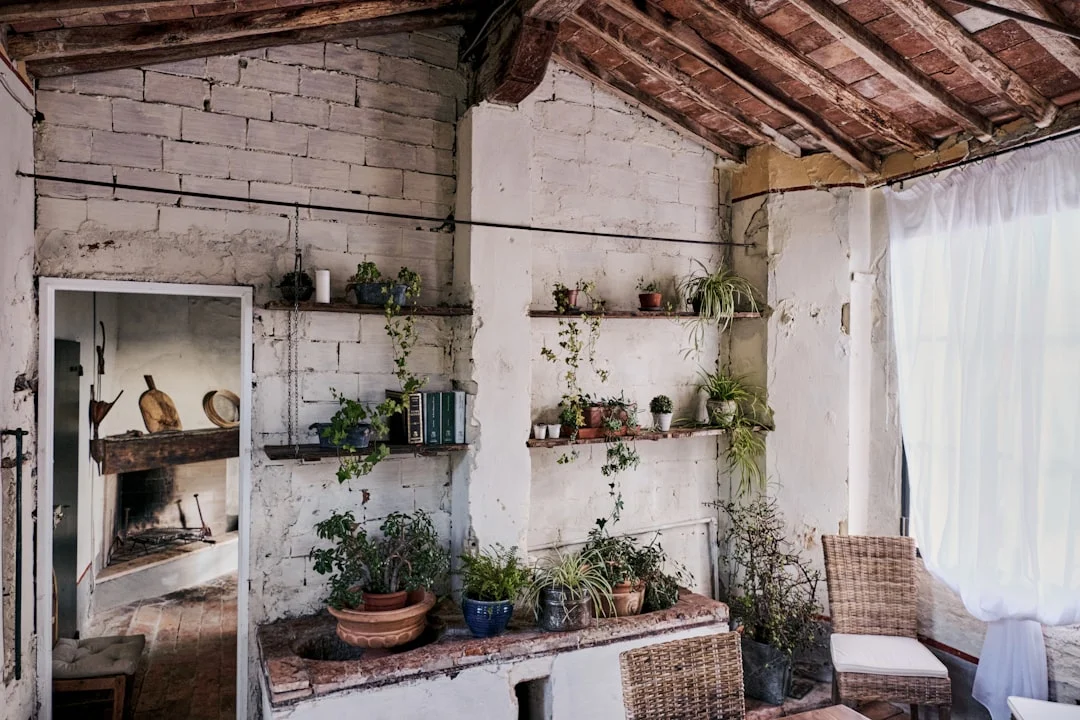
Wood + Metal + Linen: The Rustic Farmhouse Trinity That Actually Works
Why Reclaimed Wood and Matte Black Iron Hardware Complement Each Other (Warmth Meets Structure)
The pairing works because each material carries the other’s weight. Reclaimed wood brings warmth, organic grain, and a lived-in feel that prevents black iron from reading too cold or industrial. The matte black hardware—think cabinet pulls, picture hooks, lamp bases, shelf brackets—gives structure to the wood without competing with it. You’ll see this combination in farmhouse kitchens where raw wood cabinets meet black iron handles, or on a reclaimed dining table supported by wrought iron legs.
When choosing between these two materials, focus on finish rather than era. A matte black iron pull looks equally at home on a century-old barn door and on a budget-friendly new piece of furniture. The key is that neither material tries to outshine the other; they create a visual rhythm where wood reads as “warmth” and metal reads as “definition.” This is why you’ll find it works in rustic farmhouse decor for small spaces—the pairing doesn’t add bulk, only texture.
Linen as the Neutralizer
Without linen, a room full of wood and metal can feel like a hardware store catalog. Linen softens harder materials without adding visual weight because its weave catches light differently than polished surfaces. A linen throw on a solid wood sofa, linen curtains framing a farmhouse sink, or linen-upholstered dining chairs all accomplish the same thing: they interrupt the grain-and-metal pattern just enough to keep the eye from getting stuck.
This is where many homeowners make their biggest mistake—they add too much linen and lose the rustic edge. The trick is using it as a counterweight rather than a foundation. If your wood pieces are heavily grained and your iron hardware reads bold, choose linen in neutral tones (cream, oat, or pale blue) with visible texture but minimal pattern. A linen rug on a hardwood floor works better than a linen upholstered armchair when you want to keep the room feeling grounded rather than airy.
When Brushed Nickel Works Better Than Wrought Iron
Wrought iron is the default choice for rustic farmhouse decor, but brushed nickel has a specific role that many homeowners overlook. Choose brushed nickel when your wood pieces are already warm-toned and you want to keep the metal from darkening the overall feel. This matters most in kitchens with honey-colored cabinets or living rooms where reclaimed beams dominate the visual field. The lighter metal reflects more ambient light, which keeps the space feeling open rather than heavy.
Brushed nickel also ages differently—while black iron develops subtle patina over time, brushed nickel tends to hide fingerprints and minor scratches better, making it practical for high-traffic areas like a rustic farmhouse kitchen. If you’re building your look on a budget, this is worth considering: brushed nickel hardware at big-box retailers often costs less than artisan-cast iron pieces while still delivering the same visual effect.
Practical Styling Tips
- Start with one dominant material (usually wood) and layer the other two as accents, not equal partners
- If you’re mixing vintage finds with new pieces, choose a consistent metal tone—don’t alternate between black iron and brass unless you intentionally want that contrast
- For farmhouse style living room without looking dated, keep linen pieces in solid colors rather than busy patterns; the texture should speak louder than any motif
- Affordable rustic farmhouse accent pieces like a black iron mirror frame or a linen table runner can anchor a larger piece of furniture and make it feel more intentional
The Warmth-to-Simplicity Balance Your Space Is Missing
Rustic farmhouse decor has a way of tipping into one of two extremes: either too polished and catalog-ready, or so cluttered with vintage finds that the eye doesn’t know where to rest. The trick isn’t picking more items—it’s calibrating how much warmth each layer contributes against how much visual noise it creates.
How to tell if your room feels too styled versus lived-in (the pillow test)
Sit on the sofa in your space and notice what happens. Are you constantly adjusting throw pillows that slide off, or do they settle where you put them? Do your decorative objects look like they’re waiting for a photographer, or do they belong to someone who lives there?
Too-styled rooms have an overabundance of matching sets—every pillow in the same fabric family, all candles on one tray, every vase holding fresh greenery. Lived-in spaces show variation: a linen cushion that’s seen laundry day, a ceramic bowl with a chip near the rim, books stacked by size rather than color. The goal is to keep your rustic farmhouse decor looking intentional without being fussy.
Here’s a practical test: remove every third decorative object from your main sight lines and see if the room feels emptier or lighter. If it feels lighter, you had too much. If it still reads as cozy with fewer items, you’ve found your warmth-to-simplicity sweet spot.
Why too much shiplap can feel cold—and how to counter it with textiles
Shiplap gives rustic farmhouse decor its architectural backbone, but a room covered in horizontal boards from floor to ceiling can read as sterile rather than warm. The problem isn’t the material itself—it’s the lack of softening layers.
Textiles are what rescue shiplap from feeling cold. A chunky knit throw draped over a wooden bench, linen curtains that filter light through their weave, or a jute rug that adds fiber depth to the floor will all break up the hard planes. Think of textiles as the counterweight to your wood and metal elements.
The rule of thumb: for every one square foot of shiplap wall you see from your main seating position, have at least one textile element within arm’s reach—a pillow, a blanket, a table runner, or even a woven basket. This keeps the rustic farmhouse look grounded without overwhelming it.
Choosing between warm white and off-white paint—and what each does to rustic textures
The paint color you choose for your walls will either amplify or mute every texture in your room. Warm white leans into yellow undertones and makes wood grain, linen, and natural stone read richer. Off-white—closer to pure white with a slight gray lean—creates more contrast against darker rustic elements like black iron hardware and reclaimed wood beams.
If you’re going for that Fixer Upper-inspired warmth, choose a paint with a warm undertone (look for descriptions that mention cream, ivory, or golden hints). These work especially well in living rooms and bedrooms where you want the space to feel enveloping. If your rustic farmhouse decor leans more toward modern farmhouse—think clean lines, white furniture, and black accents—an off-white wall will let those textures pop without competing.
Test paint samples on large swatches (at least 12×12 inches) and view them at different times of day. The same warm white can read as yellow in morning light and almost peach in evening lamp light. Your rustic textures will shift with it, so pick the time of day when you use the room most.
Avoiding the Staged Farmhouse Look Without Sacrificing Warmth
The catalog-perfect trap: when every piece matches and nothing feels personal
There is a particular kind of farmhouse that looks like it was photographed for a magazine spread rather than lived in. The shiplap runs uninterrupted. Every throw pillow carries the same jute texture. A set of three galvanized buckets sits on the kitchen counter, holding nothing but air and intention.
This catalog-perfect trap happens when we collect pieces that individually read as “rustic farmhouse” without considering how they interact. You might have a reclaimed wood coffee table from one store, a black iron chandelier from another, linen curtains from a third—all correct in their own right, but collectively feeling like a mood board rather than a home.
The fix starts with restraint. Instead of filling every surface with farmhouse touches, pick two or three anchor pieces that genuinely reflect your taste. A vintage wooden stool you found at an estate sale and actually use for breakfast counts more than five new ceramic bowls stacked on the counter because they look good.
How to break up symmetry without losing cohesion
Farmhouse design often defaults toward symmetry: matching tables and chairs, symmetrical gallery walls, pairs of identical lanterns flanking a mirror. This works in magazines but can feel rigid in real life. Breaking up that symmetry doesn’t mean abandoning order—it means introducing the kind of small imperfections that signal authenticity.
Try an asymmetrical gallery wall instead of a grid. Arrange a mix of framed botanical prints, a woven basket hung at eye level, and perhaps one piece leaning casually against the wall rather than hanging straight. The key is maintaining a visual thread—similar frame colors, consistent spacing between pieces, or a shared color palette that keeps everything feeling intentional.
Mismatched furniture works the same way. A set of four dining chairs doesn’t need to be identical. Two upholstered in linen and two in solid wood create interest while staying within the rustic farmhouse vocabulary. The trick is keeping the mismatch deliberate: choose pieces from a similar era or with complementary finishes rather than pulling random items off the shelf.
When layering textures, resist pairing every material with its match. A chunky knit blanket looks better on a smooth linen sofa than on another knit piece. A matte black iron lamp reads more interesting next to weathered wood than against a polished marble surface. The contrast between finishes—rough versus smooth, warm versus cool—is what keeps layered farmhouse decor from feeling flat.
Why leaving one surface slightly unfinished reads as authentic rather than incomplete
One of the most effective ways to avoid the staged look is to let some surfaces breathe without decoration. A bare patch of shiplap on an otherwise decorated wall, a side table with only a single candle instead of a fully styled vignette—these small absences signal that the room was designed by someone who lives in it.
This principle extends beyond visual space into material choices. You don’t need to treat every piece of wood with the same stain or distress every surface equally. A freshly painted cabinet next to an original, unpainted wooden shelf creates a sense of history. The contrast between new and aged tells a story rather than presenting a single moment frozen in time.
Consider your farmhouse sink as a case study: when it’s surrounded by perfectly coordinated accessories and gleaming hardware, it reads like a showroom display. When there’s a dish towel casually draped over the edge and a small cutting board resting nearby, it feels lived-in. The same principle applies to every surface in your home.
The goal isn’t to chase imperfection for its own sake. It’s to create enough visual breathing room that the eye can rest between styled areas. A single statement piece on an empty wall carries more weight than a fully decorated one. One well-placed basket of blankets reads as purposeful rather than decorative clutter when it has space around it.
Practical steps to achieve this balance
- Start with your largest furniture pieces and build outward, leaving gaps between them for visual rest
- Choose one or two materials as your foundation (wood + iron works better than wood + iron + marble + linen all competing equally)
- Add texture through textiles rather than more decorative objects—throw pillows, blankets, curtains
- Leave at least one surface in each room with only essential items, no curated display
- Rotate accessories seasonally instead of keeping everything visible year-round
Mixing Vintage Finds With New Pieces Without Looking Dated
The hardest part about rustic farmhouse decor isn’t finding the pieces—it’s keeping them from looking like a museum exhibit or, worse, a catalog spread. A room full of reclaimed wood and black iron hardware can quickly feel staged if every item is trying to tell you a story. The trick is letting some things do more talking than others.
The 70/30 rule: how much of your room should feel ‘old’ versus ‘new’
Think of the space as having a dominant voice and supporting cast. Roughly seventy percent of what you see—flooring, large furniture, wall treatments—should read as aged or naturally worn. The remaining thirty percent—accessories, lighting, smaller accent pieces—can be crisp and contemporary without clashing.
This doesn’t mean you need to buy old things. It means choosing new items that carry the visual weight of age: a linen sofa with visible weave, a dining table with subtle hand-planed marks, or a light fixture whose finish has been intentionally distressed. The rule works because it prevents every surface from competing for attention.
Consider a rustic farmhouse living room where you’ve invested in a solid reclaimed wood coffee table and an aged plaster wall treatment. That’s your seventy percent. Then layer in a clean-lined modern sofa, a few contemporary ceramic vases, and a minimalist black iron floor lamp. The new pieces don’t fight the old ones—they give them room to breathe.
Choosing new pieces that age gracefully—what to look for in modern rustic furniture
Not all new furniture ages well in a farmhouse setting. The difference usually comes down to three things: material honesty, construction visibility, and color temperature.
- Honest materials: Look for pieces where you can see the material doing its job. A solid wood table with visible grain reads as rustic even when new. Particle board hidden behind a veneer doesn’t carry the same weight over time, especially if that veneer chips or peels.
- Visible construction: Things like mortise-and-tenon joints, exposed framing, and hand-forged hardware signal authenticity. A modern chair with clean lines but visible joinery will feel more at home in a rustic farmhouse living room than a sleek piece that relies on hidden fasteners.
- Warm undertones: Cool grays and stark whites can work, but they tend to read as “farmhouse” only while the trend lasts. Warm beiges, soft creams, and natural wood tones age with the style rather than against it.
A practical example: when shopping for a new dining set that needs to live alongside a vintage farmhouse table, look for chairs in the same wood family but with slightly different profiles. If your table is chunky and hand-hewn, avoid ultra-thin modern legs. Instead, choose something with a bit of heft—perhaps a Windsor-style chair in a lighter finish or a Parsons-style piece in warm oak.
When a thrifted farmhouse sink is worth the investment (and when it’s not)
Farmhouse sinks have become almost synonymous with rustic farmhouse decor, but they’re also one of the most overpriced items in the category. A new, branded farmhouse sink can cost two to three times what you’d pay for a thrifted or outlet version that works just as well.
The investment makes sense when:
- You’re doing a full kitchen renovation and want the sink to anchor the room’s aesthetic
- You find one in excellent condition—no chips, cracks, or heavy rust—at a reasonable price
- The style matches your broader rustic farmhouse decor vision (a deep apron-front sink reads differently than a shallower country-style basin)
It doesn’t make sense when:
- You’re styling on a budget and could spend that money on several smaller vintage pieces instead
- The sink you find has significant damage that would cost more to repair than the savings over buying new
- Your kitchen is small enough that a traditional drop-in or undermount sink wouldn’t clash with the farmhouse aesthetic anyway
A useful shortcut: if your rustic farmhouse decor already includes other significant investment pieces—like an antique dining table or a reclaimed wood island—a thrifted farmhouse sink can tie those elements together. If you’re starting from scratch, consider whether that one statement piece is the right anchor for the room.
Affordable Rustic Farmhouse Decor That Doesn’t Skimp on Style
The biggest mistake homeowners make with rustic farmhouse decor is thinking the look has to come from expensive furniture. It doesn’t. The texture and warmth that make this style feel authentic can be layered in through materials, finishes, and small details—most of which won’t break the bank.
DIY Shiplap Alternatives That Save Money Without Sacrificing Impact
Shiplap became synonymous with rustic farmhouse decor after Fixer Upper, but it’s not the only way to get that board-and-batten texture. Plywood beadboard panels run about $8 per 4-foot length compared to shiplap at $12–$15, and both look nearly identical once painted. The real savings come from how you install them: peel-and-stick versions let you tackle an accent wall in a weekend without calling a contractor.
Another option worth considering is wainscoting kits sold at home improvement stores. These pre-cut MDF panels snap into place with adhesive and finish nails, giving you the same layered texture on walls or even kitchen island faces for under $200 total. The trade-off? MDF doesn’t have the organic grain of real wood, so it reads slightly more refined than rustic—but a coat of matte paint in warm whites or soft greys keeps it grounded.
If you want to skip the wall treatment entirely and still achieve that layered look, consider vertical board accents on furniture pieces. A plain pine dresser becomes farmhouse decor the moment you attach reclaimed-wood trim boards across its front panels with a nail gun.
Where to Source Black Iron Hardware Without Paying Designer Markup
Black iron hardware is one of the most cost-effective ways to inject rustic character into any room. Cabinet pulls, door handles, hinges, and even decorative strap hinges on pantry doors all carry that same warm, industrial weight that signals authentic farmhouse decor without requiring a full renovation budget.
The markup becomes apparent when you shop at specialty design retailers—$12–$18 for a single drawer pull. The same pulls at big-box stores or online hardware suppliers typically run $3–$6 each. You can also find antique-style iron pieces on Facebook Marketplace and local salvage yards, often in bundles of 20 or more for under $50 total.
When shopping for black iron hardware, pay attention to the finish. Matte black with slight imperfections reads more rustic than high-gloss powder-coated finishes. Look for pieces described as “oil-rubbed,” “brushed,” or “antique black”—these tend to age gracefully and blend naturally with reclaimed wood textures.
Small Accent Pieces That Deliver Big Rustic Impact
The secret to affordable rustic farmhouse decor is understanding which small pieces carry the most visual weight. A single mason jar vase on a kitchen counter reads as a deliberate styling choice, not an afterthought—especially when filled with dried eucalyptus or wheat stems instead of fresh flowers.
Reclaimed wood signs don’t need to say anything profound to work. The rough-hewn edges and weathered paint are what communicate rustic farmhouse decor, regardless of the message. Look for pieces at flea markets where you can haggle, and skip the ones mounted in expensive frames unless the frame itself has character worth keeping.
Textile accents offer another low-cost way to add texture without committing to new furniture. A chunky knit throw in oatmeal or cream on a sofa, layered with linen curtains in natural tones, creates that lived-in warmth that defines authentic farmhouse decor. The key is choosing materials with visible texture—think weave patterns, nubby cottons, and slubbed linens rather than smooth, uniform fabrics.
When mixing these smaller pieces into your space, resist the urge to fill every surface. A single stoneware pitcher on a coffee table, two mismatched wooden bowls in a kitchen cabinet, or three iron candlesticks of varying heights on a mantel all read as intentional when given breathing room. That restraint is what separates rustic farmhouse decor that feels collected from one that feels cluttered.
Audit your current space: pick one surface that feels 'too perfect' and introduce one imperfect texture—a linen throw, a reclaimed wood tray, or a black iron hook. Share what you changed and how it shifted the room's warmth in the comments below.
Related posts:



Tagged: Farmhouse Style On A Budget, Home Decor, Modern Farmhouse Vs Traditional Rustic, Rustic Farmhouse Decor, Rustic Farmhouse Decor For Small Spaces, Rustic Farmhouse Living Room Ideas, Vintage Rustic Home Decor, Warm Rustic Farmhouse Decor