

Modern Luxury Bedroom Decor Ideas: Intentional Restraint Over Expensive Excess

Open with the tension between Pinterest-perfect bedrooms and real-life sleeping spaces — most people mistake luxury for accumulation (more pieces, more trends) when modern luxury is actually restraint. Position the article as a filter that helps readers spend on what signals quality and save on what doesn't.
What Actually Signals Modern Luxury in a Bedroom
The word “luxury” gets thrown around like confetti in design media, but modern luxury bedrooms earn their label differently than they used to. A decade ago, you could stack velvet drapes, crystal chandeliers, and gilded mirrors into a room that read as expensive — even if it felt like a hotel lobby at 2 a.m. Today’s modern luxury bedroom is quieter, more intentional, and easier to live in. The aesthetic isn’t about how much money you’ve spent on any single piece; it’s about restraint, material honesty, and the kind of layering that makes a room feel considered rather than curated by committee.

bedding fabrics that read as expensive: Egyptian cotton vs. linen vs. silk
Your bedding is the first thing your hand touches when you get into bed — and it’s also what catches the eye from across the room. Modern luxury bedrooms tend to favor fabric quality over thread count numbers, because a 400-count percale in long-staple cotton will feel more refined than an 800-count polyester blend every single time.
Egyptian cotton gives you that crisp, hotel-luxury hand-feel with a slight sheen. It’s the go-to for people who want their bed to look like they just had it made (because you did). Linen, on the other hand, is where modern luxury really earns its keep — it looks better the more it wrinkles, which means you can sleep in and the bed still reads intentional rather than messy. Silk adds warmth without weight; a silk pillowcase alone will change how your skin feels against fabric by morning.
The trade-off: Egyptian cotton requires ironing or steaming if you want that polished look. Linen doesn’t need to be pressed, but it does demand a linen-specific washing routine (cold water, no fabric softener). Silk pillowcases are the cheapest luxury upgrade in most bedrooms — often under $40 — and they deliver a disproportionate amount of visual and tactile payoff.
Statement furniture pieces worth the investment (and which aren’t)
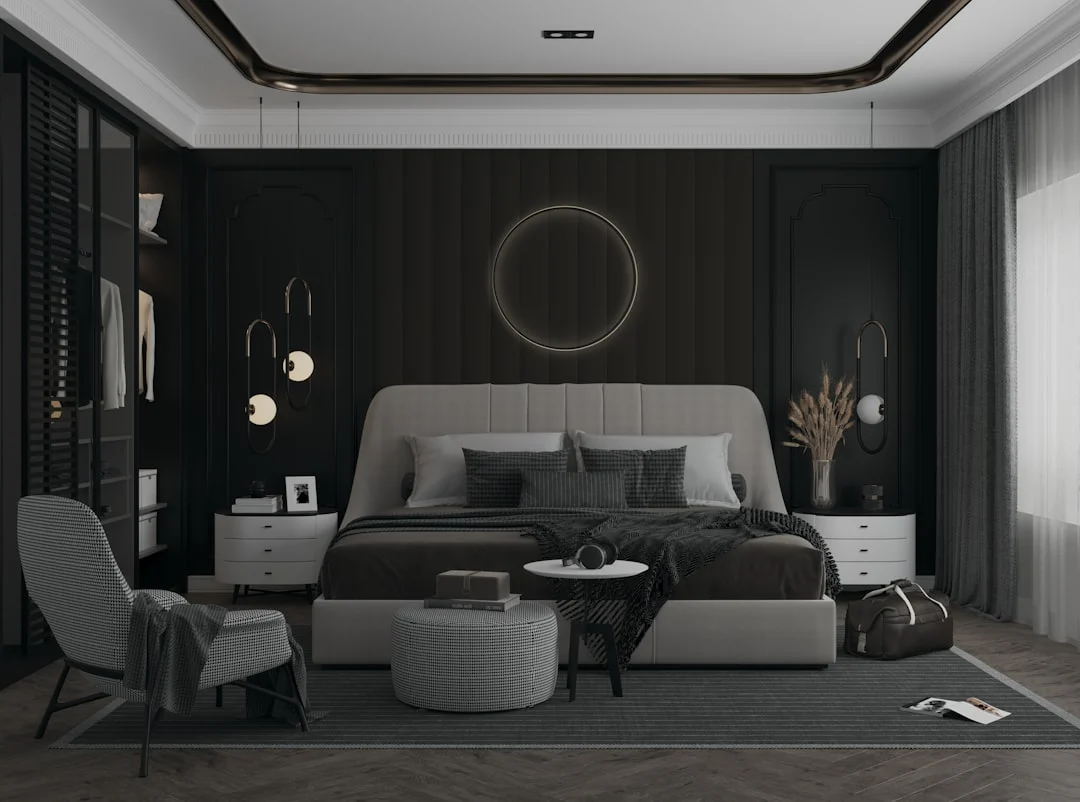
A statement piece should do one thing really well. In modern luxury bedrooms, that usually means either anchoring the room with architectural presence or introducing a material contrast that elevates everything around it. The bed frame is the obvious starting point — a low-profile platform in walnut or a headboard upholstered in boucle or velvet will carry more visual weight than any nightstand arrangement you could dream up.
But here’s where people overspend: decorative furniture that only looks good when the room is empty. A sculptural chair next to the window is beautiful in photos. It’s also something you’ll trip over at 6 a.m. while chasing a child out of bed. Modern luxury bedrooms tend toward furniture that serves daily life with dignity rather than furniture that merely displays it.
Investment-worthy pieces include the mattress (this is where the money actually goes — your body knows), bedding fabrics, and one or two statement items that define the room’s character. Pieces you can save on include decorative throw pillows (buy them in sets of three for visual rhythm, not five for visual chaos), accent rugs, and most lighting beyond a well-placed pair of wall sconces.
The role of material palette — marble, brass, and velvet without overdoing it
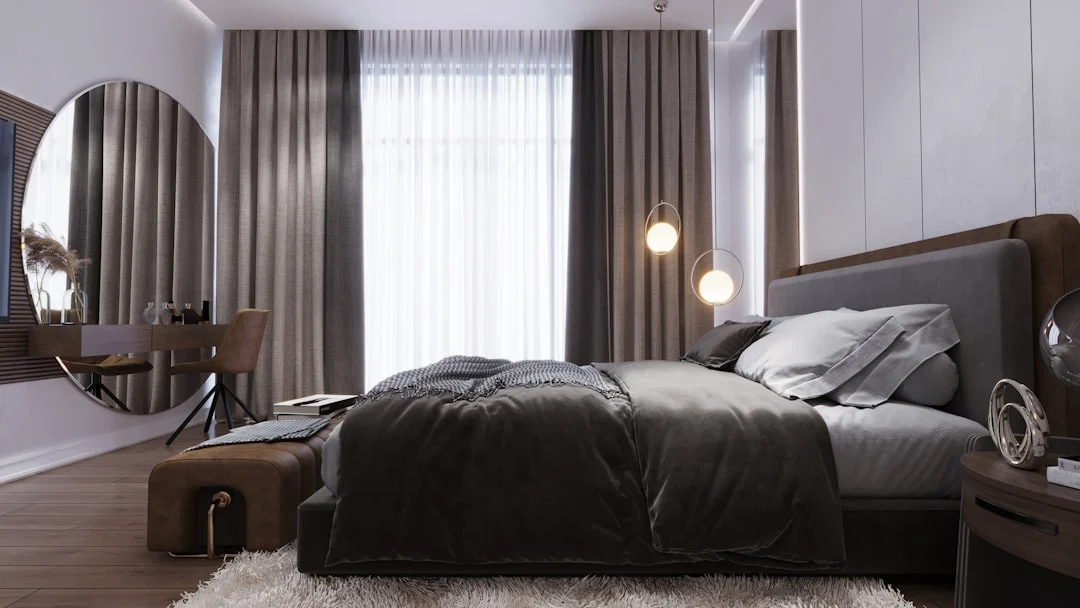
Marble, brass, and velvet have been the holy trinity of luxury bedrooms for years. The problem isn’t that these materials are overdone; it’s that they’re often layered on every surface simultaneously until the room feels like a catalog spread rather than a place to sleep.
Modern luxury bedroom design uses material palettes as a filtering system, not a decoration strategy. If your headboard is velvet and your nightstands are marble with brass hardware, you don’t need a velvet rug or a brass lamp on top of everything — the existing materials have already done the work. The restraint comes from choosing one or two dominant textures and repeating them at different scales throughout the room.
The color palette in a modern luxury bedroom typically stays neutral: whites, greys, taupes, and the occasional deep charcoal or navy for contrast. What makes it feel expensive isn’t the paint on the walls — it’s the way light bounces off those surfaces. Layered lighting (sconces beside the bed, a pendant over the nightstand, perhaps a floor lamp in the corner) creates pools of illumination that make even a simple palette look intentional and warm.
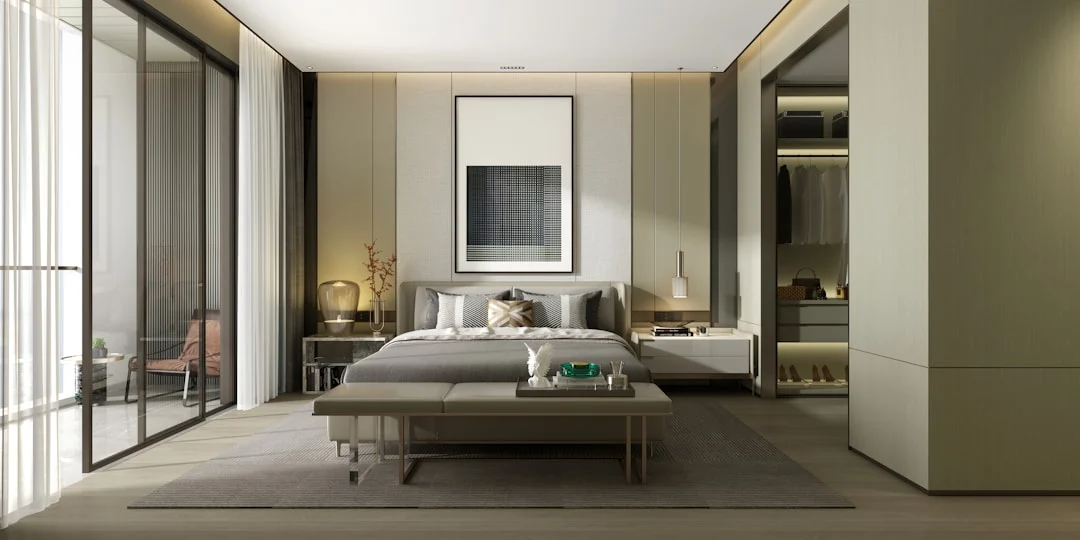
When you’re building a modern luxury bedroom on a budget, this material approach is your friend. You can buy a velvet throw pillow for $25, a marble bookend for $40, and brass picture hooks for $12 — and suddenly the same white walls that looked generic now feel like they belong in a magazine. That’s not cheap; it’s smart. And it’s exactly what distinguishes modern luxury bedroom design from expensive excess.
Restraint vs. Accumulation: The Modern Luxury Trade-Off
The most common mistake in modern luxury bedroom styling is mistaking volume for value. A room filled with carefully chosen pieces can look like a showroom because everything has its place, but it also looks staged — the kind of space you’re reluctant to actually sleep in. The opposite approach, where fewer items are given more attention, creates the same elevated impression at lower total cost and with better longevity.
Why fewer pieces cost more but look less staged
Luxury bedroom decor tends to concentrate spending on a small number of anchors: the bedding set, the mattress, one statement piece of furniture, and lighting that isn’t just overhead. A modern luxury room might have three or four significant items instead of seven or eight. Each costs more individually because you’re paying for materials and craftsmanship rather than volume.
Consider a bed made with 400-thread-count Egyptian cotton sheets ($180) versus a curated set of six decorative pillows in varying fabrics ($90 total). The bedding alone carries the room’s luxury signal. The pillows add texture but don’t change whether the space feels elevated or merely decorated.
When you invest in fewer pieces, you avoid the visual competition that makes rooms feel crowded. There’s room for air around each item — a principle that applies equally to furniture placement and color palette. A modern luxury bedroom with a solid walnut dresser, a linen duvet set, and one sculptural floor lamp reads as intentional rather than filled.
The trend trap: what to skip from fast-moving decor cycles
Modern luxury bedrooms age poorly when they’re built around trends. The current wave of jute rugs, chunky knit throws, and ceramic planters will look dated in three years. What won’t is a well-made bed frame, quality bedding fabrics, or layered lighting that works regardless of what’s on trend.
Here’s a practical filter: if you can name the exact source of the item — a specific Pinterest board, a TikTok creator, an influencer’s bedroom tour — it’s probably a trend piece. If it feels like it belongs in any room from 2018 to 2030, it’s likely a luxury investment.
Items you can safely skip on the trend cycle include decorative trays on nightstands (unless they serve function), accent chairs that don’t fit your sleep routine, and wall art chosen for color rather than scale. Items worth investing in are bedding fabrics — specifically linen and silk blends — lighting beyond ceiling fixtures, and furniture with honest materials like solid wood or marble rather than veneers.
How restraint creates the ‘high-end’ impression without the price tag
A room feels expensive when it has a clear point of view. Modern luxury bedroom decor achieves this through three specific levers: material honesty, color discipline, and lighting layering.
Material honesty means choosing pieces where the material is visible rather than hidden under paint or laminate. A brass sconce shows its metal; a velvet headboard reveals its texture. The eye reads these cues as quality even without knowing the price tag.
Color discipline narrows the palette to three or four tones maximum. A neutral luxury bedroom doesn’t mean beige — it means a restrained selection of similar hues that work together without competing. Think warm white bedding with a charcoal throw and soft gold accents, rather than introducing blue, green, and terracotta in equal measure.
Lighting layering replaces the single overhead fixture with three sources at different heights: wall sconces flanking the bed, a pendant or table lamp on a nightstand, and perhaps one floor lamp near a reading chair. This is where modern luxury bedroom ideas under $500 come into play — layered lighting can be achieved entirely through strategic mid-range purchases rather than expensive fixtures.
The result is a room that reads as curated rather than decorated, which is the real difference between feeling high-end and feeling staged.
Layering Lighting Without a Chandelier
The chandelier is the fastest way to make a bedroom feel like a hotel lobby—impressive, but often at odds with the quiet restraint that defines modern luxury. Layered lighting achieves the same visual richness through three roles: ambient light that washes the room in soft illumination, task lighting for reading and dressing, and accent lighting that reveals texture and material.
The Three-Light Rule for Modern Luxury Bedrooms
Start by deciding what each light source needs to accomplish. Ambient lighting can come from a recessed fixture, a wall-wash sconce, or even a floor lamp positioned in a corner to bounce light off the ceiling. Task lighting sits within arm’s reach of where you’ll actually use it—typically beside the bed for reading, over a vanity, or near a dressing area. Accent lighting pulls focus: a small table lamp on a nightstand, a slim pendant over a bench at the foot of the bed, or a narrow beam from a picture light highlighting wall art.
The rule isn’t about having exactly three fixtures. It’s about ensuring one light in each category exists and that they don’t compete for attention. A bedroom with two identical table lamps on either side of the bed has redundant task lighting but may lack ambient wash or accent depth. Conversely, a single pendant over the bed with no bedside lamp creates drama but leaves you fumbling for reading light.
Pendant and Sconce Pairings That Work in Small Spaces
Modern luxury bedrooms often lean on unconventional pairings to save floor space while maintaining visual interest. A narrow wall sconce paired with a slim pendant creates vertical layering without the bulk of two table lamps. This combination works particularly well in rooms where nightstands are too small to support anything larger than a book, or where renters can’t drill into floors for additional fixtures.
For a more grounded approach, consider placing a low-profile pendant at desk height over a writing surface and mounting a sconce on the adjacent wall. The contrast between the downward throw of the pendant and the upward-and-downward wash of the sconce creates depth that reads as intentional rather than accidental. Both fixtures should share a material family—brass with brass, matte black with matte black—but don’t need to match exactly. A brushed nickel sconce next to a polished brass pendant reads as curated.
Where to Invest: Statement Lighting vs. Affordable Table Lamps
The biggest mistake people make is spending on the wrong fixture type. A $400 designer table lamp from a big-box store often looks better than a $150 statement pendant from a fast-furniture brand, because the designer piece has been weighted in material and proportion. When deciding where to put your lighting budget, follow this hierarchy:
- Primary fixture (the one you’ll see most): invest more here—this is usually the bedside lamp or the focal pendant.
- Secondary fixtures (supporting lights): spend moderately; these do the heavy lifting of illumination but don’t need to be conversation pieces.
- Tertiary fixtures (accent and utility): save. A simple floor lamp in a corner or an inexpensive LED strip behind a headboard can add warmth without breaking the bank.
A practical rule of thumb: if you’re choosing between spending $120 on a table lamp and $35 on a pendant, spend more on the table lamp. Table lamps dominate bedroom lighting because they sit at eye level when you’re in bed, and their shade material—linen, silk, or hand-blown glass—casts a softer glow than most pendants do from above.
For modern luxury bedrooms under $500 total, start with one quality table lamp ($80–$120), add a pair of matching sconces ($40–$60 each), and finish with an affordable pendant or floor accent ($30–$50). The result reads as layered and considered rather than assembled from discount bins.
Bedding as the Bedroom’s Anchor Piece
Modern luxury bedroom design starts where most people sleep, and that’s no coincidence. Your bedding is the visual center of the room — it occupies the most surface area when you walk in, sets the tone for everything surrounding it, and anchors your layered lighting, statement furniture, and material palette. The mistake most people make is treating bedding as an afterthought: buying matching sets from the same retailer, defaulting to crisp white sheets that feel more hotel than home, or investing heavily in a frame only to pair it with thin cotton covers that sag by morning.
Choosing Bedding That Elevates Without Overwhelming
The luxury you’re after doesn’t come from matching every piece — it comes from intentional layering. Start with your duvet cover as the foundation, then build outward. A single high-quality linen or cotton-linen blend in a relaxed weave adds texture that catches light differently throughout the day. Layer two to three throw pillows on top of your sleeping pillows, mixing at least one textured fabric (waffle knit, bouclé, or lightly napped wool) with something smoother. Add a throw blanket folded casually at the foot of the bed — not perfectly centered, just enough to suggest depth.
Consider the weight and drape of your fabrics. Heavy linen or thick percale holds its shape better than flimsy polyester blends, which is why they read as more luxurious even when you haven’t spent much on them. The difference between a bed that looks staged and one that feels lived-in often comes down to how many layers you’ve committed to versus how quickly you abandon them.
Color Palette Strategy: Neutral Luxury and When to Add a Single Tone
Modern luxury bedroom color palettes lean warm rather than cool. Think oat, soft grey, bone white, and pale terracotta — colors that feel expensive because they’re grounded in natural tones rather than borrowed from high-contrast trends. A neutral base lets you introduce texture without visual noise. If your walls are painted a mid-tone or your headboard is upholstered, keep your bedding closer to the wall color family so nothing competes.
Add a single tone when you want the bed to become a focal point rather than blending into the room. A deep navy duvet cover against white linen pillows, or a muted sage throw over camel sheets, creates a restrained pop of color that reads as intentional. The key is restraint: one accent color per bedding layer is plenty. Anything more pushes toward maximalism, which works in some rooms but dilutes the modern luxury aesthetic.
Budget-Friendly Ways to Upgrade
Modern luxury bedroom ideas under $500 are entirely possible if you know where to invest and where to save. Start with your pillow case fabrics — Egyptian cotton or long-staple cotton in a 400+ thread count feels noticeably different after three weeks of use, even at the same price point as cheaper options. Swap out one throw pillow cover for something with texture (a linen blend from a fabric store costs less than $15) rather than buying an entire set.
When upgrading your sheets, prioritize the materials over the count. A 200-thread-count percale sheet in pure cotton often outperforms a 600-thread-count polyester blend in both comfort and longevity. For small bedrooms specifically, modern luxury bedroom tips suggest choosing bedding with simpler patterns or solid colors that don’t compete with visual clutter — less pattern means more perceived space, which elevates the room regardless of square footage.
Don’t overlook your mattress topper as part of the bedding investment. A high-quality wool or latex topper ($150–$300) changes how sheets drape and how the bed feels underfoot, making even a modest frame look more substantial. This is where you’re getting the most return on investment: better sleep quality plus a visible upgrade in texture and form.
The Cold Room Trap: When Modern Luxury Loses Its Warmth
Pinterest boards are full of bedrooms that look like they belong in a magazine spread — and then you walk into one. The clean lines, the neutral palette, the statement headboard sitting perfectly centered against a wall painted a shade called “cloud.” It works beautifully on screen. In person, it feels less like a place to sleep and more like a showroom waiting for occupants.
This is the trap: modern luxury reads as expensive when restraint is actually intentional, but cheapens itself when it becomes absence dressed up as sophistication. The difference lies in what you layer in after the basics are settled — texture, light, material stories that accumulate over time rather than being installed all at once.
Texture mistakes that make bedrooms feel staged rather than lived-in
The most common mistake is treating texture as decoration rather than substance. A velvet throw draped perfectly across a leather chair reads staged when it hasn’t been sat on, wrinkled slightly from use, or folded with the kind of casual asymmetry that happens when someone actually lives in a room.
- Layer too few fabrics and your bedroom feels like one material wearing another — a linen pillow against a cotton sheet against a wool blanket that don’t really converse. You get visual noise without tactile richness.
- Over-accessorize in the opposite direction, and you end up with a room full of texture that doesn’t belong to itself. A silk cushion next to a chunky knit throw next to a jute rug next to a velvet curtain — each piece is interesting on its own, but together they compete rather than complement.
- Ignore the bedding hierarchy. In modern luxury bedrooms, bedding does more heavy lifting than any other element. Egyptian cotton sheets alone won’t create warmth; it’s the combination of sheet weight, pillow loft, duvet fill, and throw placement that signals quality without shouting about it.
Consider this trade-off: a single well-made linen drape costs more upfront than three cheaper ones, but it ages into a richer texture over time. Cheap drapes look crisp the first month and flat by the third. The luxury version looks slightly rumpled the first month and deeply textured by the third.
How to balance clean lines with cozy sleep comfort
Clean lines are not inherently cold — they become cold when they’re paired with hard surfaces and sparse layering. A modern luxury bedroom achieves warmth through strategic softness placed against structure, not by abandoning either one.
The key is thinking in pairs: a sharp, low-profile bed frame softened by deep bedding; a sleek nightstand with a rounded-edge lamp; a rectangular rug with slightly frayed edges that catch light differently depending on the hour. These small contradictions create visual interest without compromising the modern aesthetic.
- Start with your mattress and bedding as the warmest elements. They’re what you touch most. A firm mattress paired with a down-alternative duvet gives structure without stiffness — exactly the balance that reads as luxury rather than clinical.
- Choose one or two soft surfaces per side of the bed. Too many throw pillows on either side creates visual clutter; too few makes the bed feel like it’s waiting for guests. Three pillows per side is a reliable starting point: one sleeping pillow, one decorative pillow in a contrasting fabric, and one throw pillow that ties back to another texture in the room.
- Use wood tones instead of steel or chrome for bedside tables and dressers. Wood warms instantly; metal cools. This is especially relevant when you’re working with a neutral palette, where material choice becomes the primary signal of warmth versus cold.
When minimalism works — and when it’s just empty
Minimalism in modern luxury bedrooms requires discipline. Every remaining piece must earn its place through material quality, scale, or function. When done well, a minimalist bedroom feels spacious without feeling sparse.
The distinction between intentional minimalism and accidental emptiness comes down to three questions:
- Is the floor visible? In true minimalism, you can see more floor because furniture is purposeful rather than piled. If you’ve removed most things but what’s left doesn’t serve a clear function or create visual balance, you have emptiness, not minimalism.
- Does each piece have weight? A single statement armchair in the corner of a bedroom works because it anchors the space. Three identical stools clustered together look like they belong in a different room entirely — decorative rather than functional.
- Are you saving or spending on what matters? This is where many people get it wrong: investing heavily in a headboard while using budget sheets, or vice versa. The modern luxury bedroom signals quality through its core elements first — bedding, mattress, lighting — and only then through decorative accents.
The trap of “less is more” is that less can also be nothing. A room with no textures at all reads as cold regardless of how expensive the materials are. A room with too many competing elements reads as cluttered regardless of how minimal the palette. Modern luxury sits in the middle — restrained but rich, deliberate but comfortable.
Think of it this way: your bedroom should feel like it could be photographed for a magazine without losing its ability to host a good night’s sleep. If you have to choose between looking staged and sleeping well, pick sleep. The photographs will follow.
Download our Modern Luxury Bedroom Checklist — a one-page guide to help you decide which pieces to invest in, which to skip, and how to layer lighting and bedding without overcomplicating the room.
Related posts:


Tagged: Bedroom Material Palette, Contemporary Luxury Bedroom Decor, High-end Bedroom Ideas, Home Decor, Layered Lighting Bedroom, Luxury Bedroom Aesthetics, Modern Luxury Bedroom Decor Ideas, Modern Luxury Bedroom Design