

Small Changes, Big Impact: How Intentional Layering Creates a Cozy Living Room on a Budget

Position cozy as a sensory design principle—warmth, texture, and personal character—rather than an aesthetic choice tied to spending. Preview how layering affordable elements (color temperature, textiles, lighting) creates depth without major renovation costs.
Warm Color Temperature: The Foundation of Cozy
The single most overlooked lever in creating a cozy living room decor on a budget is the light you’re already using. Most homes are lit with cool white bulbs—the kind that cast a bluish, fluorescent glow—because they’re cheap and bright. But brightness isn’t the same as warmth. The difference between a room that feels like a sterile showroom and one that feels like a hug often comes down to color temperature measured in Kelvin.
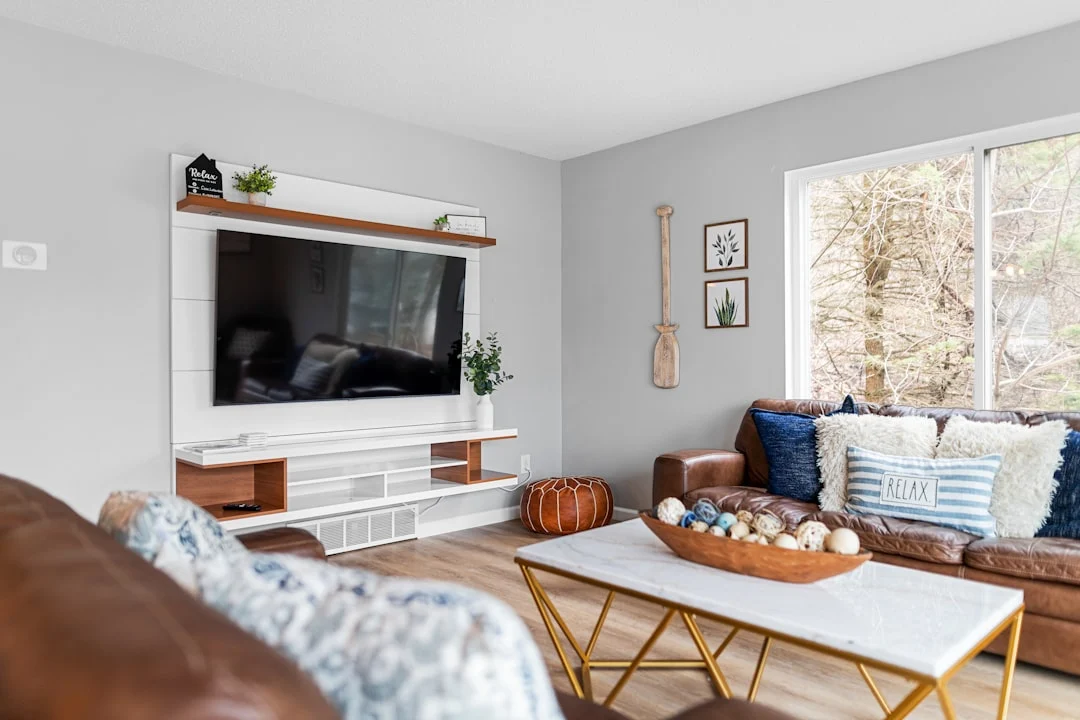
How 2700K–3000K Lighting Transforms Room Mood
Bulbs labeled “warm white” or “soft white” typically sit in the 2700K to 3000K range. At this temperature, light mimics the golden quality of late afternoon sun or candlelight, which is why these bulbs instantly make a space feel more inviting. The effect compounds as you add layers: warm overhead lighting, warm table lamps, warm floor lamps—each one reinforcing the others.
Here’s where budget thinking pays off. A smart bulb like a Philips Hue or Lifx can cost $15 to $20 each and lets you dial in exact color temperatures on demand. But even basic LED bulbs from brands like GE or Sylvania at the 2700K mark run under $4 apiece. Swap out five to six key bulbs around your living room, and you’ve spent less than $30 for a noticeably warmer environment. The math is simple: if a full paint job costs hundreds of dollars, warm lighting gives you roughly 60% of that visual impact for about 5% of the cost.
Consider this scenario: your living room has overhead recessed lights at 4000K (cool white) and one floor lamp with a cheap daylight bulb. During winter evenings, the room feels cold despite being well-lit. Swap the ceiling fixture bulbs for 2700K warm white, replace the floor lamp bulb with a 3000K soft white, and add a small table lamp on your sideboard at 2700K. Suddenly that same space reads as cozy without touching a single piece of furniture.
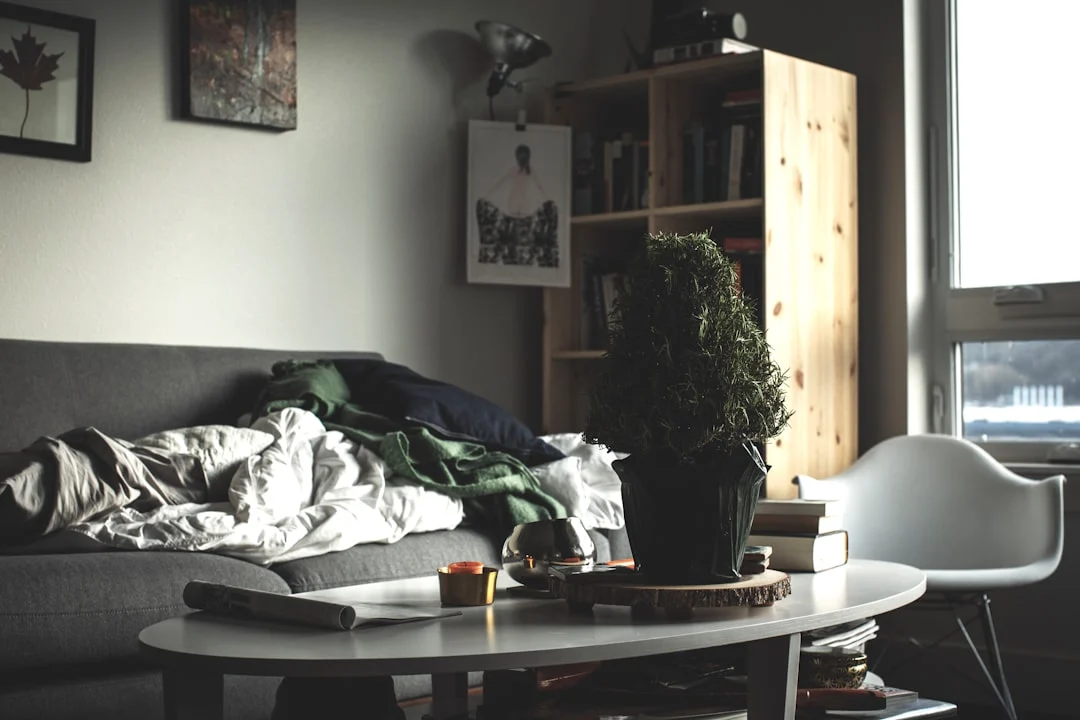
Painting with Warm Tones on a Budget
Lighting sets the stage; paint brings it to life. The trick is choosing warm tones that don’t cost a fortune or commit you permanently—especially important for renters who can’t repaint walls at will.
Designer brands like Farrow & Ball and Benjamin Moore have developed cult-favorite warm neutrals, but their prices ($60–$80 per gallon) can be prohibitive. Budget alternatives exist in the same color families. Sherwin-Williams “Alabaster” (SW 7008) at roughly $45/gallon is a warm off-white that works beautifully with 2700K lighting. Behr’s “Warm White
Textile Layering: Building Tactile Depth for Less
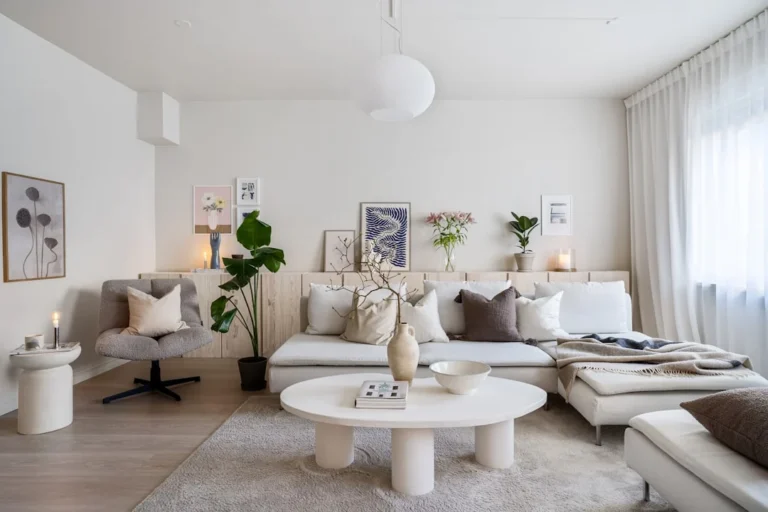
A room feels cozy when your eyes and hands encounter more than one surface. That’s the principle behind textile layering—stacking throws, pillows, and rugs so each piece adds warmth without requiring a budget overhaul. The trick is intentionality. Randomly tossing fabric onto furniture reads as cluttered; choosing pieces that vary in texture, scale, and color creates depth that photographs well and feels lived-in.
The Pillow-and-Throw Rule of Three (and Where to Save)
Start with three pillows per seating surface. Two smaller ones go behind a larger one, creating visual weight toward the back of the sofa or chair. This arrangement works whether your furniture is traditional or modern because it introduces scale variation at no extra cost. A $15 pillow from a discount store can look as good as a $60 designer piece if you pick up its color from an existing wall treatment, rug, or artwork.
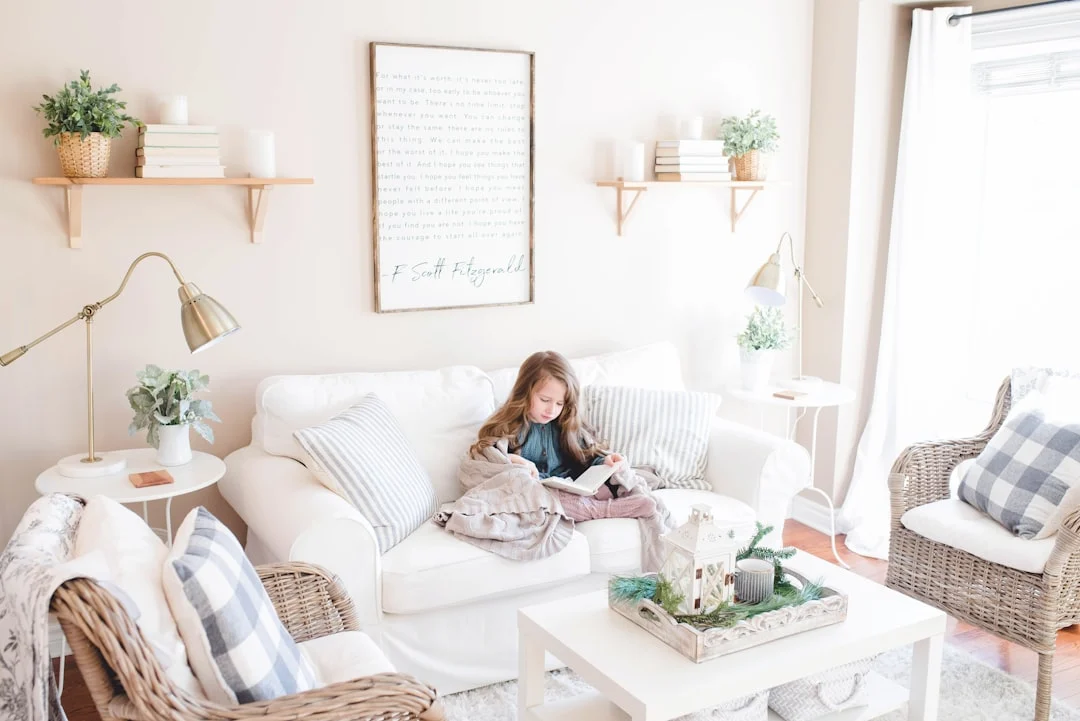
Pair the pillows with one throw per seat. Draping a blanket across the arm of a sofa or folded over the back of a chair signals comfort before anyone sits down. The Rule of Three extends naturally to throws too: two on sofas, one on an accent chair gives you enough density without overwhelming the room.
Where to save is often where people overspend. Pillows and throws are cheaper than furniture, so they’re the ideal place to experiment with trends—think moss green velvet or a chunky knit in cream—before committing those colors to larger pieces. When you tire of a trend, swap out the pillow covers ($10-$25 each) rather than replacing the entire sofa cushion.
Affordable Fabric Types That Add the Most Texture
Not all budget fabrics deliver equal warmth. Here’s what to look for on a per-square-foot basis:
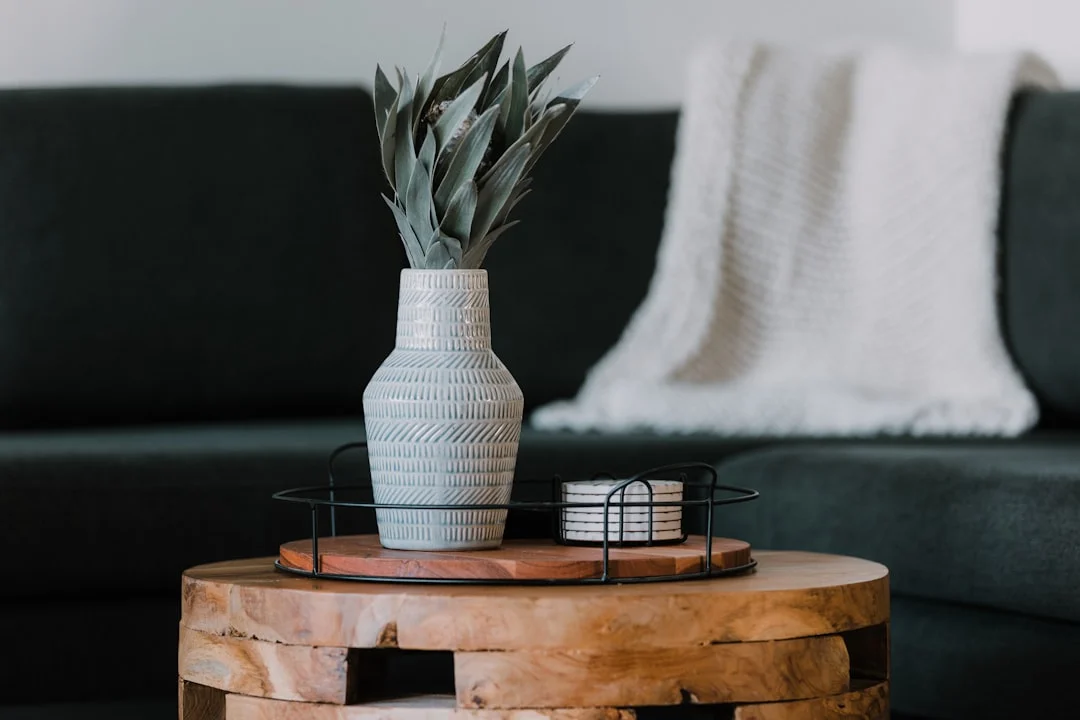
- Cotton canvas or linen-blend throws ($20-$40): These read as substantial without the price tag of wool. Look for slightly slubby weaves that catch light differently than flat cottons.
- Velvet pillow covers ($12-$35 each): Velvet reflects ambient lighting, which is especially valuable in rooms with lower natural light. A warm-toned velvet—burnt orange, deep teal, or mustard—adds color and tactile interest simultaneously.
- Chunky knit throws ($30-$60 at discount retailers): The oversized loops create shadows that make any sofa look more inviting. These are often handwoven in smaller batches, which means you can find quality pieces below $50 if you shop off-season.
- Faux fur accents ($15-$40): A single faux fur throw or pillow on a leather chair creates immediate contrast between smooth and plush surfaces. Choose shorter pile for high-traffic areas; longer pile works well on accent chairs that see less use.
Avoid buying every fabric type in the same color family. If your pillows are all neutral, make sure at least one throw introduces a different texture entirely—a woven seagrass mat under the sofa, for example, gives you visual contrast without adding more softness to an already soft room.
Secondhand Rugs vs. Budget New Options: Choosing by Traffic and Style
Rugs anchor textile layering, but the best option depends on how your living room is used. A secondhand rug from a local thrift store or online marketplace often costs half the price of a new equivalent and carries its own history—faded patterns that look intentional rather than worn. Look for natural fiber rugs like jute or sisal at estate sales; they’re durable, affordable ($30-$80), and pair well with colorful throws and pillows.
For high-traffic living rooms, budget new options from retailers like IKEA, Target, or Wayfair offer consistent sizing and predictable return policies. A $60 synthetic rug in a geometric pattern works as a neutral base that lets your textiles do the talking. If you’re renting and want to avoid permanent changes, consider a large area rug layered over existing flooring—it covers damage without requiring installation.
When comparing secondhand versus new, ask yourself three questions:
- Is the pattern worth preserving? Vintage floral or Persian-style rugs often look more expensive than they are because their patterns have aged gracefully.
- Does the size fit your room’s proportions? A too-small rug makes a living room feel cramped. Measure your seating area and add at least 18 inches beyond the outer edges of your furniture on all sides.
- Can you refresh it yourself? Secondhand rugs can be washed, lightly dyed, or have fringe reattached for under $20—transforming a worn piece into something that looks curated rather than borrowed.
The key insight: layering textiles doesn’t require buying more. It requires choosing pieces that work together and using what you already own in new arrangements. Move an old throw from the bedroom to the living room chair. Swap pillow covers seasonally instead of replacing pillows entirely. Each small change compounds into a room that feels warm, intentional, and significantly less expensive than a full redesign.
Lighting and Personal Touches That Feel Expensive Without Costing It
A living room can look expensive without a single expensive piece. The difference usually comes down to two things: how the light falls across surfaces, and whether objects on those surfaces have a reason to be there. Both of these are entirely within reach for anyone working with a limited budget.
Diy Accent Walls Under $50 (Peel-and-Stick, Paint, Fabric)
Accent walls have been the go-to solution for renters and homeowners alike, but not all methods are created equal. The peel-and-stick wallpaper trend has exploded in recent years, with brands like Wallblaze and Chasing Paper offering patterns that hold up surprisingly well even when you need to remove them later. A single roll typically runs between $20 and $40, which means a standard 10-by-12 foot wall comes in at under $50 total.
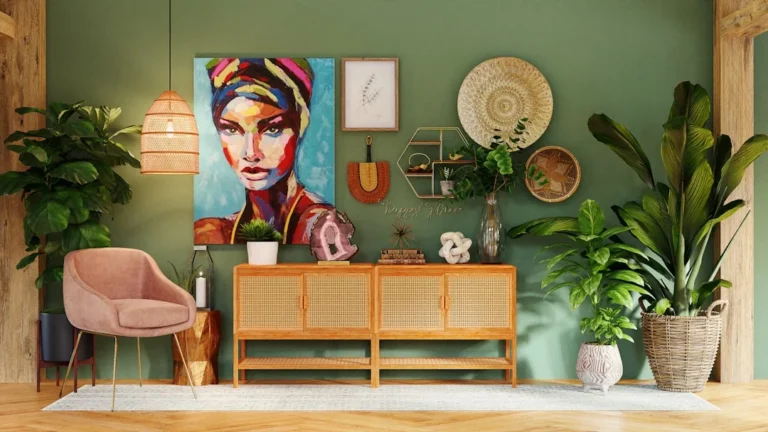
Paint remains the more economical route if you want to get creative. Two coats of a warm paint color—think deep terracotta, forest green, or navy—on a single wall can add visual weight and depth that makes the rest of the room feel intentional rather than empty. The key is choosing a shade slightly darker than your main walls. This contrast creates layers without requiring new furniture.
Fabric draping offers an even more flexible option for renters who don’t want to commit to anything permanent. A length of linen or cotton fabric stretched across a wall using removable adhesive hooks can create the same textural effect as wallpaper, and you can swap it out when your mood shifts. This approach works particularly well in warm living room color schemes that lean toward earth tones.
Curating Meaningful Objects vs. Buying Decorative Fillers
The most noticeable difference between a room that looks expensive and one that just looks full comes down to curation. Every object on display should either serve a function or carry meaning—or ideally, both.
A stack of vintage books on a coffee table tells a story. A single framed photograph from your travels does the same. But a shelf lined with mass-produced decorative objects that match only by color often reads as filler rather than thoughtfulness. When you’re building cozy living room decor on a budget, prioritize pieces that reflect your actual life over items chosen purely for their visual compatibility.
This is where secondhand furniture for cozy spaces becomes especially valuable. A thrifted wooden box used as a side table, or a mismatched set of chairs found at an estate sale, costs far less than new equivalents and often carries more character in return. The imperfections become part of the warmth.
Budget Lighting Upgrades That Outperform Premium Fixtures
Lighting is arguably the single most impactful element in creating a cozy atmosphere, and it’s also one of the easiest to upgrade without replacing expensive fixtures entirely. The color temperature of your bulbs matters more than people realize: switch to warm white bulbs at 2700K to 3000K and you’ll immediately notice how much softer every surface looks.
Adding a floor lamp in a corner that currently sits dark costs less than most designer pendant lights. A simple arc lamp from IKEA or Target will cast light over your seating area and create the kind of layered illumination that makes spaces feel larger and more inviting. If you already have overhead lighting, adding one or two table lamps with fabric shades softens the harshness of direct ceiling bulbs.
Budget lighting upgrades like these outperform premium fixtures because they address a specific problem—too much light from too few sources—rather than simply replacing one expensive piece with another. A $30 floor lamp paired with a $15 warm-white bulb and a $20 set of affordable throw pillows will often make a living room feel more complete than a $400 designer table lamp alone.
The trade-off between time investment and money spent becomes clear when you consider that many of these lighting and wall treatments can be installed in an afternoon by someone with minimal DIY experience. You’re not hiring contractors; you’re placing objects, hanging fabric, or screwing in bulbs. The results are immediate rather than incremental.
DIY Versus Ready-Made: Matching Time to Your Budget Trade-Off
The cozy living room decor on a budget conversation usually starts with a list of items—throw pillows, a woven rug, a string of warm lights. But the real question isn’t what to buy or what to make; it’s how much time you’re willing to invest versus how much money you’d rather spend.
Consider buying a $45 linen throw pillow versus making one from a $18 bolt of fabric. The DIY version saves $27 but requires an afternoon with a needle, thread, and a sewing machine that may or may not be in your closet. Now consider a $150 hand-knotted wool rug versus the $60 flatweave you assemble yourself from a kit. That’s a different kind of math—one where the savings feel more substantial but the labor might stretch across multiple evenings.
When DIY Saves Money (and When It Doesn’t)
DIY delivers its best results when you’re working with materials that would otherwise be expensive as finished products. Repainting a thrifted wooden dresser for $20 saves you hundreds. Transforming a plain curtain into a pillow cover costs pennies per unit. Adding brass hardware to an IKEA cabinet drawer pulls the whole piece up a visual tier for under $15.
But DIY can quietly bleed money when you factor in tools, supplies, and mistakes. That fabric paint kit looks like a deal until you need three coats on a textured pillowcase. The glue gun sits gathering dust after one project. You buy the wrong size thread, return it, and discover shipping costs more than the item itself.
Here’s a practical rule: if you already own the tools and have at least two hours of uninterrupted time, DIY is usually worth it for items under $50 that would cost $80 or more ready-made. If you’re starting from scratch on tools and the finished product is something you’ll replace every few years anyway—like a decorative throw—the ready-made option often makes more sense.
Quick Wins vs. Long-Term Projects for Busy Homeowners and Renters
Your time budget matters as much as your money budget. A busy parent with a toddler might find that assembling a pre-cut rug kit on Saturday morning is achievable, while attempting to upholster an armchair requires a full weekend and patience they don’t have.
Quick-win DIY projects for cozy living rooms include:
- Painting a single accent wall or the back of a bookshelf ($25-$40 in paint alone)
- Sewing no-sew fringe onto a plain throw blanket
- Arranging three to five thrifted frames with matching mats on an empty wall
- Wrapping a basic floor lamp shade in burlap or fabric for warmer light diffusion
Longer-term DIY projects that pay off over years—especially for homeowners planning to stay put—involve refinishing furniture, building custom window treatments, or creating a gallery wall from scratch using secondhand frames sourced across multiple thrift stores.
Choosing the Right Approach for Rental-Friendly Spaces
Renters face unique constraints that shift the DIY versus ready-made equation. You can’t paint every wall permanently, and you might not have a washer large enough to handle oversized fabric projects. But renters also have one advantage: they’re often more intentional about what stays.
For rental-friendly cozy decor, lean toward no-damage installations and portable DIY solutions. Adhesive-backed hooks hold up heavier textiles without leaving marks. Peel-and-stick wallpaper adds texture to a single wall in an afternoon and disappears when you move. A budget-friendly ready-made rug anchors the room while DIY pillows add personality at the couch.
The most cost-effective rental strategy combines both approaches: buy the big, expensive items (a good sofa, a solid coffee table) and layer personal touches through DIY textiles, lighting, and small furniture updates. This way you’re not spending your budget on things you’ll leave behind—you’re investing in pieces that define your space while remaining easy to take with you.
Small-Space Cozy: Layering Without Clutter
A cozy living room doesn’t need to feel crowded. In fact, the best compact spaces achieve warmth through deliberate layering rather than accumulation. When your floor plan tops out at 200 square feet or less, every piece must earn its place by contributing texture, light, or function.
Maximizing Warmth in Rooms Under 200 Square Feet
The secret to a cozy living room decor on a budget in small spaces is vertical thinking. Most people layer horizontally—rugs under coffee tables, pillows stacked on sofas, artwork centered at eye level—but the walls and corners hold untapped potential for texture and visual depth.
- Hang floor-to-ceiling curtains a few inches above the window frame to draw the eye upward
- Use a tall, narrow bookshelf as both storage and a textural anchor against blank walls
- Layer a low-profile rug over a larger area rug for added warmth without sacrificing floor space
- Install floating shelves above the sofa to hold throws, plants, or small art pieces
Lighting plays an outsized role in compact rooms. A single overhead fixture tends to flatten a small space, while two or three layered light sources—table lamps, wall sconces, or even battery-operated LED strips behind furniture—create pockets of warmth that make the room feel larger and more inviting.
Low-Profile Furniture and Vertical Layers for Compact Living Rooms
Furniture height dictates how much a room feels open. A bulky sectional swallows visual space, while a low-profile sofa with clean lines allows light to travel further across the floor. Look for pieces that sit closer to the ground without sacrificing comfort—mid-century modern styles often hit this sweet spot.
Vertical layering works best when you vary heights deliberately. A tall plant next to a short side table, a standing lamp beside a low bookshelf, or a wall-mounted mirror above a console—all create rhythm rather than repetition. This approach matters especially for renters who can’t make permanent changes but still want a layered look.
Secondhand furniture offers the best value here. A dresser from a thrift store can serve as a coffee table with casters, while an old wooden ladder becomes a blanket rack when mounted to the wall. These pieces add character and warmth without the price tag of designer items.
What to Skip When Space Is Tight
Not every cozy element works in a small room. Oversized artwork can overwhelm walls, heavy drapes block light, and too many throw pillows turn a sofa into a pile rather than a seating area. The key is editing ruthlessly before adding more.
Consider these trade-offs when curating your budget decor:
- One statement piece over many small ones—a single large painting or tapestry costs less than a gallery wall and reads as intentional rather than cluttered
- Fewer but larger throw pillows—two pillows in a rich texture like velvet or boucle add more visual weight than six small cotton ones
- A single layered rug instead of multiple runners—one oversized rug anchors the space; adding smaller rugs on top creates depth without fragmentation
The warm color temperature lighting that makes a room feel cozy doesn’t require expensive fixtures. Swap out standard bulbs for 2700K to 3000K options, and you’ll immediately notice how the space shifts from clinical to inviting—without spending more than $15 on bulbs alone.
Ultimately, achieving a cozy living room decor on a budget in a compact space comes down to intentionality. Every added element should either provide warmth through color or texture, increase functionality, or contribute to the overall visual layering. When you approach each purchase with that filter, your small living room becomes a curated environment rather than a collection of budget finds.
Start with one layer at a time—warm lighting today, textiles this weekend—and watch your living room build its own sense of comfort without breaking the bank.
Related posts:


Tagged: Affordable Throw Pillows And Blankets, Budget-friendly Living Room Makeover, Cozy Living Room Decor On A Budget, Home Decor, Lighting Tips For A Cozy Living Room, Low-cost Ways To Add Texture To Your Living Room, Secondhand Furniture For Cozy Spaces, Warm Living Room Color Schemes