

Warm Scandinavian Decor: How to Make Minimalist Nordic Interiors Feel Lived-In (Not Sterile)

Open with the common frustration—many Scandinavian interiors look beautiful in photos but feel cold and 'hospital-like' in real life, especially outside Nordic climates. Position the article as a practical guide that cuts through the sterile minimalism trap by showing how to layer textures, choose lighting that sets mood, and budget smartly across rooms so the end result feels authentically Nordic and genuinely livable.
Where to Start: Picking Your First Room Without Overwhelm
The biggest mistake people make when approaching Scandinavian interior decor is trying to do everything at once. They buy a white sofa, light wood coffee table, pendant lights, and three rugs within the same weekend—and suddenly their home looks like a catalog spread rather than somewhere they actually live.

Start with one room. Just one. The living room usually makes the best first choice because it’s where you’ll see the most immediate impact of your styling decisions, and it gives you permission to experiment without committing your entire house to a look.
The Living Room as Your Anchor
Think of your living room as the foundation for everything else. The core pieces—a sofa, a coffee table, one or two chairs, and lighting—are what matter most right now. Everything else—throw pillows, books on shelves, a rug, a sideboard—is secondary.
If you’re working with a limited budget, invest in the sofa first. A well-chosen piece in a neutral tone (cream, light grey, or soft white) will anchor your room and let you build around it. The coffee table can come later. Same for accessories. You don’t need to buy them all at once.
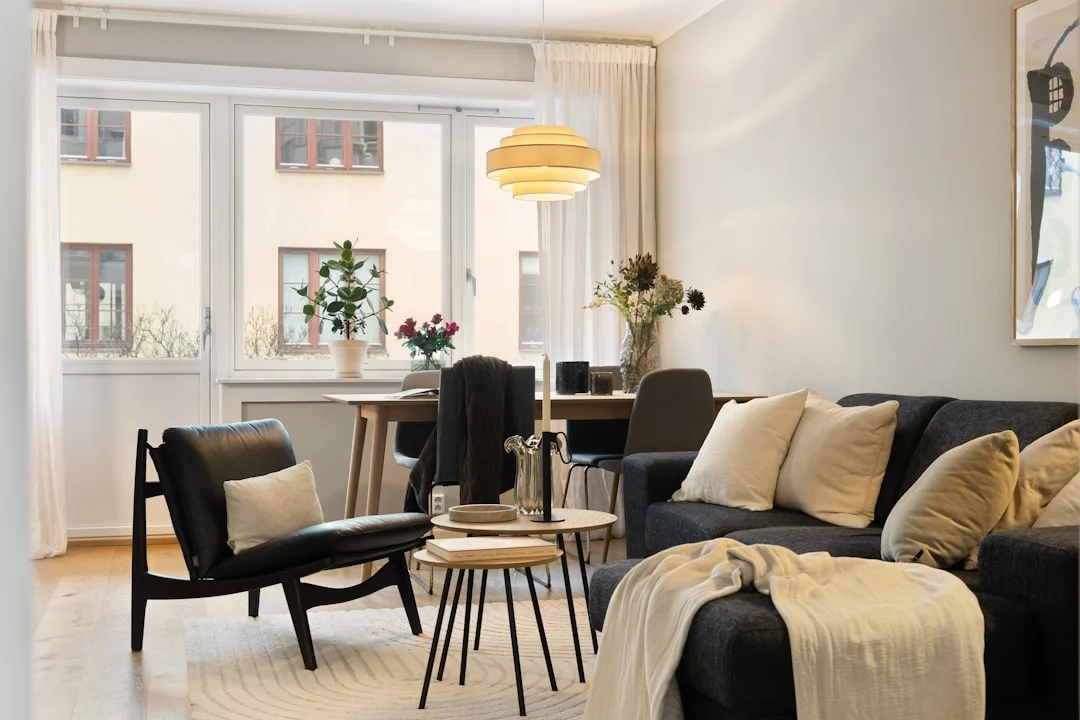
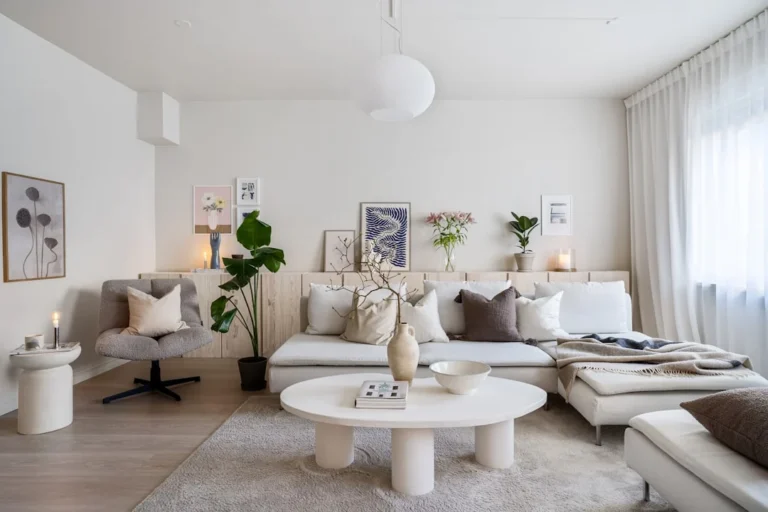
The most important thing is getting the lighting right. A single statement pendant over the coffee table, plus one or two floor lamps in darker corners, will immediately warm up any Scandinavian-style space. Lighting is where many people go wrong—they rely on overhead lights and end up with rooms that feel flat and cold.
Living Room vs. Bedroom: Which Comes First?
The bedroom is another strong contender for your first room, especially if you spend a lot of time there or want to create a sanctuary. A Scandinavian bedroom typically benefits from fewer elements than a living room—just bedding, lighting, and maybe a dresser or wardrobe. The styling rules are similar: light woods, soft textiles, and plenty of natural light.
However, the living room is usually the better starting point for most people because:
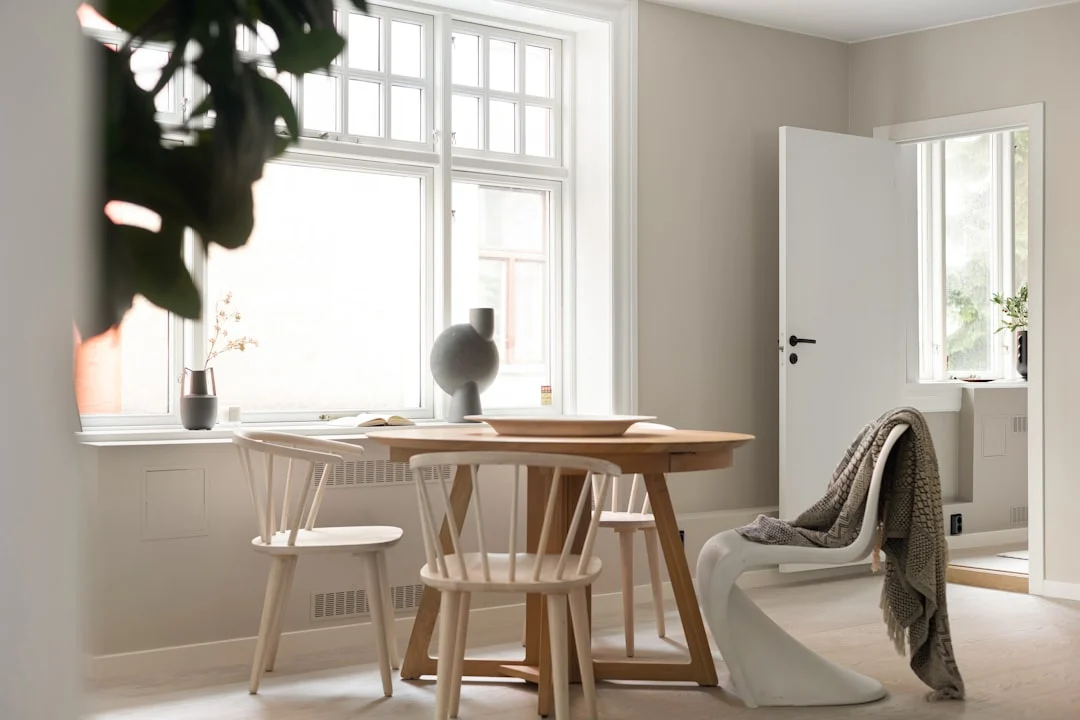
- You’ll see progress more quickly when guests visit
- The larger space gives you more room to experiment with textures and layers
- It’s easier to build a cohesive look that extends into other rooms from here
Kitchen and Bathroom: Save for Later
Your kitchen and bathroom can wait. Both spaces have their own unique challenges when it comes to Scandinavian styling—cabinets, countertops, and tiles all need consideration—and they’re easier to tackle once you’ve figured out the overall aesthetic in your living room.
When you do get to these rooms, carry forward what works from your living room: the same light wood tones for shelves or cabinets, similar pendant lighting styles, and a consistent approach to textiles. You don’t need to match perfectly—just echo elements so the spaces feel related.
A Quick Decision Tree for Renters
If you’re renting and can’t commit to big furniture purchases, here’s a simple way to decide where to start:
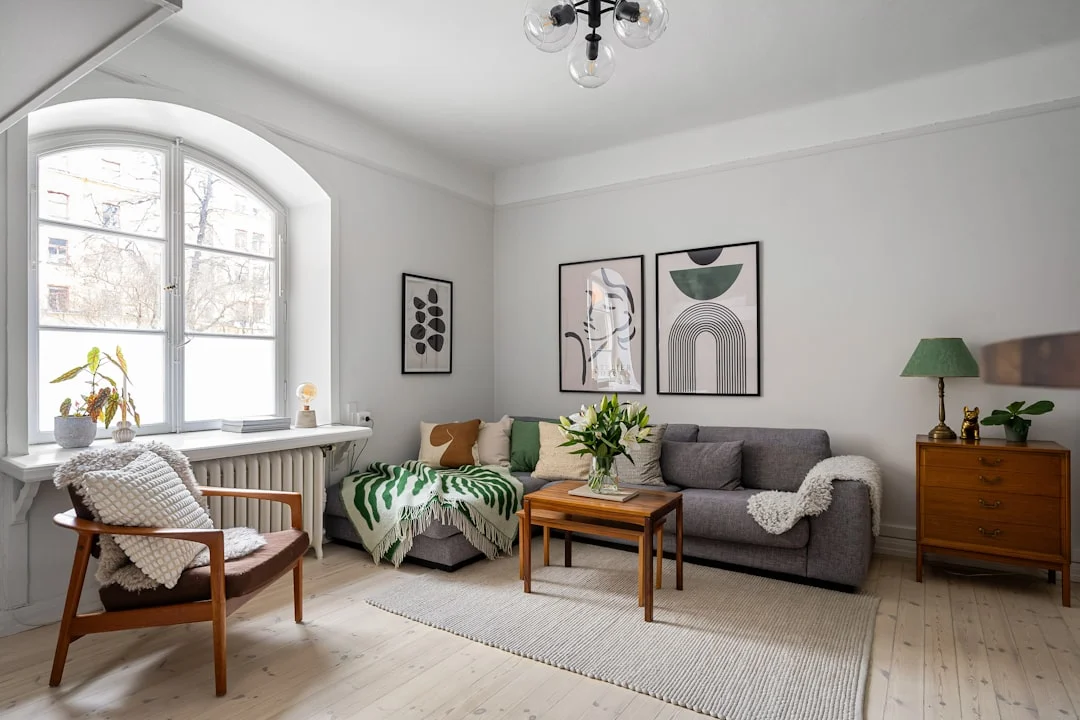
- What’s the biggest thing you see when you walk into your home? That’s usually where you should begin.
- Where do you spend the most time during the day? For many people, this is either the living room or bedroom.
- What’s one piece of furniture that’s already there and works well? Build around it. If your sofa looks good in a neutral tone, keep it. If your bed frame has a clean Scandinavian silhouette, use that as your starting point.
- Can you make changes without painting or replacing anything? Start with lighting, textiles, and accessories. These are the easiest wins for renters and they add up quickly to transform a room’s feel.
The key is to resist the urge to buy everything at once. A Scandinavian living room that feels lived-in will always look better than one that looks like it was designed in a studio and never touched.
The Warmth Dilemma: Avoiding the Sterile Nordic Look
Why White Walls Alone Create Coldness—and What to Add Instead
A room painted in pure white with a sleek sofa and nothing else can look like a showroom waiting for buyers. That’s the trap many fall into when adopting Scandinavian interior decor: equating minimalism with emptiness, which leaves spaces feeling clinical rather than calm.
The solution isn’t to abandon white walls—those clean surfaces are foundational—but to treat them as a canvas rather than the entire composition. Introduce warm whites like cream, ivory, or soft oat tones alongside pure white to eliminate that stark contrast. A single coat of eggshell finish on walls will reflect light more gently than flat white, and it won’t compete with your furniture for attention.
Consider adding a secondary wall treatment in one room to break up the expanse. A feature wall in pale sage, dusty blue, or warm grey creates depth without overwhelming the minimalist aesthetic. This approach works particularly well in living rooms where you want to frame seating arrangements, and in bedrooms where it can anchor your headboard.
Light Wood Tones That Keep Spaces Bright Without Clinical Starkness
The type of wood you choose makes a significant difference in how warm or cold a Scandinavian room feels. Birch, pine, and ash are the traditional Nordic choices, but they each bring slightly different energy to a space.
- Birch has the lightest tone with subtle grain patterns that catch light beautifully—ideal for dining tables and shelving where you want pieces to feel airy rather than heavy.
- Pine offers more warmth with its golden undertones, but can yellow over time if exposed to direct sunlight. Use it in lower-traffic areas or choose pre-finished pine that’s been stabilized against color change.
- Ash sits between birch and oak in tone, with a more pronounced grain that adds visual interest without the drama of darker woods.
The key is mixing wood tones thoughtfully rather than matching them perfectly. A birch chair paired with an ash side table and pine flooring creates layered warmth that feels intentional. Avoid using only one wood species throughout a room, which can read as monotonous, or too many contrasting woods, which reads as cluttered.
The Role of Seasonal Textures in Bridging Minimalism With Everyday Comfort
One reason Scandinavian spaces sometimes feel sterile is that they’re often photographed without the human element—the throw draped over a sofa, the stack of books on a coffee table, the mug left beside a reading lamp. These small signs of use are what transform a styled room into a lived-in one.
Layering textiles is the most effective way to introduce warmth in Scandinavian interior decor. A linen curtain softens hard window edges, a wool rug grounds your seating area, and cotton cushions add color without competing with walls. The trick is choosing natural fibers that age gracefully rather than synthetic materials that look too perfect.
Seasonal texture changes are particularly powerful. In winter, swap out lighter linens for heavier wool throws and introduce candles in various heights to create pools of warm light. In summer, switch to breathable cotton and add a few pieces of dried botanicals like pampas grass or eucalyptus that echo the natural materials theme.
Hygge-Inspired Touches That Signal Warmth Without Sacrificing Clean Lines
The Danish concept of hygge—roughly translated as cozy togetherness—doesn’t require a room full of blankets and pillows. Instead, it’s about creating moments of comfort within clean, uncluttered spaces.
Start with lighting. Scandinavian rooms often look flat under overhead lights alone because the Nordic winter demands multiple light sources at different heights. A single pendant lamp over a dining table works well, but adding floor lamps beside seating areas and small table lamps on sideboards creates layered illumination that feels warm rather than functional.
A few well-chosen accessories make the difference between sterile and inviting: a ceramic vase with a single stem of greenery, a woven basket holding blankets, a stack of art books on a coffee table. The rule is to leave breathing room around each piece so they don’t compete. One or two statement objects work better than many small decorative items.
Finally, consider the sound of your space. Scandinavian design isn’t just visual—it’s about creating environments that feel comfortable through multiple senses. A thick rug dampens echo in hard-surfaced rooms, a wool throw invites touch, and even the scent of beeswax candles or fresh linen can contribute to the feeling of warmth without adding any visual clutter at all.
Layering Textures Without the Clutter Trap
The most common reason Scandinavian interior decor starts to feel sterile is simple: we add too much of one thing and not enough contrast. A white sofa looks elegant by itself, but without a chunky knit throw, a linen cushion, and a wool rug beneath it, the room reads more like an empty gallery than a lived-in home.
The Three-Texture Rule
Start with wool, linen, and cotton as your foundation. Each brings something distinct to Scandinavian living room ideas—wool adds warmth and weight, linen offers breathability and softness, and cotton bridges the two without competing for attention.
In practice, this means choosing a chunky wool throw over a linen sofa cushion, then adding a cotton-blend curtain that filters light. The trick is ensuring no two pieces share the same texture family too closely. A velvet pillow on a wool rug will fight for visual weight; a linen pillow on a linen rug will disappear.
Where to Place Heavier Versus Lighter Textiles
Heavier textiles belong on the floor and on furniture where they’ll be touched most often. A thick Scandinavian bedroom styling piece like an alpaca throw at the foot of the bed anchors the room visually, while lighter fabrics—sheer curtains, thin cotton cushions—belong higher up or in areas that catch light.
This is especially important for small spaces. When working with Scandinavian interior decor for small spaces, heavy floor textiles pull the eye downward and make the ceiling feel taller, whereas too many wall-hanging fabrics can compress the room. A single wide linen curtain panel often outperforms a stack of smaller ones.
Common Layering Mistakes
Readers often fall into three traps when building warm Scandinavian interior decor ideas:
- Over-matching the palette. A white room doesn’t need white pillows, white throws, and white curtains. Introduce a single darker textile—charcoal wool or deep navy linen—to create depth without darkening the space.
- Ignoring texture weight. Adding thin cotton to thin cotton creates flatness. Layering a heavy knitted throw over a lightweight sofa cushion gives the room the tactile richness that hygge-inspired home decor is built on.
- Placing accessories at random heights. Scandinavian living room ideas work best when there’s a clear vertical rhythm: floor textiles, mid-height furniture pieces, and wall-level accents. A rug under the sofa, cushions on it, and a pendant light above creates this natural flow.
Editing When a Room Starts Feeling Busy
If your minimalist Scandinavian interiors are starting to feel cluttered, don’t add more—remove one thing at a time. Pick up every textile in the room and set them aside. Then return only what serves a purpose: warmth, comfort, or visual interest. If two items do the same job, keep the better-looking one.
This edit is especially useful when balancing budget across a room. You might invest in one quality wool rug that ties Nordic home design tips together, then choose more affordable linen cushions from a local market. The result reads as intentional rather than expensive, which is the real goal of Scandinavian interior decor on a budget.
The end result should feel warm without being heavy, layered without being busy. That’s what separates authentic Scandinavian color palette for interiors from the sterile versions you see in catalogs: textiles that are chosen deliberately, not added as an afterthought.
Pendant Lighting as the Scandinavian Signature—Where to Position It for Impact
If you’ve ever walked into a magazine-worthy Scandinavian living room and noticed that single pendant lamp hovering just right over the coffee table, you’ve encountered one of the most recognizable elements in Nordic interior decor. The trick isn’t the fixture itself so much as its placement. A pendant positioned too high reads as decorative rather than functional; one hung too low feels cramped and blocks sightlines across the room.
The sweet spot for a living room pendant is roughly 70 to 80 centimeters above the coffee table surface, or about 150 centimeters from floor level if you’re working without furniture in place. In dining rooms, aim for 75 centimeters above the tabletop—this keeps conversation faces visible while casting warm light onto plates and centerpieces.
Don’t limit yourself to one pendant per room. Scandinavian interiors often use clusters or staggered pendants at varying heights, particularly over kitchen islands where a row of three identical fixtures creates rhythm without visual heaviness. The key is repetition with intention: matching shapes, consistent spacing, and a unified finish rather than an eclectic mix that fights for attention.
Warm-Toned Bulbs Versus Cool White—Why This Single Choice Changes Everything in Winter
This is the mistake most people make when transitioning to Scandinavian-style lighting: they install beautiful fixtures but fill them with cool white bulbs, which is exactly what makes a minimalist room feel sterile rather than inviting. Cool white light (around 4000K) mimics fluorescent office lighting. Warm white (2700K to 3000K) carries the amber glow of Nordic winter evenings and brings out the natural tones in birch, pine, and ash wood.
If your Scandinavian interior decor features predominantly white walls and pale flooring—as most do—the difference between a 2700K bulb and a 4000K bulb is dramatic. Warm bulbs make white surfaces feel creamy and soft; cool bulbs make them look flat and clinical. The effect compounds in winter when daylight hours shrink, because warm artificial light becomes your primary source of illumination for most of the day.
You don’t need to replace every bulb at once. Start with the fixtures that define a room’s atmosphere: the living room pendant, bedside table lamps, and any overhead lights in spaces where you spend extended periods. Use cool white selectively in task areas like kitchen worktops or bathroom mirrors, where clarity matters more than warmth.
Layering Ambient, Task, and Accent Lights Without a Lighting Plan
A Scandinavian interior doesn’t require an architect’s lighting plan to feel layered. The principle is simple: every room should have at least three light sources operating independently, each serving a different purpose. Ambient light fills the space (usually from ceiling fixtures or floor lamps). Task light illuminates specific activities (desk lamps, under-cabinet kitchen lights). Accent light draws attention to objects or surfaces (wall sconces above art, small table lamps beside reading chairs).
The reason this matters for avoiding a sterile look is that single-source lighting flattens everything. A room lit only by one overhead fixture tends to look flat and empty, which amplifies the “hospital” feeling in minimalist spaces. Three or more sources at different heights create depth and make even small rooms feel considered rather than sparse.
Here’s a practical way to approach layering without overcomplicating it: begin with your main ambient light, then add one task lamp where you read or work most often, and finish with a third source that highlights something you care about—a plant, a piece of artwork, or a textured throw on the sofa. The accent light doesn’t need to be bright; in fact, slightly dimmer is better because it creates pockets of warmth that break up the visual monotony.
Budget-Friendly Lighting Swaps That Deliver Designer Results
You don’t need to invest in designer pendant lamps to achieve authentic Scandinavian interior decor lighting. One of the easiest upgrades is swapping out your existing bulb types across a room—this alone can transform the feeling at a fraction of the cost of new fixtures. IKEA’s range of simple wire or paper pendant shades, for example, costs less than most designer alternatives and delivers that characteristic Nordic silhouette.
Consider these swaps before replacing fixtures entirely:
- Replace standard white plastic shade lamps with linen or fabric ones—the material softens light output and adds texture, which is exactly what makes Scandinavian interiors feel lived-in rather than staged.
- Add a plug-in wall sconce where you don’t have hardwired lighting. A small brass or matte black sconce above a sofa or bed costs significantly less than rewiring and looks intentional rather than temporary.
- Use LED strip lights behind furniture or under shelving to create a subtle glow that makes rooms feel larger and more layered without adding visual clutter.
- Buy secondhand mid-century Scandinavian pendants from local furniture stores, charity shops, or online marketplaces. The original brands like Arne Jacobsen’s Egg Pendant or Louis Poulsen’s PH lamps are expensive new, but the style translates well to affordable reproductions.
The bottom line: lighting in Scandinavian interior decor isn’t about buying the most expensive fixtures—it’s about choosing the right warmth, positioning lights thoughtfully, and layering sources so that no corner of a room feels forgotten. When you do this, the result is a space that reads as authentic Nordic design rather than just white walls with good furniture.
Budget Breakdown: Designer Pieces Worth It vs. Affordable Swaps
The 60-30-10 Rule for Allocating Your Scandinavian Decor Budget Across Rooms
Start by treating your space like a color palette rather than a shopping list. The 60-30-10 rule—where 60% of your budget goes to foundational pieces (sofa, dining table, bed frame), 30% to secondary elements (chairs, side tables, rugs, curtains), and 10% to accessories (lamps, vases, cushions, small sculptures)—prevents the common mistake of overspending on throw pillows while skimping on the furniture that actually defines a room’s character.
In practice, this might mean investing more heavily in your living room where you spend the most time, then scaling down proportionally for secondary spaces. A bedroom doesn’t need an identical sofa to anchor it; a well-chosen bed frame and matching nightstand can carry the aesthetic while leaving budget room for texture-rich throws and layered lighting.
Investment Pieces That Hold Their Value
Not every expensive item justifies its price tag, but certain Scandinavian staples genuinely age better than cheaper alternatives:
- Solid wood dining table—A piece in oak, ash, or walnut with a proper finish (not veneer) will outlast three particleboard tables and develop a patina that enhances the lived-in quality you’re after. Look for traditional joinery rather than cam locks.
- A quality sofa—Frame construction matters more than upholstery fabric when it comes to longevity. A solid hardwood frame with high-density foam cushions and removable, washable covers will serve a family for decades. The investment pays off because sofas are the visual anchor of any Scandinavian interior decor scheme.
- Ceramic or stoneware dining ware—Handmade pieces from Nordic makers like Arabia or Iittala hold their aesthetic value and can often be found secondhand in excellent condition, making them surprisingly accessible even on a tight budget.
- A statement pendant light—Good Scandinavian lighting (think Flos, Artek, or Poul Henningsen reproductions) transforms the mood of an entire room. A single well-placed fixture with a warm bulb can replace multiple cheaper lamps and deliver that signature Nordic glow.
Affordable Swaps That Still Read as Authentic
Steer clear of pieces that scream “IKEA” by choosing items with the right proportions, materials, and finishes—regardless of where you buy them. A $100 desk lamp from a local store can look just as intentional as a $350 designer piece if it shares similar design DNA:
- Light wood tones—Birch, pine, and ash are the foundation of Scandinavian interior decor. A budget-friendly sideboard in these woods reads authentic even if it lacks the hand-finish details of premium pieces.
- Natural textiles over synthetic blends—A linen or cotton throw from a high street store will look more Nordic than a velvet cushion with expensive branding. Texture is what makes minimalist Scandinavian interiors feel warm rather than sterile, so prioritize material authenticity over brand recognition.
- Simple ceramic vases and bowls—You don’t need to hunt for vintage Danish ceramics. Contemporary mass-produced pieces in matte whites, soft greys, or earth tones work beautifully in a Scandinavian palette, especially when arranged in odd numbers on a shelf or table.
- Affordable rug layering—Instead of buying one large statement rug, layering two smaller ones (a natural jute base with a woven wool top) creates visual depth at a fraction of the cost while reinforcing the hygge-inspired warmth that defines Scandinavian living room ideas.
How Japandi Influences Can Stretch Your Budget Further
The Japandi aesthetic—blending Japanese minimalism with Scandinavian functionality—offers budget-conscious decorators a powerful lever. Because both traditions share an appreciation for natural materials, clean lines, and restraint, you can merge pieces from each without creating visual conflict:
- Furniture silhouettes that work in both directions—A low-profile platform bed with simple legs reads equally Scandinavian and Japanese. Buying one piece that serves dual aesthetic purposes means less furniture to buy overall.
- Embracing fewer, better accessories—Japandi’s emphasis on intentional minimalism means you can afford to buy fewer decorative objects but invest slightly more in each one. A single hand-thrown ceramic vase and a well-made wooden tray will carry more visual weight than a shelf full of small trinkets.
- Neutral color palette flexibility—The Japandi approach favors muted earth tones alongside Scandinavian whites and light woods, giving you more freedom to mix pieces from different price points without clashing. A $40 bamboo screen can sit comfortably next to a $600 mid-century chair because both share the same restrained visual language.
The key takeaway: your Scandinavian interior decor doesn’t need designer labels to feel authentic. Focus your budget on pieces that define a room’s structure and character, then use texture, lighting, and thoughtful accessories to build warmth without breaking the bank.
Start with one room—pick either your living room or bedroom, choose a single lighting upgrade and add one wool throw to a neutral sofa—and notice the difference within a week. Share your results in the comments below.
Related posts:


Tagged: Home Decor, Hygge-inspired Home Decor, Minimalist Scandinavian Interiors, Nordic Home Design Tips, Scandinavian Bedroom Styling, Scandinavian Interior Decor, Scandinavian Living Room Ideas, White And Wood Scandinavian Interiors