

Aesthetic Room Decor: Curate Instead of Clutter

Open with a relatable hook about buying dozens of aesthetic pieces only for the room to feel busier, not more styled—then introduce the article's core angle: a curated collection of fewer statement pieces layered with intentional textures beats trend-chasing and quantity every time.
Declutter Your Aesthetic
A room can look aesthetic and still feel heavy with stuff. The difference usually isn’t in what you own, but in how deliberately you’ve placed it. When decorative items start competing for attention—when every shelf demands a small sculpture, every wall needs three framed prints, and the bedside table hosts a lamp plus a candle plus a book plus a plant—you lose the visual breathing room that makes a space feel intentional.

Quantity vs. Quality in Room Decor
Consider two approaches to styling the same bedroom. The first fills every available surface with small decorative objects: throw pillows scattered across the bed, knickknacks lined up on dressers, mismatched picture frames clustered on walls. The second approach selects fewer pieces but chooses each one for impact—a single large piece of art instead of a gallery wall, one substantial lamp rather than three table lamps, a few larger plants positioned deliberately rather than dozens of small succulents.
Quality decorative items tend to share certain characteristics. They have purpose beyond decoration: a vintage trunk serves as both storage and seating. They hold visual weight: a bold ceramic vase commands attention without needing company. They age gracefully: linen textiles develop character, while cheap plastic pieces look dated within months.
The trade-off is upfront cost versus long-term satisfaction. A single well-chosen statement piece often costs more than several trendy alternatives, but it anchors the room better and eliminates the need to constantly rearrange smaller items in search of visual harmony.
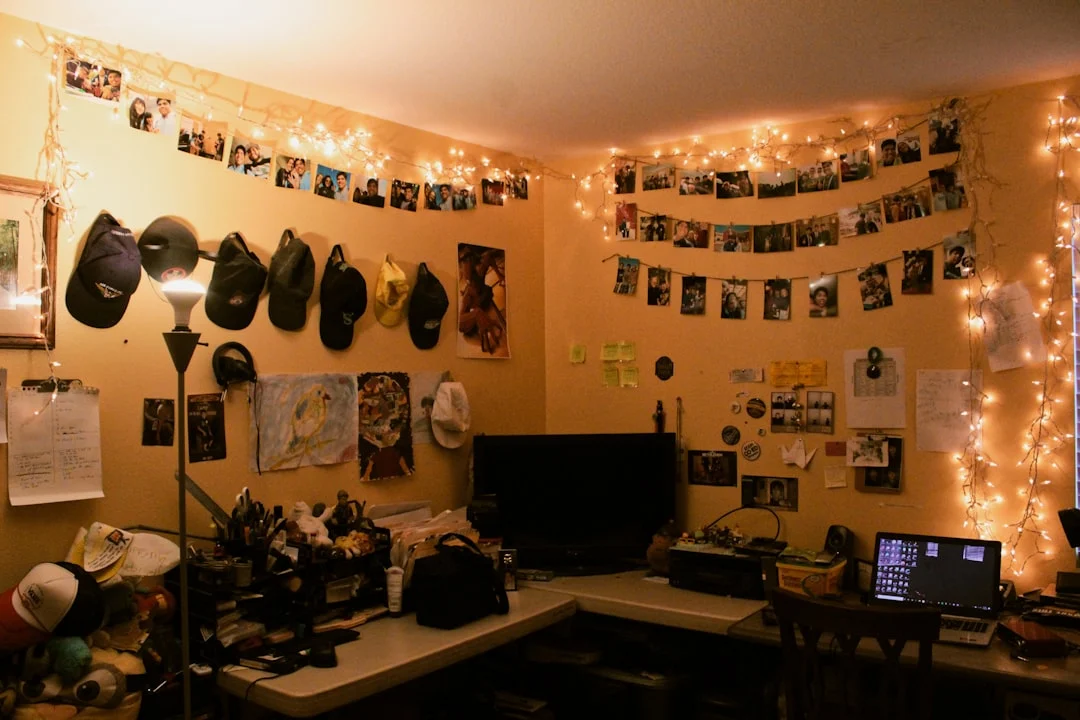
The ‘Buy Less, Choose Well’ Rule for Aesthetic Spaces
This principle applies differently depending on your living situation. Renters benefit from portable statement pieces—a beautiful floor lamp you can take anywhere, removable wallpaper on one accent wall, or a large textile that transforms the room’s color palette. Homeowners can invest in permanent elements like built-in shelving or fixed lighting fixtures that provide lasting structure for future decor choices.
Texture layering matters more than trend-chasing when building an aesthetic room. A neutral base gains depth through woven throws, velvet cushions, wooden accents, and metallic details rather than through color variety alone. Layer these elements intentionally—don’t pile them on—and the room develops richness without clutter.
The practical test for any decorative item: does it earn its place? If removing it wouldn’t noticeably change the room’s character or function, keep it in storage. Items that serve dual purposes—decorative baskets that organize, art pieces that define a zone, lighting that shapes mood—justify their position on your shelf or wall.
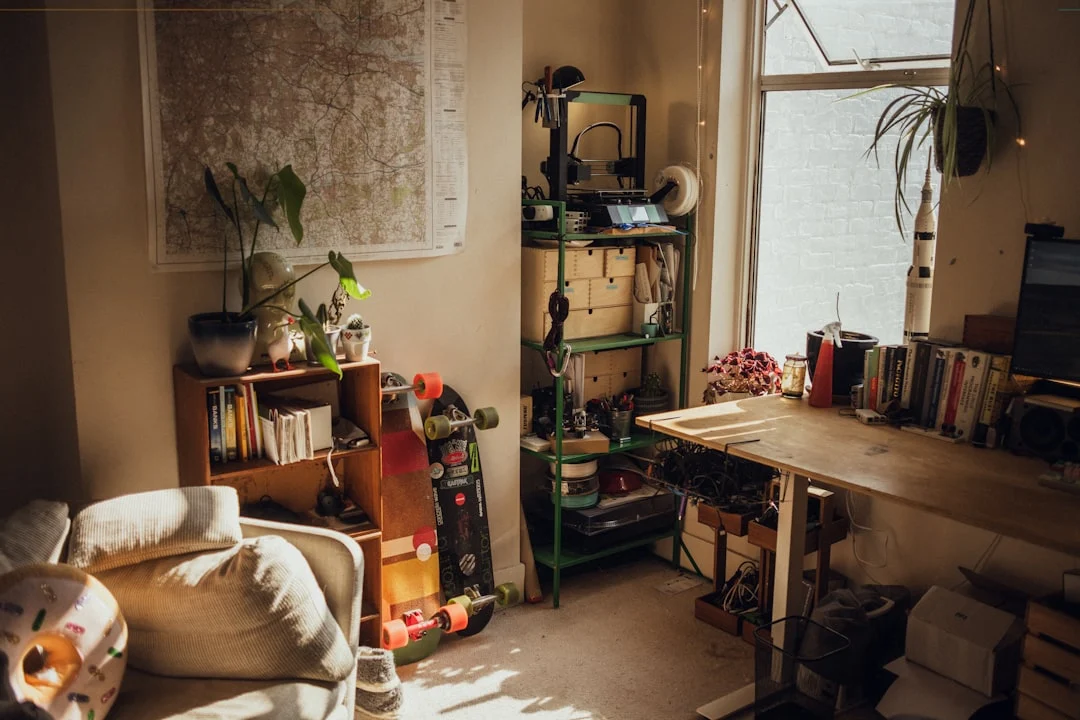
Layer Textures, Not Trends
Trendy decor pieces look impressive in photos but often age poorly once the aesthetic cycle turns. A velvet tufted chair that dominated Instagram feeds for three years suddenly reads as dated; a set of gold geometric wall shelves feels like a relic from 2019’s metallic obsession. Texture, by contrast, is timeless because it operates at the material level rather than the stylistic one. The same linen throw works in a Scandinavian, Bohemian, and Japandi room—not because they share a color palette, but because linen has weight, drape, and visual depth that any aesthetic can support.
Why Texture Outlasts Trend Cycles
Trends are usually surface decisions: a new paint color, the latest pattern on throw pillows, the current favorite material for furniture legs. They’re easy to spot and equally easy to discard. Texture lives deeper in the room. It’s how light interacts with surfaces throughout the day, how fabric moves when someone sits down, what your fingers feel when they brush past a wall hanging or run across a rug.
Consider this practical test: if you removed every painted accent wall and replaced all your pillows with solid colors from a different season, would your room still feel intentional? If the answer is yes, that’s texture doing its job. The woven basket stays meaningful even when the gallery wall shifts. The chunky knit throw reads as cozy regardless of whether velvet is having a moment.

Textile Layering Basics: Throws, Rugs, and Wall Hangings
The most common mistake people make with aesthetic room decor isn’t buying too much—it’s layering the same texture in the same scale. Three identical cotton throws stacked on a sofa create visual noise, not depth. Instead, think of each textile as occupying its own position on a spectrum:
- Scale variation: A large-area rug with fine weave pairs better with a smaller-scale chunky knit throw than with another similarly patterned piece.
- Material contrast: Pair smooth (silk pillowcase, polished wood) with rough (jute rug, raw linen). The difference registers visually even in monochromatic palettes.
- Weight distribution: Heavy textiles on the floor anchor a room. Lighter ones higher up—curtains, wall hangings—add movement without overwhelming the space.
Wall hangings are especially underutilized in texture layering. A single framed textile piece, a macrame hanger, or even a woven basket mounted above a desk adds vertical interest that doesn’t compete with floor-level rugs or horizontal sofa throws. For renters, removable wall-mounted options solve the “no nails” problem while still delivering layered visual weight.
Minimalist vs. Cozy Room Texture Strategies
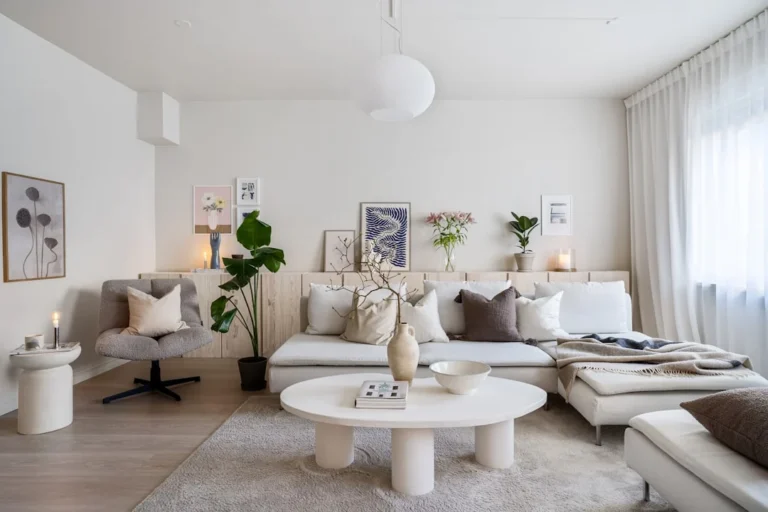
If your room aesthetic leans minimalist, texture layering works by restraint. Choose three textile types maximum—one rug, one throw, one wall piece—and let their materials speak for themselves. Stick to a narrow color range and use texture as the differentiator: think oatmeal linen against pale oak wood against charcoal wool. The room feels curated because each element has room to breathe.
A cozy room aesthetic takes the opposite approach. Here, you layer more freely—multiple throws of varying weights, patterned rugs layered over solid ones, woven baskets stacked rather than stored, curtains that pool slightly on the floor. The visual density reads as intentional warmth rather than clutter because the textures complement each other through shared materiality: natural fibers, soft edges, tactile surfaces.
The key decision criterion is whether your textiles feel like they’re working together or competing. If every piece has a different pattern scale and conflicting materials, you’ll end up with a room that looks styled but not cohesive. If the textures share an underlying logic—whether through color restraint in minimalist rooms or material generosity in cozy ones—they create aesthetic depth without requiring more items.
This is why texture layering matters for both budget-conscious decorators and those investing in statement pieces: it multiplies the visual impact of what you already own. A $40 thrifted wool blanket layered over a sofa with a $200 designer pillow can look more intentional than a room filled with matching sets, because each piece operates on its own material frequency rather than trying to coordinate through pattern or color alone.
Most rooms look cluttered not because they’re too full, but because nothing in them is doing enough work. A single statement piece—a boldly colored armchair, a large-scale abstract painting, a sculptural floor lamp—can carry an entire room’s identity while leaving plenty of breathing room around it. The trick isn’t buying fewer things; it’s buying things that pull their weight.
When you’re building a curated room aesthetic, every item on your list should answer one question: would this room lose its personality without me? If the answer is no, it belongs on the shelf. If yes, consider whether it justifies its floor space by being statement-worthy enough to anchor your design direction.
What makes a piece ‘statement-worthy’ (and worth the cost)
A statement piece earns its place through three qualities: scale that commands attention without overwhelming, visual weight that holds the eye, and versatility across styling scenarios. A $200 velvet armchair might feel like an investment until you realize it replaces two smaller pieces—a side chair and a throw blanket—and becomes the focal point of your aesthetic bedroom ideas board.
Consider texture as currency. In minimalist room decor, a single chunky knit throw or a hand-thrown ceramic vase on an otherwise clean surface creates more visual interest than a dozen small accessories scattered across shelves. Layered textures interior design works because each piece offers something different to the eye—smooth against rough, matte against glossy, organic against geometric.
Don’t confuse statement with loud. A muted sage green floor lamp on a neutral wall is still a statement; it’s just making one through color temperature and form rather than volume. The pieces that age well are those whose aesthetic value doesn’t depend on chasing current trends.
Selecting wall decor that fits your space and palette
Wall decor is where most aesthetic room decor mistakes happen—too many small frames, mismatched sizes, or artwork sized for a different room entirely. The best approach treats walls as a canvas rather than a bulletin board.
Start with scale. A single large piece above a sofa or bed anchors the space better than three medium ones clustered together. If you prefer gallery walls, maintain consistency through frame style, color palette, or spacing rather than trying to make every piece match perfectly. Room styling tips often emphasize this principle: cohesion beats coordination.
Consider your wall’s existing characteristics before buying. A textured plaster wall benefits from flat prints; a painted accent wall can handle bold patterns without competing for attention. The aesthetic color palette of your room—whether warm neutrals, cool grays, or earthy tones—should guide which pieces feel like they belong rather than arriving as strangers.
For small spaces specifically, the best wall decor for small aesthetic rooms tends to be vertical: tall narrow prints, hanging shelves that draw the eye upward, or mirrors placed strategically to create depth. Avoid horizontal sprawl when your walls are already competing with furniture sightlines.
Rental-friendly statement pieces that require zero installation
You don’t need to drill holes or commit to permanent changes to make a rental feel curated. The best rental friendly decor ideas prioritize impact over installation complexity.
Freestanding mirrors—especially large, floor-length ones with simple frames—add both visual weight and the illusion of expanded space without touching your walls. Peel-and-stick wallpaper transforms an entire accent wall in an afternoon and comes off cleanly when you move. Tension rod curtains hung from ceiling to floor create architectural interest that reads as intentional design rather than temporary solution.
Modular shelving systems like IKEA’s KALLAX or Muji’s wooden units work because they’re statement pieces themselves while remaining completely renter-proof. A single well-chosen rug—large enough to anchor your seating area, with a pattern that echoes your color palette—can unify an entire room without requiring any hardware at all.
The key insight for renters: you can invest in the same aesthetic bedroom ideas under $100 that homeowners spend hundreds on. A $60 framed print from a local artist looks more intentional than a $200 piece chosen randomly. The difference isn’t always price; it’s the confidence of choosing pieces that speak to your specific room rather than following generic trends.
Build an Aesthetic Color Palette Without Over-Decorating
The difference between a curated aesthetic room and one that feels overstuffed usually comes down to how you’ve treated color. Most people reach for decor items they love individually—pillows, rugs, wall art—and end up with a space where nothing quite belongs together. The fix isn’t buying fewer things; it’s deciding which colors those things should carry before anything hits the floor.
The 60-30-10 Rule Applied to Aesthetic Rooms
Interior designers have used this formula for decades, but in aesthetic room styling it works differently than you’d expect. The 60 percent isn’t necessarily your walls—especially if you’re renting and can’t repaint. It’s whichever surface dominates visually at eye level. That could be a cream sofa, a dark wood desk, or even the floor itself.
The 30 percent covers your mid-range elements: curtains, accent chairs, larger textiles. The remaining 10 percent is where personality lives—think throw pillows, small vases, picture frames, and decorative objects that pull from either the dominant or secondary color families. If you buy a new piece that doesn’t fit into these three buckets, it’s probably not worth adding.
Here’s the practical test: lay out your top five decor items on the floor before placing them. Do at least two of them share a clear relationship to your base color? Do they echo or contrast without competing? If every item demands equal attention, you’ve got clutter disguised as curation.
Color Psychology for Mood-Setting Spaces
Your palette should do more than look good—it should feel right when you walk into the room. Warm undertones in creams and taupes create a cozy room aesthetic that works well for bedrooms and reading nooks. Cool grays and whites lean minimalist room decor territory, which suits smaller spaces or areas where you want visual breathing room.
Consider your daily rhythm alongside your color choices. If your room doubles as a workspace, lighter walls paired with deeper accent colors will reduce eye strain better than an all-neutral scheme that flattens everything into one tone. If you use the space for winding down at night, muted earth tones help signal to your brain that it’s time to slow down.
Don’t let color trends dictate your palette entirely. A sage green wall might be everywhere this season, but if your existing furniture leans warm and your floor is cool-toned wood, you’ll end up fighting against the very aesthetic you’re chasing. Pull from what’s already in the room first, then build outward.
How to Pick a Palette That Works With Existing Furniture
The biggest mistake people make when building an aesthetic color palette is designing around blank walls and new purchases. Your actual furniture—sofa, bed frame, bookshelf, desk—already carries color, texture, and visual weight. Work with that instead of against it.
Start by identifying the dominant color in your largest piece. If you have a navy sofa, treat navy as your anchor and build outward to complementary tones like cream, light gray, or mustard. If your furniture is neutral, you have more freedom but also less natural cohesion—add warmth through textiles rather than forcing bold colors into every surface.
For rental friendly aesthetic room decor ideas, think about movable color sources: a statement wall decor piece that introduces a new hue, layered textures in throw blankets and rugs that shift the palette without permanent commitment, and small decorative objects you can rearrange or replace as your taste evolves. This approach saves money while letting you experiment with different aesthetics—boho, minimalist, Scandinavian—without painting over walls or replacing furniture.
When budget constraints force trade-offs between statement decor and everyday essentials, prioritize the items that sit in your line of sight most often. A well-chosen lamp shade or a pair of curtains will shift the entire feel of a room more than three decorative pillows on an unused chair. Curate with intention, not impulse, and let color do the work of tying everything together.
Budget Your Room Decor: Statement Pieces vs. Everyday Essentials
Where to Spend on High-Impact Decor
The first decision most people get wrong is what deserves the bigger chunk of their budget. A statement piece isn’t just something expensive—it’s something that changes how a room reads at a glance. Think oversized wall art that anchors your color palette, a floor lamp with sculptural presence, or a single textured throw pillow in a bold tone against neutral bedding.
Everyday essentials like storage baskets, basic curtains, and small accent pieces serve a purpose but rarely command attention. They’re the supporting cast, not the lead. When you budget for aesthetic room decor, put 60 to 70 percent of your spend on one or two statement items that define the room’s character. Fill in the rest with affordable basics that don’t compete for visual real estate.
Consider this: a $300 abstract canvas on an otherwise plain wall will do more to elevate a bedroom than five $50 prints scattered across it. One strong focal point creates cohesion; multiple small pieces often create noise. If you’re building a curated room aesthetic from scratch, start with what people see first when they walk in—the piece that sets the mood.
Under-$100 Aesthetic Room Ideas That Actually Work
You don’t need to spend hundreds per item to achieve an aesthetic bedroom that feels intentional. Some of the most effective under-$100 pieces are the ones people overlook because they’re too simple to notice until you have them.
- A warm-toned floor lamp ($40-80) replaces harsh overhead lighting and creates layered textures in your room styling
- Textured throw blankets in natural materials like linen or chunky knit wool ($25-60)
- A single large mirror with an interesting frame—this doubles visual space and reflects light, a rental-friendly decor upgrade that costs less than most furniture
- Dried pampas grass or eucalyptus in a simple vase for organic shape without the maintenance of fresh flowers
- Removable peel-and-stick wallpaper on one accent wall ($30-70) when your rental won’t allow paint changes
The key is consistency. An aesthetic color palette matters more than price point. If you pick three colors and stick to them across every under-$100 purchase, even budget pieces will feel designed rather than assembled.
What to Skip When Budget Is Tight
Not everything deserves your money. Some decor trends look expensive in photos but deliver minimal visual impact once they’re in the room. Here’s what to skip when you’re working with limited funds:
- Trendy accent chairs in bold colors or unusual shapes—they work well in styled rooms but often clash with existing furniture and walls, turning your space into a collection of mismatched pieces rather than a cohesive whole.
- Multiple small wall decorations clustered together—this is the most common mistake people make when trying to make a room look aesthetic without cluttering it. A gallery wall can work beautifully, but only when the frames and art share a color scheme or layout rhythm.
- Decorative trays and bowls that serve no purpose—they’re visually appealing in magazines but add surface-level texture without functional value unless you actually use them.
- Matching sets of throw pillows, curtains, and rugs—this creates a hotel look rather than an aesthetic one. Mixing textures and tones within the same color family reads more intentional.
The hardest part about budgeting for aesthetic room decor is resisting the urge to buy everything that looks good individually. A decluttered room design feels curated because each piece earns its place. Before adding something new, ask: does this complement what’s already there, or am I just filling empty space?
Common Aesthetic Room Mistakes (and How to Fix Them)
A room can look aesthetic in a magazine photo and still feel off when you actually live in it. The gap usually comes down to one thing: buying pieces for their looks instead of building a room that works together.
Over-matching: why identical pieces can feel sterile
Few things kill aesthetic room decor faster than a perfectly coordinated set. When every piece matches—same wood tone, same fabric family, same color—the room stops feeling curated and starts feeling staged. Think of the difference between a matching bedroom suite and a room where a mid-century chair sits beside a vintage rug and a contemporary lamp. Both can be beautiful, but one has character.
The fix is intentional contrast. You don’t need to buy random things; you just need to avoid buying sets. A statement wall decor piece in a contrasting finish will do more for an aesthetic color palette than three items that look like they came from the same catalog. If you’re drawn to matching, limit it to one or two pieces and let everything else add texture instead.
Ignoring scale and proportion in small rooms
The most common complaint about decluttered room design is actually a scale problem. A tiny shelf on a large wall looks like an afterthought. A massive piece of wall art over a narrow dresser swallows the space. Rental friendly decor ideas often fail because they’re designed for standard dimensions, not for the specific proportions of your room.
For small aesthetic rooms, oversized art and layered textures work better than you’d expect. A large framed print or canvas pulls the eye upward and makes walls feel expansive rather than cramped. The trick is balancing it with smaller decor items so nothing competes. If your statement wall decor piece takes up more than a third of the wall, keep surrounding furniture clean and avoid additional visual noise on that same wall.
Clashing trendy decor with personal style
Trendy pieces have a shelf life. Aesthetic bedroom ideas from Pinterest or Instagram often feature items that look current but may not fit your actual lifestyle, color preferences, or existing furniture. Buying into a trend without considering whether it complements your space creates the exact clutter you’re trying to avoid—just in a more expensive package.
Before purchasing, ask three questions: Does this piece work with colors already in my room? Can I swap it out later if the trend passes? Does it serve a function beyond looking good? If you want cozy room aesthetic but your sofa is sleek and modern, a chunky knit throw and warm lighting will bridge that gap better than buying boho rugs and rattan furniture to match. Layered textures interior design solves more problems than matching entire rooms ever could.
Other common pitfalls include using too many decorative objects on surfaces (aesthetic room styling tips often show perfectly styled shelves, but those same shelves become clutter magnets within a week), neglecting lighting when choosing decor (a beautiful lamp is useless if the bulb is wrong), and buying pieces that look good in photos but don’t fit your actual floor plan. The best way to avoid these mistakes is to start with what you already own and build outward, rather than filling every empty surface just because it’s there.
Frequently Asked Questions
How do I keep my aesthetic room from looking cluttered?
The trick is deciding what earns its place before buying more. Instead of filling empty space, start with a clear aesthetic color palette—three to four tones that repeat across your walls, textiles, and accessories—and let those guide every addition. Aesthetic bedroom ideas often fail because people chase individual pieces rather than cohesion. When you layer textures in an aesthetic room through things like a chunky knit throw over linen sheets or a woven rug against hardwood, the eye finds visual interest without crowding. Rule of thumb: if something doesn’t match your palette, serve a function, or spark genuine joy, it’s taking up space you could use for something better.
What wall decor works best for small rooms?
Small rooms benefit from pieces that create depth rather than occupy floor space. A statement wall decor item—like a large mirror angled to reflect light or a single oversized print framed in your color palette—reads as intentional rather than cramped. Avoid the mistake of covering every inch with smaller frames, which makes walls feel busy and rooms feel smaller. Instead of decorating walls vertically from top to bottom, pick one focal wall and build around it. Good aesthetic bedroom ideas for compact spaces also include floating shelves for displaying a few curated objects, a tall floor lamp that draws the eye upward, and textiles hung rather than stacked. The goal is room styling tips that make your space feel edited, not empty.
Is it better to invest in one statement piece or many smaller ones?
This depends on your budget and how long you plan to stay in the space. A single well-chosen statement piece—a sculptural lamp, a vintage chair, an art print you love—can anchor an entire aesthetic room design and give you room to experiment with affordable accents around it. The trade-off is that if your taste shifts, replacing one big item costs more than swapping out smaller ones. For renters or anyone who changes styles frequently, many smaller pieces offer flexibility; for homeowners planning longer-term styling, one statement piece per zone tends to create a more curated room aesthetic. Start with the largest surface—your bed, desk, or seating area—and choose your statement piece there first before filling in around it.
How can renters achieve an aesthetic look without permanent changes?
Rental friendly decor ideas center on temporary solutions that deliver big style returns. Command hooks and adhesive strips let you hang art, mirrors, and shelves without drilling into walls. Peel-and-stick wallpaper or removable wall decals transform a plain surface into something editorial in an afternoon. Textile-heavy styling—curtains, rugs, throw pillows, blankets—is inherently renter-friendly since it requires no installation and can be packed away when you move. Lighting matters too; floor lamps, table lamps, and plug-in sconces add warmth without electrical work. When building your aesthetic color palette, lean on textiles and decor pieces in shades that complement your existing walls rather than fighting against them. This approach means your room looks styled even with a blank canvas underneath.
Curate Your Room, Don’t Fill It
A room starts looking aesthetic the moment you stop treating every surface as a display shelf. The clutter trap is real: you buy a plant, then another because the first one looks lonely on the windowsill, then throw pillows to match the rug you got for the wrong color wall, and suddenly your space feels like a catalog that ran out of page count. Aesthetic room decor isn’t about having more—it’s about having pieces that belong together.
The edit checklist: what stays and what goes
Before adding anything new to your walls or shelves, run through these criteria. Each decision point keeps your curated room aesthetic from tipping into visual noise.
- Does it serve a purpose beyond decoration? A framed print is fine if it brings you joy every time you walk in. It stops being aesthetic bedroom ideas and starts becoming clutter when three identical prints sit on the same wall because they were all on sale.
- Does it fit your color palette, or does it fight it? This doesn’t mean everything has to match perfectly—minimalist room decor often works best with a restrained base of whites, beiges, and soft grays. A single statement wall decor piece in terracotta or navy adds depth without breaking the flow.
- Is it proportionate to your space? Oversized art on a small wall reads as cluttered. Tiny shelves on a large expanse of painted drywall look like they’re hiding something. Scale matters more than style.
- Does it survive beyond the trend cycle? Aesthetic color palette choices should outlast whatever’s trending on Pinterest this month. If you love it after two years, it earns its place.
For renters working with rental friendly decor options, prioritize removable adhesive hooks, peel-and-stick wallpaper, and freestanding shelving that doesn’t require drilling. These pieces let you build a cozy room aesthetic without losing your security deposit or committing to permanent changes.
Next steps for styling your space
Once you’ve edited down to the pieces that belong, layer them intentionally. Layered textures interior design is what separates a styled room from one that just looks tidy. A knit throw on a smooth leather chair, linen curtains against painted brick, a woven basket beside a ceramic vase—these combinations create visual interest without adding more objects.
Lighting plays an equally important role in room styling tips that actually work. Skip the overhead light and build layers: a floor lamp for ambient glow, a small table lamp on a nightstand or desk, and perhaps a string of warm LEDs behind your headboard if you’re going for aesthetic bedroom ideas that feel lived-in rather than staged.
When budget constraints force trade-offs between statement decor and everyday essentials, invest in one or two anchor pieces—a quality rug, a solid wood dresser, a well-made bed frame—and build around them with smaller, affordable additions. The $10 to $30 items you pick up at thrift stores or online retailers become aesthetic room decor when they’re placed deliberately rather than scattered randomly.
The final rule of thumb: if you can’t explain why a piece is in your room beyond “it looks nice,” it probably doesn’t belong. Curated room aesthetic means every item has a job. Your space should feel intentional, not accidental.
End with a practical CTA encouraging readers to audit their room using the edit checklist and share their biggest decor struggle in the comments—inviting engagement that reinforces the curated-over-cluttered angle.
Related posts:

Tagged: Aesthetic Bedroom Ideas, Aesthetic Room Decor, Curated Room Aesthetic, Home Decor, Layered Textures Interior, Minimalist Room Decor, Room Styling Tips, Statement Wall Decor